Committee on Science and Technology for Countering Terrorism – författare
519 kr
Läs direkt efter köp
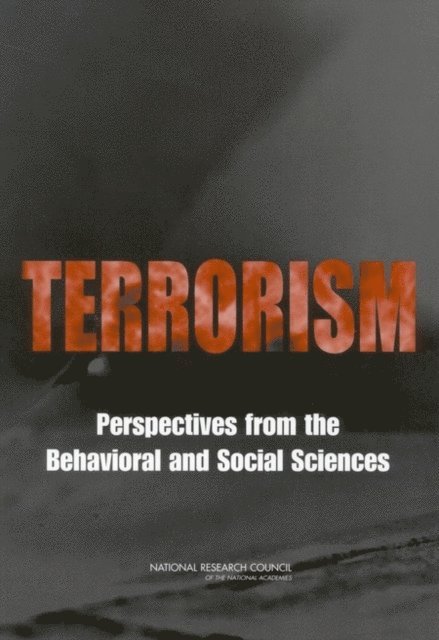
The events and aftermath of September 11, 2001, profoundly changed the course of history of the nation. They also brought the phenomenon known as terrorism to the forefront of the nation''s consciousness. As it became thus focused, the limits of scientific understanding of terrorism and the capacity to develop policies to deal with it became even more evident. The objective of this report is to bring behavioral and social science perspectives to bear on the nature, determinants, and domestic responses to contemporary terrorism as a way of making theoretical and practical knowledge more adequate to the task. It also identifies areas of research priorities for the behavioral and social sciences.
519 kr
Läs direkt efter köp
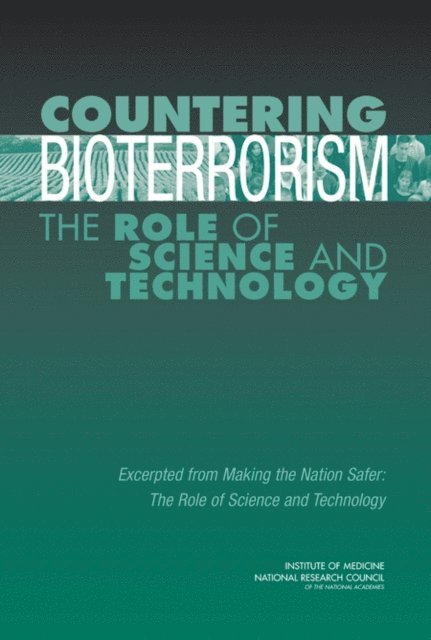
The attacks of September 11 and the release of anthrax spores revealed enormous vulnerabilities in the U.S. public-health infrastructure and suggested similar vulnerabilities in the agricultural infrastructure as well. The traditional public health response—surveillance (intelligence), prevention, detection, response, recovery, and attribution—is the paradigm for the national response not only to all forms of terrorism but also to emerging infectious diseases. Thus, investments in research on bioterrorism will have enormous potential for application in the detection, prevention, and treatment of emerging infectious diseases that also are unpredictable and against which we must be prepared. The deciphering of the human genome sequence and the complete elucidation of numerous pathogen genomes, our rapidly increasing understanding of the molecular mechanisms of pathogenesis and of immune responses, and new strategies for designing drugs and vaccines all offer unprecedented opportunities to use science to counter bioterrorist threats. But these same developments also allow science to be misused to create new agents of mass destruction. Hence the effort to confront bioterrorism must be a global one. Countering Bioterrorism makes the following recommendations:
Recommendation 1: All agencies with responsibility for homeland security should work together to establish stronger and more meaningful working ties between the intelligence, S&T, and public health communities.
Recommendation 2: Federal agencies should work cooperatively and in collaboration with industry to develop and evaluate rapid, sensitive, and specific early-detection technologies.
Recommendation 3: Create a global network for detection and surveillance, making use of computerized methods for real-time reporting and analysis to rapidly detect new patterns of disease locally, nationally, and ultimately— internationally. The use of high-throughput methodologies that are being increasingly utilized in modern biological research should be an important component of this expanded and highly automated surveillance strategy.
Recommendation 4: Use knowledge of complex biological patterns and high-throughput laboratory automation to classify and diagnose infections in patients in primary care settings.
Recommendation 5: USDA should create an agency for control and prevention of plant disease. This agency should have the capabilities necessary to deal effectively with biothreats.
892 kr
Läs direkt efter köp
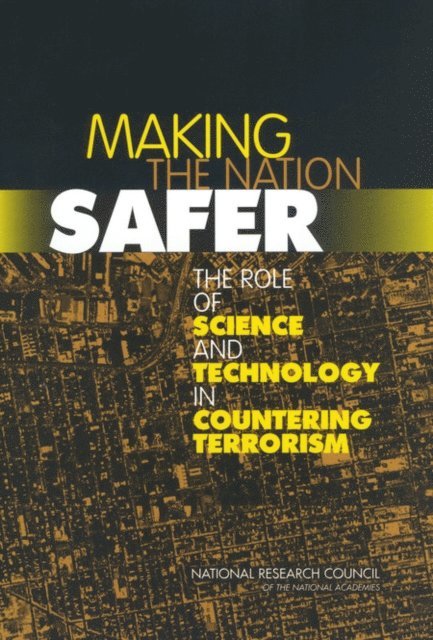
Vulnerabilities abound in U.S. society. The openness and efficiency of our key infrastructures — transportation, information and telecommunications systems, health systems, the electric power grid, emergency response units, food and water supplies, and others — make them susceptible to terrorist attacks. Making the Nation Safer discusses technical approaches to mitigating these vulnerabilities.
A broad range of topics are covered in this book, including:
Nuclear and radiological threats, such as improvised nuclear devices and "dirty bombs;" Bioterrorism, medical research, agricultural systems and public health; Toxic chemicals and explosive materials; Information technology, such as communications systems, data management, cyber attacks, and identification and authentication systems; Energy systems, such as the electrical power grid and oil and natural gas systems; Transportation systems; Cities and fixed infrastructures, such as buildings, emergency operations centers, and tunnels; The response of people to terrorism, such as how quality of life and morale of the population can be a target of terrorists and how people respond to terrorist attacks; and Linked infrastructures, i.e. the vulnerabilities that result from the interdependencies of key systems.In each of these areas, there are recommendations on how to immediately apply existing knowledge and technology to make the nation safer and on starting research and development programs that could produce innovations that will strengthen key systems and protect us against future threats. The book also discusses issues affecting the government''s ability to carry out the necessary science and engineering programs and the important role of industry, universities, and states, counties, and cities in homeland security efforts.
A long term commitment to homeland security is necessary to make the nation safer, and this book lays out a roadmap of how science and engineering can assist in countering terrorism.
357 kr
Läs direkt efter köp
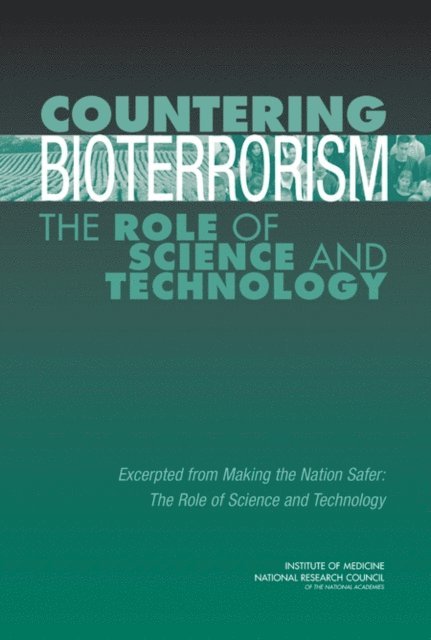
The attacks of September 11 and the release of anthrax spores revealed enormous vulnerabilities in the U.S. public-health infrastructure and suggested similar vulnerabilities in the agricultural infrastructure as well. The traditional public health response—surveillance (intelligence), prevention, detection, response, recovery, and attribution—is the paradigm for the national response not only to all forms of terrorism but also to emerging infectious diseases. Thus, investments in research on bioterrorism will have enormous potential for application in the detection, prevention, and treatment of emerging infectious diseases that also are unpredictable and against which we must be prepared. The deciphering of the human genome sequence and the complete elucidation of numerous pathogen genomes, our rapidly increasing understanding of the molecular mechanisms of pathogenesis and of immune responses, and new strategies for designing drugs and vaccines all offer unprecedented opportunities to use science to counter bioterrorist threats. But these same developments also allow science to be misused to create new agents of mass destruction. Hence the effort to confront bioterrorism must be a global one. Countering Bioterrorism makes the following recommendations:
Recommendation 1: All agencies with responsibility for homeland security should work together to establish stronger and more meaningful working ties between the intelligence, S&T, and public health communities.
Recommendation 2: Federal agencies should work cooperatively and in collaboration with industry to develop and evaluate rapid, sensitive, and specific early-detection technologies.
Recommendation 3: Create a global network for detection and surveillance, making use of computerized methods for real-time reporting and analysis to rapidly detect new patterns of disease locally, nationally, and ultimately— internationally. The use of high-throughput methodologies that are being increasingly utilized in modern biological research should be an important component of this expanded and highly automated surveillance strategy.
Recommendation 4: Use knowledge of complex biological patterns and high-throughput laboratory automation to classify and diagnose infections in patients in primary care settings.
Recommendation 5: USDA should create an agency for control and prevention of plant disease. This agency should have the capabilities necessary to deal effectively with biothreats.
268 kr
Läs direkt efter köp
The events and aftermath of September 11, 2001, profoundly changed the course of history of the nation. They also brought the phenomenon known as terrorism to the forefront of the nation''s consciousness. As it became thus focused, the limits of scientific understanding of terrorism and the capacity to develop policies to deal with it became even more evident. The objective of this report is to bring behavioral and social science perspectives to bear on the nature, determinants, and domestic responses to contemporary terrorism as a way of making theoretical and practical knowledge more adequate to the task. It also identifies areas of research priorities for the behavioral and social sciences.
576 kr
Läs direkt efter köp
Vulnerabilities abound in U.S. society. The openness and efficiency of our key infrastructures — transportation, information and telecommunications systems, health systems, the electric power grid, emergency response units, food and water supplies, and others — make them susceptible to terrorist attacks. Making the Nation Safer discusses technical approaches to mitigating these vulnerabilities.
A broad range of topics are covered in this book, including:
Nuclear and radiological threats, such as improvised nuclear devices and "dirty bombs;" Bioterrorism, medical research, agricultural systems and public health; Toxic chemicals and explosive materials; Information technology, such as communications systems, data management, cyber attacks, and identification and authentication systems; Energy systems, such as the electrical power grid and oil and natural gas systems; Transportation systems; Cities and fixed infrastructures, such as buildings, emergency operations centers, and tunnels; The response of people to terrorism, such as how quality of life and morale of the population can be a target of terrorists and how people respond to terrorist attacks; and Linked infrastructures, i.e. the vulnerabilities that result from the interdependencies of key systems.In each of these areas, there are recommendations on how to immediately apply existing knowledge and technology to make the nation safer and on starting research and development programs that could produce innovations that will strengthen key systems and protect us against future threats. The book also discusses issues affecting the government''s ability to carry out the necessary science and engineering programs and the important role of industry, universities, and states, counties, and cities in homeland security efforts.
A long term commitment to homeland security is necessary to make the nation safer, and this book lays out a roadmap of how science and engineering can assist in countering terrorism.
573 kr
Tillfälligt slut
568 kr
Tillfälligt slut