Conrad Leyser - Böcker
Visar alla böcker från författaren Conrad Leyser. Handla med fri frakt och snabb leverans.
5 produkter
5 produkter
2 716 kr
Skickas inom 5-8 vardagar
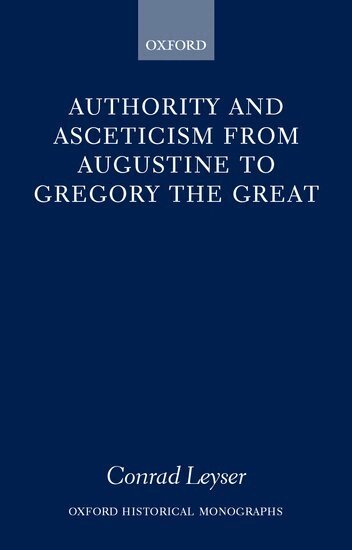
Conrad Leyser examines the formation of the Christian ascetic tradition in the western Roman Empire during the period of the barbarian invasions, c.400-600. In an aggressively competitive political context, one of the most articulate claims to power was made, paradoxically, by men who had renounced 'the world', committing themselves to a life of spiritual discipline in the hope of gaining entry to an otherworldly kingdom. Often dismissed as mere fanaticism or open hypocrisy, the language of ascetic authority, Conrad Leyser shows, was both carefully honed and well understood in the late Roman and early medieval Mediterranean. Dr Leyser charts the development of this new moral rhetoric by abbots, teachers, and bishops from the time of Augustine of Hippo to that of St Benedict and Gregory the Great.
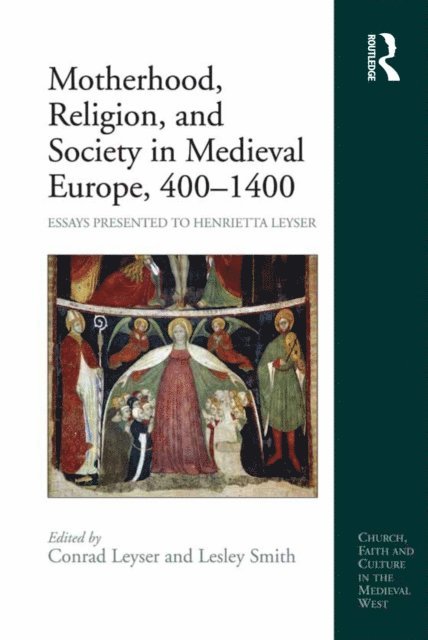
Motherhood, Religion, and Society in Medieval Europe, 400-1400
Essays Presented to Henrietta Leyser
Häftad, Engelska, 2020
635 kr
Skickas inom 10-15 vardagar
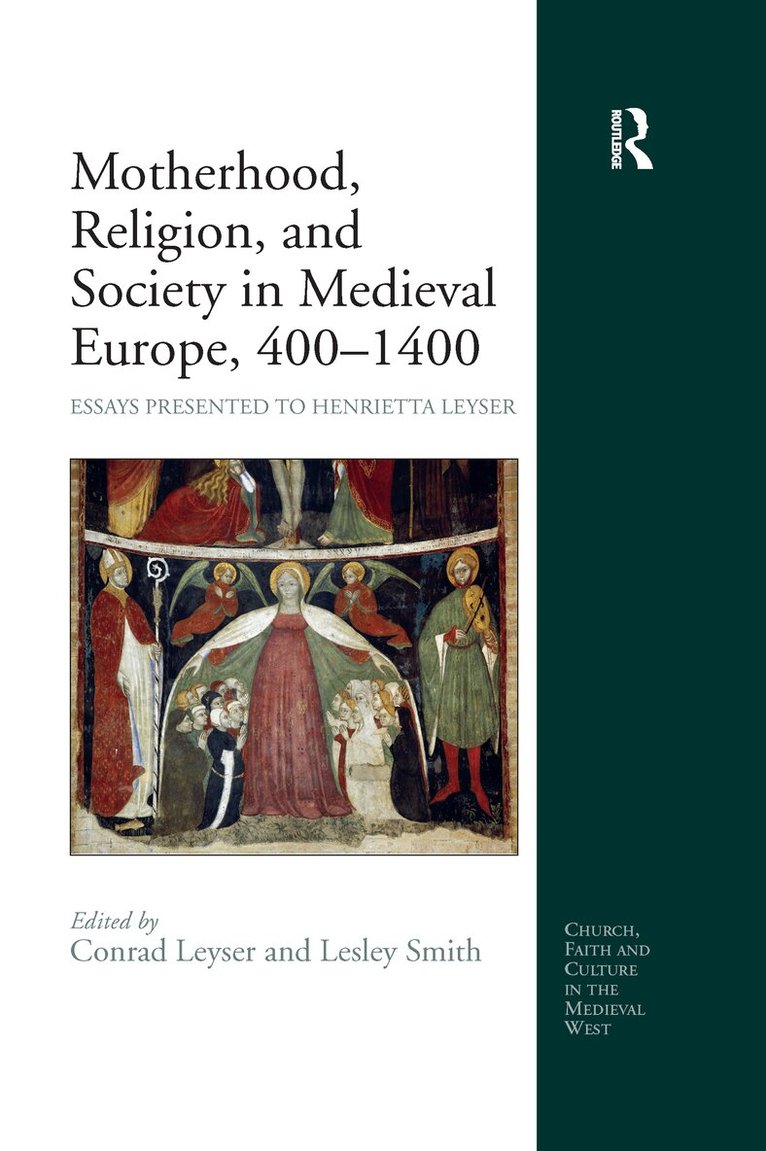
Who can concentrate on thoughts of Scripture or philosophy and be able to endure babies crying ... ? Will he put up with the constant muddle and squalor which small children bring into the home? The wealthy can do so ... but philosophers lead a very different life ... So, according to Peter Abelard, did his wife Heloise state in characteristically stark terms the antithetical demands of family and scholarship. Heloise was not alone in making this assumption. Sources from Jerome onward never cease to remind us that the life of the mind stands at odds with life in the family. For all that we have moved in the past two generations beyond kings and battles, fiefs and barons, motherhood has remained a blind spot for medieval historians. Whatever the reasons, the result is that the historiography of the medieval period is largely motherless. The aim of this book is to insist that this picture is intolerably one-dimensional, and to begin to change it. The volume is focussed on the paradox of motherhood in the European Middle Ages: to be a mother is at once to hold great power, and by the same token to be acutely vulnerable. The essays look to analyse the powers and the dangers of motherhood within the warp and weft of social history, beginning with the premise that religious discourse or practice served as a medium in which mothers (and others) could assess their situation, defend claims, and make accusations. Within this frame, three main themes emerge: survival, agency, and institutionalization. The volume spans the length and breadth of the Middle Ages, from late Roman North Africa through ninth-century Byzantium to late medieval Somerset, drawing in a range of types of historian, including textual scholars, literary critics, students of religion and economic historians. The unity of the volume arises from the very diversity of approaches within it, all addressed to the central topic.
Making Early Medieval Societies
Conflict and Belonging in the Latin West, 300-1200
Inbunden, Engelska, 2016
834 kr
Skickas inom 7-10 vardagar
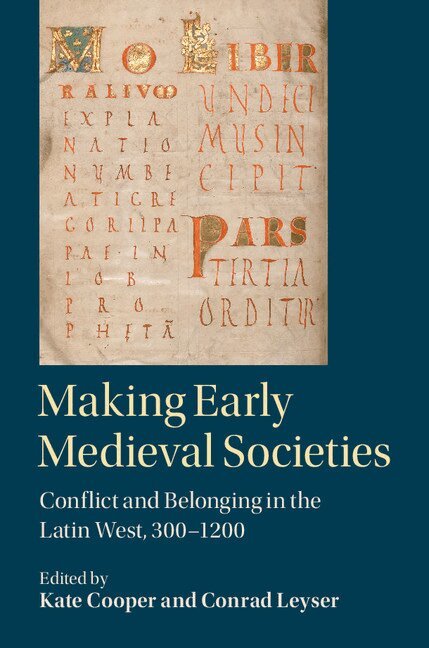
Making Early Medieval Societies explores a fundamental question: what held the small- and large-scale communities of the late Roman and early medieval West together, at a time when the world seemed to be falling apart? Historians and anthropologists have traditionally asked parallel questions about the rise and fall of empires and how societies create a sense of belonging and social order in the absence of strong governmental institutions. This book draws on classic and more recent anthropologists' work to consider dispute settlement and conflict management during and after the end of the Roman Empire. Contributions range across the internecine rivalries of late Roman bishops, the marital disputes of warrior kings, and the tension between religious leaders and the unruly crowds in western Europe after the first millennium - all considering the mechanisms through which conflict could be harnessed as a force for social stability or an engine for social change.
Making Early Medieval Societies
Conflict and Belonging in the Latin West, 300-1200
Häftad, Engelska, 2018
441 kr
Skickas inom 7-10 vardagar
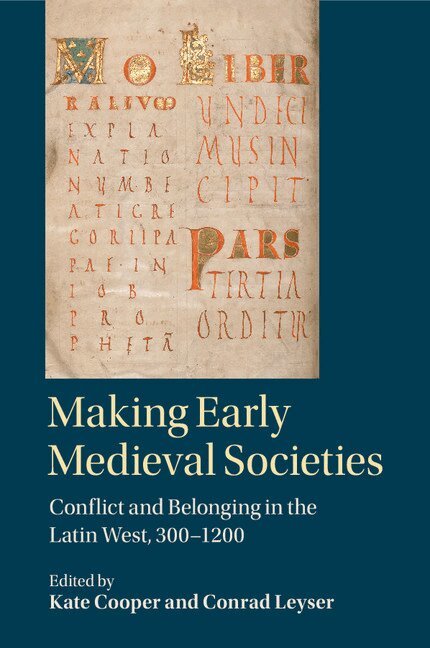
Making Early Medieval Societies explores a fundamental question: what held the small- and large-scale communities of the late Roman and early medieval West together, at a time when the world seemed to be falling apart? Historians and anthropologists have traditionally asked parallel questions about the rise and fall of empires and how societies create a sense of belonging and social order in the absence of strong governmental institutions. This book draws on classic and more recent anthropologists' work to consider dispute settlement and conflict management during and after the end of the Roman Empire. Contributions range across the internecine rivalries of late Roman bishops, the marital disputes of warrior kings, and the tension between religious leaders and the unruly crowds in western Europe after the first millennium - all considering the mechanisms through which conflict could be harnessed as a force for social stability or an engine for social change.
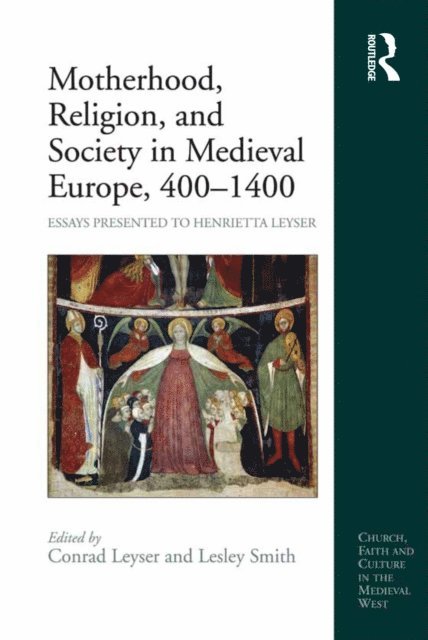
Motherhood, Religion, and Society in Medieval Europe, 400-1400
Essays Presented to Henrietta Leyser
Inbunden, Engelska, 2011
2 170 kr
Skickas inom 10-15 vardagar
Who can concentrate on thoughts of Scripture or philosophy and be able to endure babies crying ... ? Will he put up with the constant muddle and squalor which small children bring into the home? The wealthy can do so ... but philosophers lead a very different life ... So, according to Peter Abelard, did his wife Heloise state in characteristically stark terms the antithetical demands of family and scholarship. Heloise was not alone in making this assumption. Sources from Jerome onward never cease to remind us that the life of the mind stands at odds with life in the family. For all that we have moved in the past two generations beyond kings and battles, fiefs and barons, motherhood has remained a blind spot for medieval historians. Whatever the reasons, the result is that the historiography of the medieval period is largely motherless. The aim of this book is to insist that this picture is intolerably one-dimensional, and to begin to change it. The volume is focussed on the paradox of motherhood in the European Middle Ages: to be a mother is at once to hold great power, and by the same token to be acutely vulnerable. The essays look to analyse the powers and the dangers of motherhood within the warp and weft of social history, beginning with the premise that religious discourse or practice served as a medium in which mothers (and others) could assess their situation, defend claims, and make accusations. Within this frame, three main themes emerge: survival, agency, and institutionalization. The volume spans the length and breadth of the Middle Ages, from late Roman North Africa through ninth-century Byzantium to late medieval Somerset, drawing in a range of types of historian, including textual scholars, literary critics, students of religion and economic historians. The unity of the volume arises from the very diversity of approaches within it, all addressed to the central topic.