Kate Cooper - Böcker
Visar alla böcker från författaren Kate Cooper. Handla med fri frakt och snabb leverans.
17 produkter
17 produkter
Reception
2007
709 kr
Tillfälligt slut
100 inspirational interactive whiteboard lessons for every year group- perfect for the busy or less confident interactive whiteboarduser.* Essential for all Smartboard users - over 50 high-quality full-lessonNotebook files saving teachers hours of preparation.* Perfect for all levels of experience - includes use of all Notebooktools, generic support and illustrated glossary.* Includes linked photocopiable activities for work away from theboard.* Linked to the Renewed Framework for Literacy and Maths, QCA andNational Curriculum.
560 kr
Skickas inom 7-10 vardagar
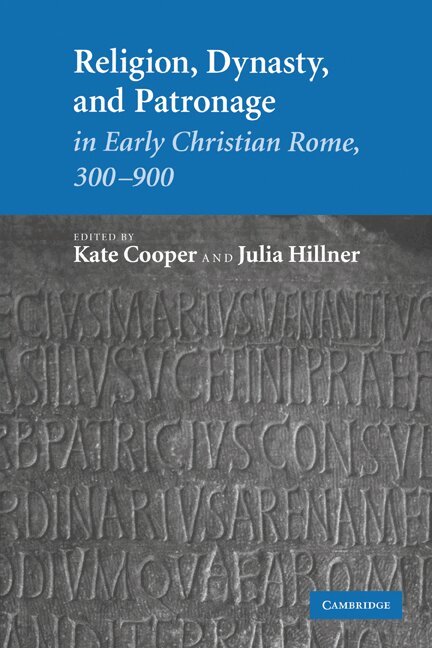
Traces the central role played by aristocratic patronage in the transformation of the city of Rome at the end of antiquity. It moves away from privileging the administrative and institutional developments related to the rise of papal authority as the paramount theme in the city's post-classical history. Instead the focus shifts to the networks of reciprocity between patrons and their dependents. Using material culture and social theory to challenge traditional readings of the textual sources, the volume undermines the teleological picture of ecclesiastical sources such as the Liber Pontificalis, and presents the lay, clerical, and ascetic populations of the city of Rome at the end of antiquity as interacting in a fluid environment of alliance-building and status negotiation. By focusing on the city whose aristocracy is the best documented of any ancient population, the volume makes an important contribution to understanding the role played by elites across the end of antiquity.
577 kr
Skickas inom 7-10 vardagar
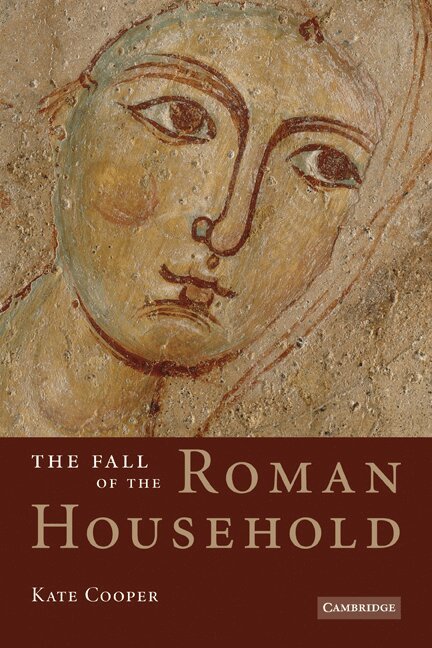
Edward Gibbon laid the fall of the Roman Empire at Christianity's door, suggesting that 'pusillanimous youth preferred the penance of the monastic to the dangers of a military life ... whole legions were buried in these religious sanctuaries'. This surprising study suggests that, far from seeing Christianity as the cause of the fall of the Roman Empire, we should understand the Christianisation of the household as a central Roman survival strategy. By establishing new 'ground rules' for marriage and family life, the Roman Christians of the last century of the Western empire found a way to re-invent the Roman family as a social institution to weather the political, military, and social upheaval of two centuries of invasion and civil war. In doing so, these men and women - both clergy and lay - found themselves changing both what it meant to be Roman, and what it meant to be Christian.
1 245 kr
Skickas inom 7-10 vardagar
Traces the central role played by aristocratic patronage in the transformation of the city of Rome at the end of antiquity. It moves away from privileging the administrative and institutional developments related to the rise of papal authority as the paramount theme in the city's post-classical history. Instead the focus shifts to the networks of reciprocity between patrons and their dependents. Using material culture and social theory to challenge traditional readings of the textual sources, the volume undermines the teleological picture of ecclesiastical sources such as the Liber Pontificalis, and presents the lay, clerical, and ascetic populations of the city of Rome at the end of antiquity as interacting in a fluid environment of alliance-building and status negotiation. By focusing on the city whose aristocracy is the best documented of any ancient population, the volume makes an important contribution to understanding the role played by elites across the end of antiquity.
807 kr
Skickas inom 7-10 vardagar
Edward Gibbon laid the fall of the Roman Empire at Christianity's door, suggesting that 'pusillanimous youth preferred the penance of the monastic to the dangers of a military life ... whole legions were buried in these religious sanctuaries'. This surprising study suggests that, far from seeing Christianity as the cause of the fall of the Roman Empire, we should understand the Christianisation of the household as a central Roman survival strategy. By establishing new 'ground rules' for marriage and family life, the Roman Christians of the last century of the Western empire found a way to re-invent the Roman family as a social institution to weather the political, military, and social upheaval of two centuries of invasion and civil war. In doing so, these men and women - both clergy and lay - found themselves changing both what it meant to be Roman, and what it meant to be Christian.
404 kr
Skickas inom 10-15 vardagar
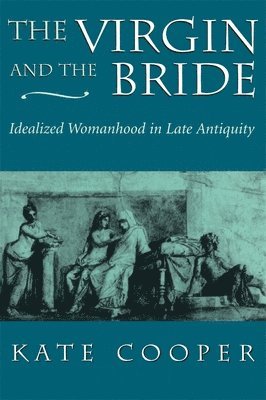
During the last centuries of the Roman Empire, the prevailing ideal of feminine virtue was radically transformed: the pure but fertile heroines of Greek and Roman romance were replaced by a Christian heroine who ardently refused the marriage bed. How this new concept and figure of purity is connected with--indeed, how it abetted--social and religious change is the subject of Kate Cooper's lively book.The Romans saw marital concord as a symbol of social unity--one that was important to maintaining the vigor and political harmony of the empire itself. This is nowhere more clear than in the ancient novel, where the mutual desire of hero and heroine is directed toward marriage and social renewal. But early Christian romance subverted the main outline of the story: now the heroine abandons her marriage partner for an otherworldly union with a Christian holy man. Cooper traces the reception of this new ascetic literature across the Roman world. How did the ruling classes respond to the Christian claim to moral superiority, represented by the new ideal of sexual purity? How did women themselves react to the challenge to their traditional role as matrons and matriarchs? In addressing these questions, Cooper gives us a vivid picture of dramatically changing ideas about sexuality, family, and morality--a cultural revolution with far-reaching implications for religion and politics, women and men.The Virgin and the Bride offers a new look at central aspects of the Christianization of the Roman world, and an engaging discussion of the rhetoric of gender and the social meaning of idealized womanhood.
Making Early Medieval Societies
Conflict and Belonging in the Latin West, 300-1200
Inbunden, Engelska, 2016
834 kr
Skickas inom 7-10 vardagar
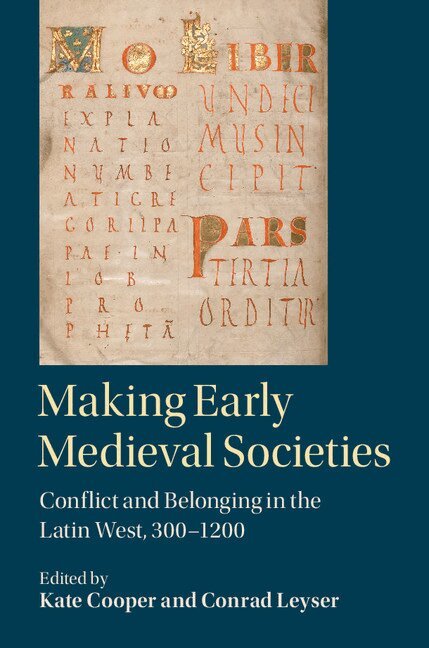
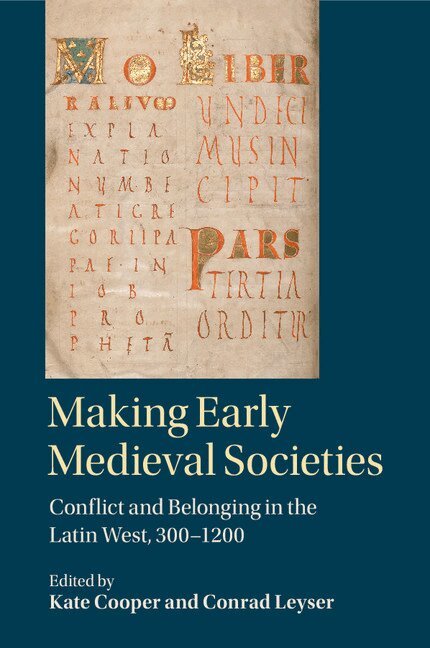
Making Early Medieval Societies explores a fundamental question: what held the small- and large-scale communities of the late Roman and early medieval West together, at a time when the world seemed to be falling apart? Historians and anthropologists have traditionally asked parallel questions about the rise and fall of empires and how societies create a sense of belonging and social order in the absence of strong governmental institutions. This book draws on classic and more recent anthropologists' work to consider dispute settlement and conflict management during and after the end of the Roman Empire. Contributions range across the internecine rivalries of late Roman bishops, the marital disputes of warrior kings, and the tension between religious leaders and the unruly crowds in western Europe after the first millennium - all considering the mechanisms through which conflict could be harnessed as a force for social stability or an engine for social change.
1 719 kr
Skickas inom 7-10 vardagar
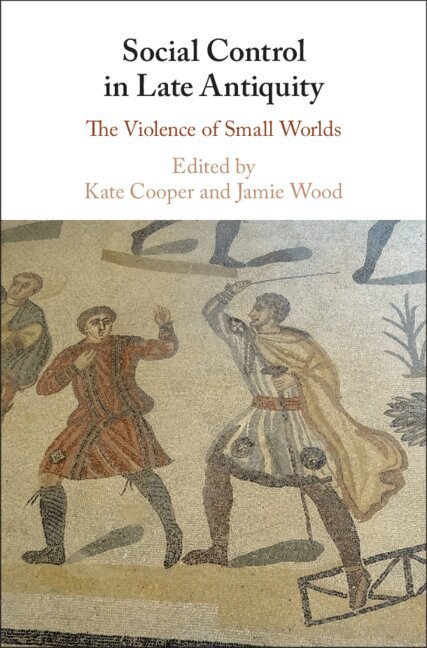
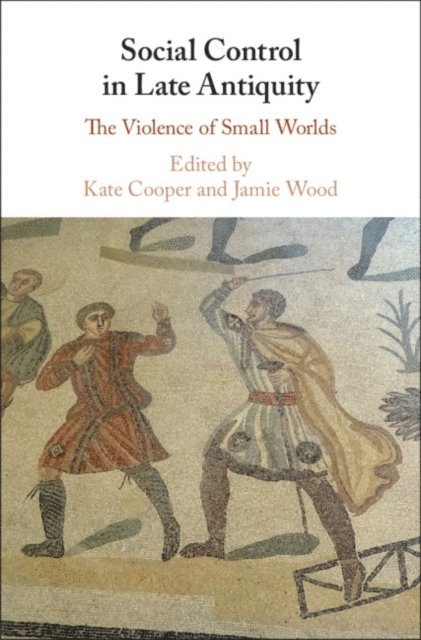
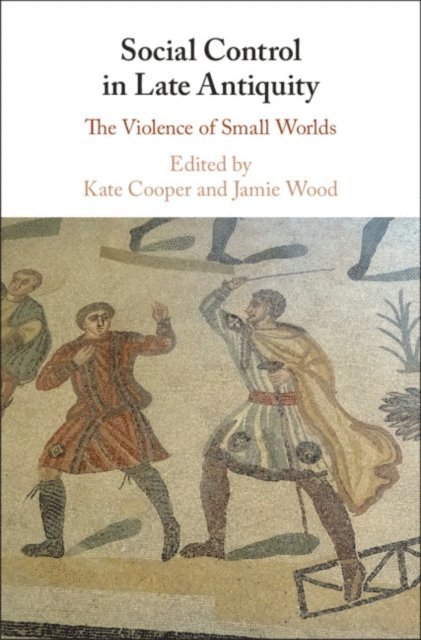
Social Control in Late Antiquity: The Violence of Small Worlds explores the small-scale communities of late antiquity - households, monasteries, and schools - where power was a question of personal relationships. When fathers, husbands, teachers, abbots, and slave-owners asserted their own will, they saw themselves as maintaining the social order, and expected law and government to reinforce their rule. Naturally, the members of these communities had their own ideas, and teaching them to 'obey their betters' was not always a straightforward business. Drawing on a wide variety of sources from across the late Roman Mediterranean, from law codes and inscriptions to monastic rules and hagiography, the book considers the sometimes conflicting identities of women, slaves, and children, and documents how they found opportunities for agency and recognition within a system built on the unremitting assertion of the rights of the powerful.
507 kr
Skickas inom 7-10 vardagar
Social Control in Late Antiquity: The Violence of Small Worlds explores the small-scale communities of late antiquity - households, monasteries, and schools - where power was a question of personal relationships. When fathers, husbands, teachers, abbots, and slave-owners asserted their own will, they saw themselves as maintaining the social order, and expected law and government to reinforce their rule. Naturally, the members of these communities had their own ideas, and teaching them to 'obey their betters' was not always a straightforward business. Drawing on a wide variety of sources from across the late Roman Mediterranean, from law codes and inscriptions to monastic rules and hagiography, the book considers the sometimes conflicting identities of women, slaves, and children, and documents how they found opportunities for agency and recognition within a system built on the unremitting assertion of the rights of the powerful.
Making Early Medieval Societies
Conflict and Belonging in the Latin West, 300-1200
Häftad, Engelska, 2018
441 kr
Skickas inom 7-10 vardagar
Making Early Medieval Societies explores a fundamental question: what held the small- and large-scale communities of the late Roman and early medieval West together, at a time when the world seemed to be falling apart? Historians and anthropologists have traditionally asked parallel questions about the rise and fall of empires and how societies create a sense of belonging and social order in the absence of strong governmental institutions. This book draws on classic and more recent anthropologists' work to consider dispute settlement and conflict management during and after the end of the Roman Empire. Contributions range across the internecine rivalries of late Roman bishops, the marital disputes of warrior kings, and the tension between religious leaders and the unruly crowds in western Europe after the first millennium - all considering the mechanisms through which conflict could be harnessed as a force for social stability or an engine for social change.
210 kr
Skickas inom 7-10 vardagar
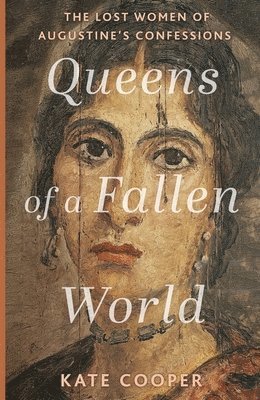
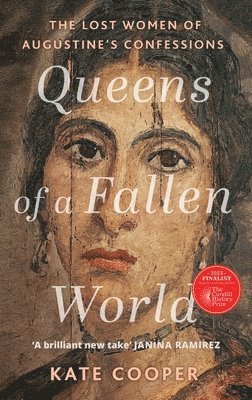
FINALIST FOR THE CUNDILL HISTORY PRIZE 2023'A brilliant new take' Janina Ramirez, author of Femina'A masterpiece of the historian's art' Peter Brown, author of Augustine of HippoThe powerful and surprising story of the four remarkable women who changed Augustine's life - and history - forever.While many know of St Augustine and the Confessions, few know of the women whose hopes and dreams shaped his early life: his mother, Monnica of Thagaste; his lover; his fiancée; and Justina, the troubled empress of ancient Rome. Drawing upon their depictions in the Confessions, historian Kate Cooper skilfully reconstructs their lives against the backdrop of the late Roman Empire to paint a vivid portrait of the turbulent society they and Augustine moved through. She shows how despite their often precarious position, these women tried in their different ways to influence the world around them and argues that Augustine did not end his engagement because he was called by God, but because he considered the potential marriage to be an unforgiveable betrayal of his lover.Vividly written and drawing on extensive new research, Queens of a Fallen World is essential reading for those looking for a new understanding not only of Augustine, but also of the women who shaped his life with consequences that were to change Christianity for centuries to come.
138 kr
Skickas inom 7-10 vardagar
FINALIST FOR THE CUNDILL HISTORY PRIZE 2023'A brilliant new take' Janina Ramirez, author of Femina'A masterpiece of the historian's art' Peter Brown, author of Augustine of HippoThe powerful and surprising story of the four remarkable women who changed Augustine's life - and history - forever.While many know of St Augustine and the Confessions, few know of the women whose hopes and dreams shaped his early life: his mother, Monnica of Thagaste; his lover; his fiancée; and Justina, the troubled empress of ancient Rome. Drawing upon their depictions in the Confessions, historian Kate Cooper skilfully reconstructs their lives against the backdrop of the late Roman Empire to paint a vivid portrait of the turbulent society they and Augustine moved through. She shows how despite their often precarious position, these women tried in their different ways to influence the world around them and argues that Augustine did not end his engagement because he was called by God, but because he considered the potential marriage to be an unforgiveable betrayal of his lover.Vividly written and drawing on extensive new research, Queens of a Fallen World is essential reading for those looking for a new understanding not only of Augustine, but also of the women who shaped his life with consequences that were to change Christianity for centuries to come.
248 kr
Skickas inom 3-6 vardagar
362 kr
Skickas inom 3-6 vardagar
86 kr
Skickas
149 kr
Tillfälligt slut
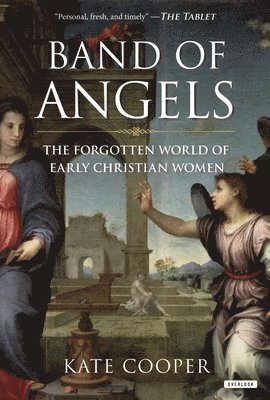
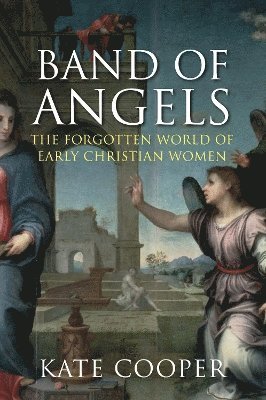
In Band of Angels, Kate Cooper tells the surprising story of early Christianity from the woman's point of view. Though they are often forgotten, women from all walks of life played an invaluable role in Christianity's growth to become a world religion.Peasants, empresses, and independent businesswomen contributed what they could to an emotional revolution unlike anything the ancient world had ever seen. By mobilizing friends and family to spread the word from household to household, they created a wave of change not unlike modern 'viral' marketing. For the most part, women in the ancient world lived out their lives almost invisibly in a man's world. Piecing together their history from the few contemporary accounts that have survived requires painstaking detective work. Yet a careful re-reading of ancient sources yields a vivid picture, and shows how daily life and the larger currents of history shaped one another. This remarkable book tells the story of how a new way of understanding relationships took root in the ancient world. By sharing the ideas that had inspired them, ancient women changed their own lives. But they did something more: they changed the world around them, and in doing so, they created an enduring legacy. Their story is a testament to what invisible people can achieve, and to how the power of ideas can change history.
189 kr
Skickas inom 5-8 vardagar