Costis Hadjimichalis - Böcker
Visar alla böcker från författaren Costis Hadjimichalis. Handla med fri frakt och snabb leverans.
4 produkter
4 produkter
617 kr
Skickas inom 10-15 vardagar
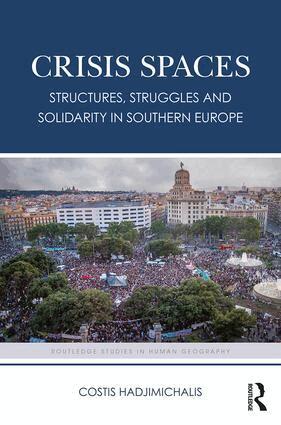
The financial malaise that has affected the Eurozone countries of southern Europe – Spain, Portugal, Italy and, in its most extreme case, Greece – has been analysed using mainly macroeconomic and financial explanations. This book shifts the emphasis from macroeconomics to the relationship between uneven geographical development, financialisation and politics. It deconstructs the myth that debt, both public and private, in Southern Europe is the sole outcome of the spendthrift ways of Greece, Spain, Italy and Portugal, offering a fresh perspective on the material, social and ideological parameters of the economic crisis and the spaces where it unfolded.Featuring a range of case examples that complement and expand the main discussion, Crisis Spaces will appeal to students and scholars of human geography, economics, regional development, political science, cultural studies and social movements studies.
4 214 kr
Skickas inom 7-10 vardagar
Looks at the the emergence of new forms of marginality as part of the new map of Europe. The contributors focus on regions, cities, and social groups which at first sight are missing out; the people and places on the edge of dominant economic, political and cultural systems which carry the stigma of marginality.
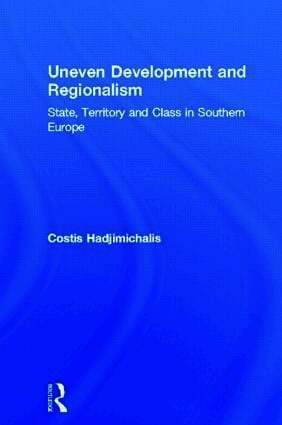
Uneven Development and Regionalism
State, Territory and Class in Southern Europe
Inbunden, Engelska, 1986
1 363 kr
Skickas inom 10-15 vardagar
Published in the year 1986, Uneven Development and Regionalism is a valuable contribution to the field of Geography.
2 088 kr
Skickas inom 10-15 vardagar
The financial malaise that has affected the Eurozone countries of southern Europe – Spain, Portugal, Italy and, in its most extreme case, Greece – has been analysed using mainly macroeconomic and financial explanations. This book shifts the emphasis from macroeconomics to the relationship between uneven geographical development, financialization and politics. It deconstructs the myth that debt, both public and private, in Southern Europe is the sole outcome of the spendthrift ways of Greece, Spain, Italy and Portugal, offering a fresh perspective on the material, social and ideological parameters of the economic crisis and the spaces where it unfolded.Featuring a range of case examples that complement and expand the main discussion, Crisis Spaces will appeal to students and scholars of human geography, economics, regional development, political science, cultural studies and social movements studies.