Craig Stanford - Böcker
Visar alla böcker från författaren Craig Stanford. Handla med fri frakt och snabb leverans.
9 produkter
9 produkter
1 531 kr
Skickas inom 7-10 vardagar
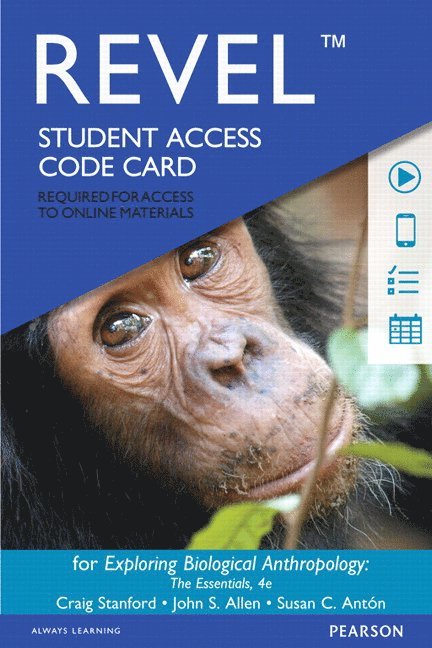
Present a concise overview of biological anthropology, from early foundations to recent innovations REVEL™ for Exploring Biological Anthropology: The Essentials combines concise coverage of the foundations of the field with modern innovations and discoveries, helping students understand, and get excited about, the discipline. Because the authors conduct research in three of the main areas of biological anthropology — the human fossil record (Susan Antón), primate behavior and ecology (Craig Stanford), and human biology and the brain (John Allen) — they offer a specialist approach that engages students and gives them everything they need to master the subject. REVEL for the Fourth Edition continues to present traditional physical anthropology within a modern Darwinian framework, and includes coverage of contemporary discoveries to highlight the ever-increasing body of knowledge in biological anthropology. REVEL is Pearson’s newest way of delivering our respected content. Fully digital and highly engaging, REVEL replaces the textbook and gives students everything they need for the course. Informed by extensive research on how people read, think, and learn, REVEL is an interactive learning environment that enables students to read, practice, and study in one continuous experience — for less than the cost of a traditional textbook. NOTE: REVEL is a fully digital delivery of Pearson content. This ISBN is for the standalone REVEL access card. In addition to this access card, you will need a course invite link, provided by your instructor, to register for and use REVEL.
1 689 kr
Skickas inom 3-6 vardagar
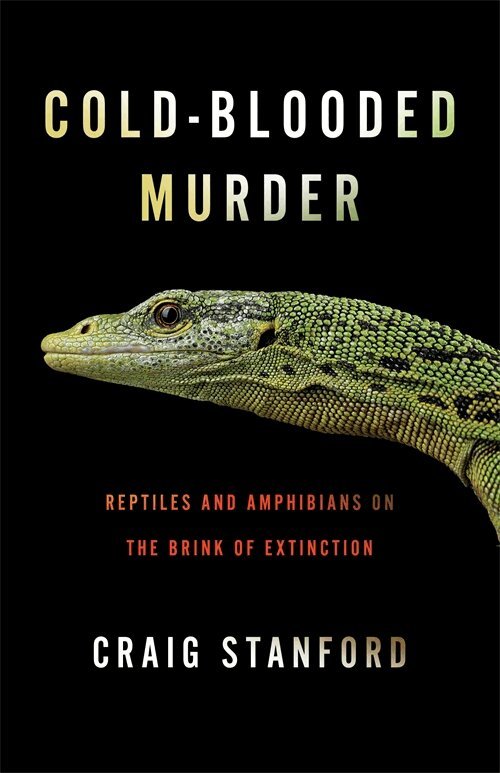
Around the world, many reptile and amphibian species—from the iconic Komodo dragon to the unglamorous Telfair’s skink—are facing grave threats to their survival. For many, like the Belalanda chameleon of Madagascar and Mexico’s beloved axolotls, habitat destruction due to logging, agriculture, and development poses the greatest peril. Some, such as Galápagos giant tortoises, have been slaughtered wholesale by humans. Others, like Caribbean rock iguanas, have been driven to the brink of extinction by the introduction of new species to their island homes. Commercial exploitation is another risk to animals like the ploughshare tortoise, in high demand in the global black market pet trade, and the Cuban crocodile, prized for its skin. Still more, like Yosemite toads, face new threats as climate change accelerates.In Cold-Blooded Murder, Craig Stanford tells the captivating stories of dozens of endangered reptiles and amphibians, depicting the ecological roles and unique characteristics of each species. He takes readers on a globe-spanning journey, revealing the diversity and beauty of the creatures with whom we share our world. Stanford considers the commonalities and differences in how these species came to be threatened with extinction, underscoring human culpability as well as the complexity of each situation. He also highlights conservation projects that are protecting critically endangered animals, sharing inspiring success stories while acknowledging the difficulty of saving species. This gripping and poignant book shows why we should be fascinated by reptiles and amphibians—and strive to prevent their extinction.
276 kr
Skickas
Around the world, many reptile and amphibian species—from the iconic Komodo dragon to the unglamorous Telfair’s skink—are facing grave threats to their survival. For many, like the Belalanda chameleon of Madagascar and Mexico’s beloved axolotls, habitat destruction due to logging, agriculture, and development poses the greatest peril. Some, such as Galápagos giant tortoises, have been slaughtered wholesale by humans. Others, like Caribbean rock iguanas, have been driven to the brink of extinction by the introduction of new species to their island homes. Commercial exploitation is another risk to animals like the ploughshare tortoise, in high demand in the global black market pet trade, and the Cuban crocodile, prized for its skin. Still more, like Yosemite toads, face new threats as climate change accelerates.In Cold-Blooded Murder, Craig Stanford tells the captivating stories of dozens of endangered reptiles and amphibians, depicting the ecological roles and unique characteristics of each species. He takes readers on a globe-spanning journey, revealing the diversity and beauty of the creatures with whom we share our world. Stanford considers the commonalities and differences in how these species came to be threatened with extinction, underscoring human culpability as well as the complexity of each situation. He also highlights conservation projects that are protecting critically endangered animals, sharing inspiring success stories while acknowledging the difficulty of saving species. This gripping and poignant book shows why we should be fascinated by reptiles and amphibians—and strive to prevent their extinction.
180 kr
Skickas inom 5-8 vardagar
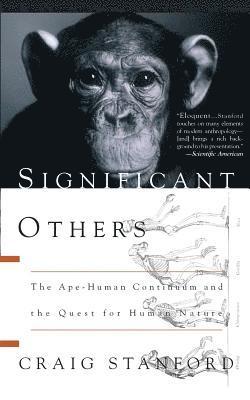
Evolutionary scientists know that the line that divides humans from other animals has grown increasingly blurry, yet many other fields, especially in the social sciences, have not really absorbed this knowledge. At the same time, the knowledge that all humans are genetically and cognitively modern has left the apes as our only true "savages." Thus if we want to learn about human nature and how we came to be as we are, we must look to the apes. In this sweeping, fresh, controversial book, primatologist Craig Stanford does just that, giving us fascinating insights- and debunks many myths- about infanticide, mating practices, and the origins of human cognition.
374 kr
Skickas inom 10-15 vardagar
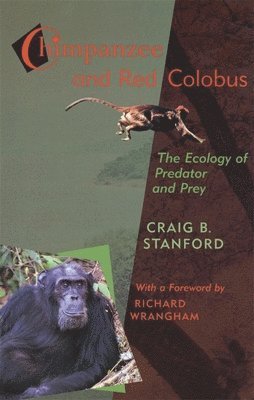
Our closest living relatives, the chimpanzees, are familiar enough--bright and ornery and promiscuous. But they also kill and eat their kin, in this case the red colobus monkey, which may say something about primate--even hominid--evolution. This book, the first long-term field study of a predator-prey relationship involving two wild primates, documents a six-year investigation into how the risk of predation molds primate society. Taking us to Gombe National Park in Tanzania, a place made famous by Jane Goodall's studies, the book offers a close look at how predation by wild chimpanzees--observable in the park as nowhere else--has influenced the behavior, ecology, and demography of a population of red colobus monkeys.As he explores the effects of chimpanzees' hunting, Craig Stanford also asks why these creatures prey on the red colobus. Because chimpanzees are often used as models of how early humans may have lived, Stanford's findings offer insight into the possible role of early hominids as predators, a little understood aspect of human evolution.The first book-length study in a newly emerging genre of primate field study, Chimpanzee and Red Colobus expands our understanding of not just these two primate societies, but also the evolutionary ecology of predators and prey in general.
316 kr
Skickas inom 10-15 vardagar
Apes and dolphins: primates and cetaceans. Could any creatures appear to be more different? Yet both are large-brained intelligent mammals with complex communication and social interaction. In the first book to study apes and dolphins side by side, Maddalena Bearzi and Craig B. Stanford, a dolphin biologist and a primatologist who have spent their careers studying these animals in the wild, combine their insights with compelling results. Beautiful Minds explains how and why apes and dolphins are so distantly related yet so cognitively alike and what this teaches us about another large-brained mammal: Homo sapiens. Noting that apes and dolphins have had no common ancestor in nearly 100 million years, Bearzi and Stanford describe the parallel evolution that gave rise to their intelligence. And they closely observe that intelligence in action, in the territorial grassland and rainforest communities of chimpanzees and other apes, and in groups of dolphins moving freely through open coastal waters. The authors detail their subjects’ ability to develop family bonds, form alliances, and care for their young. They offer an understanding of their culture, politics, social structure, personality, and capacity for emotion. The resulting dual portrait—with striking overlaps in behavior—is key to understanding the nature of “beautiful minds.”
298 kr
Skickas inom 10-15 vardagar
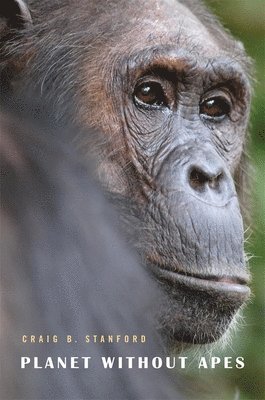
Planet Without Apes demands that we consider whether we can live with the consequences of wiping our closest relatives off the face of the Earth. Leading primatologist Craig Stanford warns that extinction of the great apes—chimpanzees, bonobos, gorillas, and orangutans—threatens to become a reality within just a few human generations. We are on the verge of losing the last links to our evolutionary past, and to all the biological knowledge about ourselves that would die along with them. The crisis we face is tantamount to standing aside while our last extended family members vanish from the planet.Stanford sees great apes as not only intelligent but also possessed of a culture: both toolmakers and social beings capable of passing cultural knowledge down through generations. Compelled by his field research to take up the cause of conservation, he is unequivocal about where responsibility for extinction of these species lies. Our extermination campaign against the great apes has been as brutal as the genocide we have long practiced on one another. Stanford shows how complicity is shared by people far removed from apes’ shrinking habitats. We learn about extinction’s complex links with cell phones, European meat eaters, and ecotourism, along with the effects of Ebola virus, poverty, and political instability.Even the most environmentally concerned observers are unaware of many specific threats faced by great apes. Stanford fills us in, and then tells us how we can redirect the course of an otherwise bleak future.
330 kr
Skickas inom 10-15 vardagar
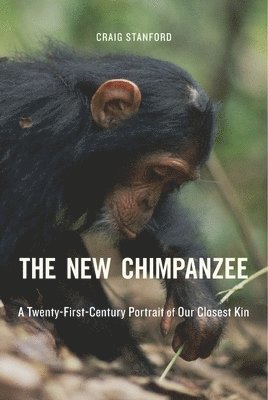
Recent discoveries about wild chimpanzees have dramatically reshaped our understanding of these great apes and their kinship with humans. We now know that chimpanzees not only have genomes similar to our own but also plot political coups, wage wars over territory, pass on cultural traditions to younger generations, and ruthlessly strategize for resources, including sexual partners. In The New Chimpanzee, Craig Stanford challenges us to let apes guide our inquiry into what it means to be human.With wit and lucidity, Stanford explains what the past two decades of chimpanzee field research has taught us about the origins of human social behavior, the nature of aggression and communication, and the divergence of humans and apes from a common ancestor. Drawing on his extensive observations of chimpanzee behavior and social dynamics, Stanford adds to our knowledge of chimpanzees’ political intelligence, sexual power plays, violent ambition, cultural diversity, and adaptability.The New Chimpanzee portrays a complex and even more humanlike ape than the one Jane Goodall popularized more than a half century ago. It also sounds an urgent call for the protection of our nearest relatives at a moment when their survival is at risk.
284 kr
Skickas inom 3-6 vardagar
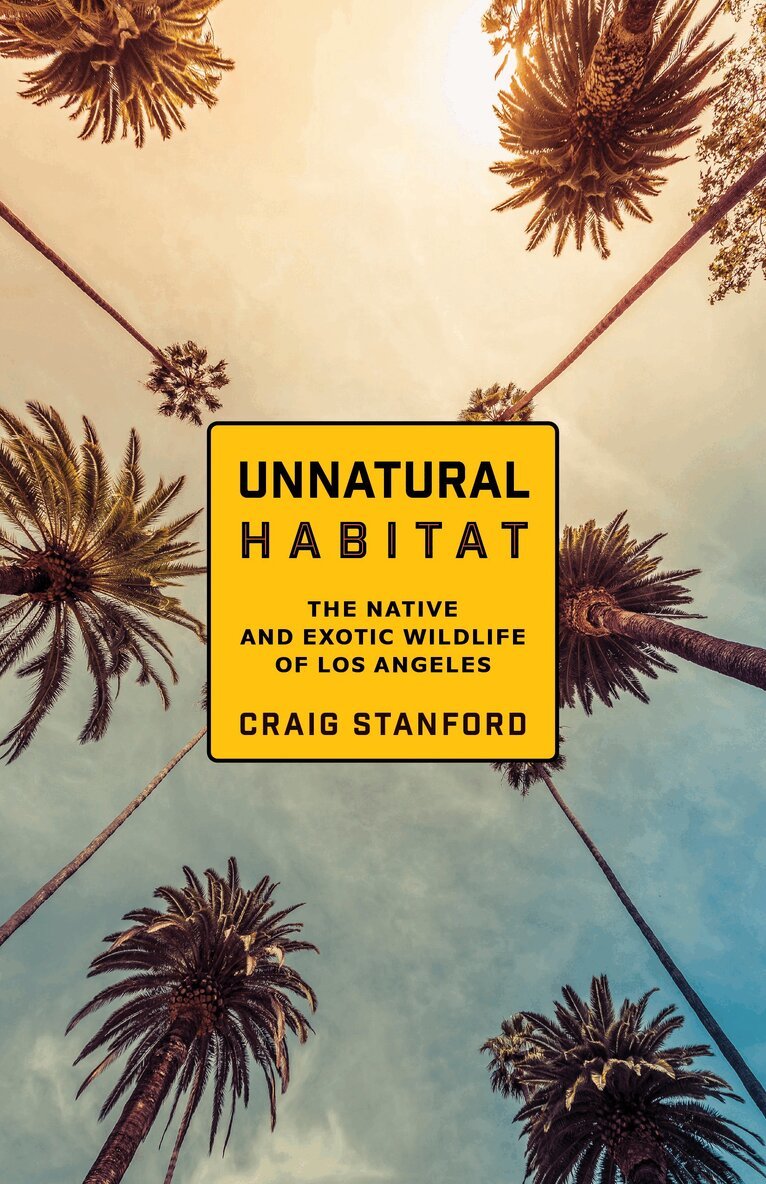
A guide to the ecosystem famously known as Los Angeles, from a field biologist and longtime San Gabriel Valley resident."A worthy and illuminating entry in the tradition of works exploring urbanization’s effect on the environment." —Los Angeles TimesWithin the sprawling metropolis of Los Angeles and its suburbs, residents coexist—often unknowingly—with a bustling mosaic of native and introduced wildlife. Conservationist Craig Stanford, whose research has taken him around the world, now takes a deep dive into the natural history of his Southern California home. Stanford's informed and vivid accounts of more than 150 species entreat us to appreciate the ecological marvels of sagebrush and skunks and skippers, the iconic palms of LA lore, and the mountain lions still roaming the hills.These portraits of the glamorous, humble, irritating, and altogether fascinating species that live alongside Angelenos urge us to recognize that even in a jungle of concrete, we live within nature. Witty and captivating, and combining cutting-edge research with his own critter encounters, Stanford demonstrates the beauty of shaping our cities to support biodiversity, and he warns against the threats that can tip urban ecosystems out of balance, leaving us in a much lonelier world.