Cristina Johnston - Böcker
Visar alla böcker från författaren Cristina Johnston. Handla med fri frakt och snabb leverans.
4 produkter
4 produkter
1 004 kr
Skickas inom 7-10 vardagar
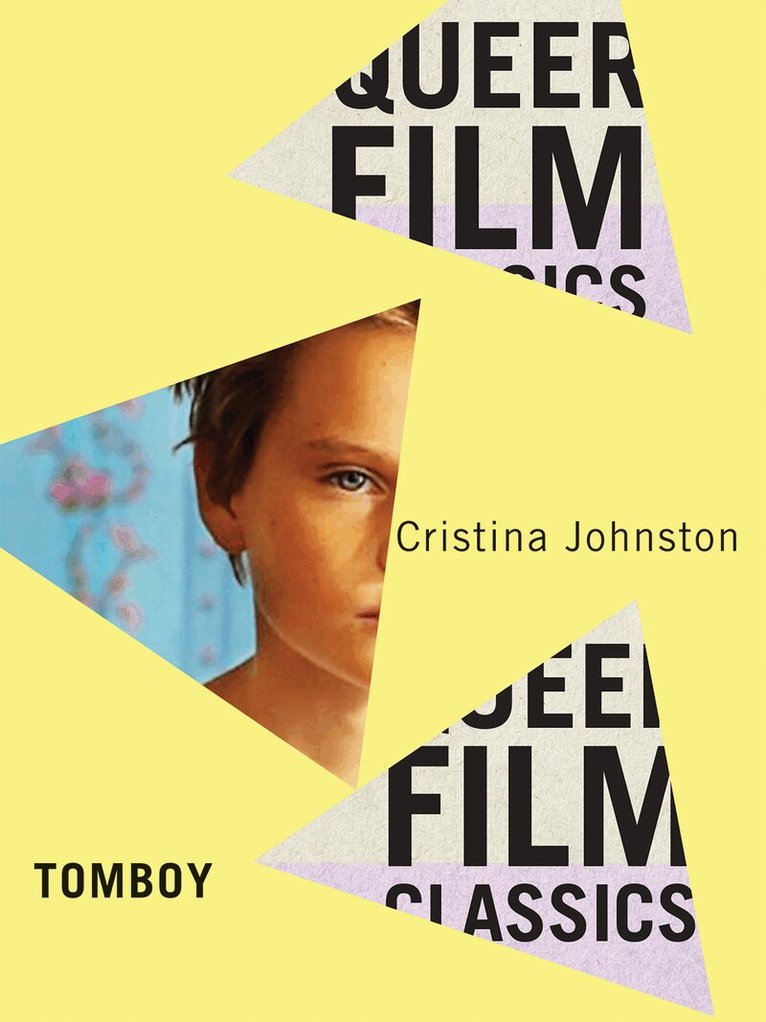
Céline Sciamma’s 2011 film Tomboy is the central work in the French filmmaker’s coming-of-age trilogy. Bracketed between La Naissance des pieuvres / Waterlilies (2007), an examination of girlhood and teenage desire, and the 2014 film Bande de filles / Girlhood, about the lives of a group of Black girls in their late teens living in the Paris suburbs, Tomboy is a quiet, understated examination of gender and queer selfhood amidst the shifting sands of late childhood and early adolescence.Tomboy is an intimate and luminous film, tender but stark, and never sentimental. Written, cast, and filmed in a matter of months, it follows the experiences and burgeoning friendships of a ten-year-old child who moves to a new town during the summer holidays. First introducing themself as Mikaël, they are, we later learn, Laure to their parents and younger sister. Sciamma’s film is not interested in why the character is passing but in how. Cristina Johnston focuses on specific elements of Mikaël/Laure’s haptic and spatial experience, showing how the filmmaker’s signature engagement with surfaces and textures allows queer potentialities to unfold organically.While Johnston centres her analysis on Tomboy, she also connects the film to broader themes within Sciamma’s trilogy, public reception of the films, and the significance of Sciamma’s identity as a queer director. Ultimately the book offers insight into a film that deserves to be watched and appreciated for its nuanced portrayal of childhood, queerness, and passing as experience rather than ideology.
204 kr
Skickas inom 7-10 vardagar
Céline Sciamma’s 2011 film Tomboy is the central work in the French filmmaker’s coming-of-age trilogy. Bracketed between La Naissance des pieuvres / Waterlilies (2007), an examination of girlhood and teenage desire, and the 2014 film Bande de filles / Girlhood, about the lives of a group of Black girls in their late teens living in the Paris suburbs, Tomboy is a quiet, understated examination of gender and queer selfhood amidst the shifting sands of late childhood and early adolescence.Tomboy is an intimate and luminous film, tender but stark, and never sentimental. Written, cast, and filmed in a matter of months, it follows the experiences and burgeoning friendships of a ten-year-old child who moves to a new town during the summer holidays. First introducing themself as Mikaël, they are, we later learn, Laure to their parents and younger sister. Sciamma’s film is not interested in why the character is passing but in how. Cristina Johnston focuses on specific elements of Mikaël/Laure’s haptic and spatial experience, showing how the filmmaker’s signature engagement with surfaces and textures allows queer potentialities to unfold organically.While Johnston centres her analysis on Tomboy, she also connects the film to broader themes within Sciamma’s trilogy, public reception of the films, and the significance of Sciamma’s identity as a queer director. Ultimately the book offers insight into a film that deserves to be watched and appreciated for its nuanced portrayal of childhood, queerness, and passing as experience rather than ideology.
Del 97 - Modern French Identities
New Queer Images
Representations of Homosexualities in Contemporary Francophone Visual Cultures
Häftad, Engelska, 2011
496 kr
Tillfälligt slut
Since the early 1980s, there has been a dramatic increase in the number of international gay/lesbian-themed visual productions, ranging from pornographic images and television programmes to advertising and graphic novels. Often originating from countries with a multicultural tradition (most notably Great Britain and the United States), this cultural phenomenon has now reached many territories, including the French-speaking world.What are the thematic and aesthetic convergences/divergences of such visual productions? Do such works develop problematics and approaches specific to areas such as metropolitan France or French-speaking Canada? The eleven essays included in this collection (two in English and nine in French) aim to answer these questions by offering in-depth and challenging discussions of various queer-themed visual productions made in a contemporary Francophone context. Each contribution focuses on specific case studies drawn from auteur, pornographic and experimental cinemas, as well as those based on analyses of images from television, printed media and contemporary art.
Del 98 - Modern French Identities
Cinematic Queerness
Gay and Lesbian Hypervisibility in Contemporary Francophone Feature Films
Häftad, Engelska, 2011
611 kr
Skickas inom 5-8 vardagar
The last three decades have witnessed the proliferation of gay/lesbian-themed films both on our screens and at international film festivals. This trend – termed ‘hypervisibility’ by Julianne Pidduck – has gone far beyond the boundaries of countries with a multicultural tradition and now reaches many territories, including the French-speaking world. What is the narrative and thematic originality of such films in French-speaking contexts? Do such feature films develop problematics and approaches specific to areas such as metropolitan France or Francophone Canada?The sixteen essays included in this collection (six in English and ten in French) aim to answer to such questions by offering in-depth and challenging discussions of film productions from France and Quebec, ranging from Patrice Chéreau’s L’Homme blessé/The Wounded Man (1983) via Josiane Balasko’s Gazon maudit (1995) to Jean-Marc Vallée’s C.R.A.Z.Y. (2005). Works by Olivier Ducastel and Jacques Martineau, Sébastien Lifshitz, Gaël Morel, François Ozon and Léa Pool are also examined.