Cristy Clark - Böcker
Visar alla böcker från författaren Cristy Clark. Handla med fri frakt och snabb leverans.
4 produkter
4 produkter
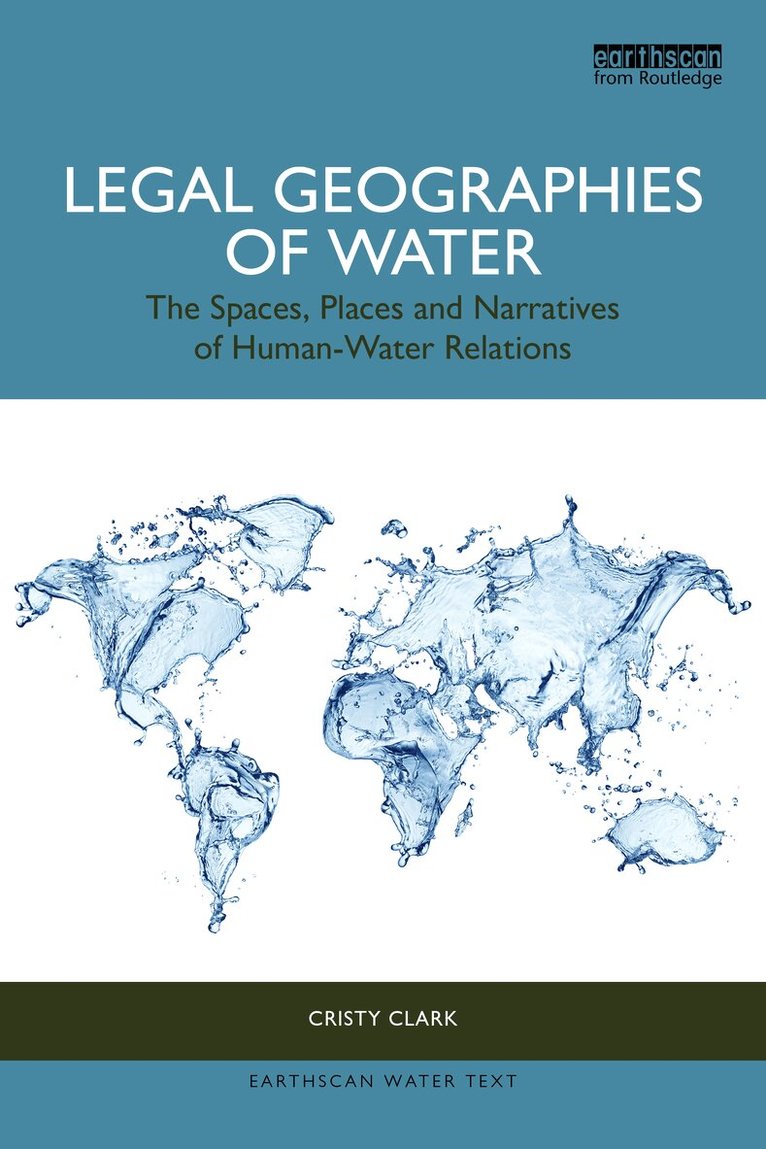
Legal Geographies of Water
The Spaces, Places and Narratives of Human-Water Relations
Häftad, Engelska, 2025
530 kr
Skickas inom 10-15 vardagar
This book deepens our understanding of humanity’s diverse relationships with water and the law, providing a critical assessment of this relationship, and charting the course towards a more sustainable and just water future.By using legal geography, this book pays particular attention to the place-based inter-relationships between water, people, and law (both formal and informal) and to the ways that law both constitutes and is constituted by the relationship between people and place. Starting in the 1980s, Chapter 2 investigates the early commodification of water through the liberalisation of rural water markets in Chile and the urban water supply and sanitation systems of England and Wales. Chapter 3 then examines the global expansion of neoliberal water governance in the 1990s, starting with donor-driven reforms in the global south and particularly Manila in the Philippines. Chapters 4 and 5 document both the grassroots response to these neoliberal water reforms and the inherent tensions in the attempts of the early 2000s to reconcile the recognition of a human right to water with the ongoing rollout of market mechanisms, both in the domestic context of South Africa and within the United Nations human rights system. Moving forward again, Chapter 6 examines the recent intensification of neoliberal water governance through financialisation and considers its specific impacts in Detroit and Flint, Michigan. Chapter 7 then considers the renewed global emphasis on living waters and Indigenous ontologies of water by examining the new legislative arrangements for the Whanganui River in Aotearoa, New Zealand. The book concludes in Chapter 8 by highlighting the stories of hope that can be found in many of the case studies explored in the book and in emerging examples from around the world.This book is essential reading for students and scholars interested in water law, security, and justice from across a wide range of disciplines, including environmental studies, law, geography, human rights, and political ecology.
Legal Geographies of Water
The Spaces, Places and Narratives of Human-Water Relations
Inbunden, Engelska, 2025
1 921 kr
Skickas inom 10-15 vardagar
This book deepens our understanding of humanity’s diverse relationships with water and the law, providing a critical assessment of this relationship, and charting the course towards a more sustainable and just water future.By using legal geography, this book pays particular attention to the place-based inter-relationships between water, people, and law (both formal and informal) and to the ways that law both constitutes and is constituted by the relationship between people and place. Starting in the 1980s, Chapter 2 investigates the early commodification of water through the liberalisation of rural water markets in Chile and the urban water supply and sanitation systems of England and Wales. Chapter 3 then examines the global expansion of neoliberal water governance in the 1990s, starting with donor-driven reforms in the global south and particularly Manila in the Philippines. Chapters 4 and 5 document both the grassroots response to these neoliberal water reforms and the inherent tensions in the attempts of the early 2000s to reconcile the recognition of a human right to water with the ongoing rollout of market mechanisms, both in the domestic context of South Africa and within the United Nations human rights system. Moving forward again, Chapter 6 examines the recent intensification of neoliberal water governance through financialisation and considers its specific impacts in Detroit and Flint, Michigan. Chapter 7 then considers the renewed global emphasis on living waters and Indigenous ontologies of water by examining the new legislative arrangements for the Whanganui River in Aotearoa, New Zealand. The book concludes in Chapter 8 by highlighting the stories of hope that can be found in many of the case studies explored in the book and in emerging examples from around the world.This book is essential reading for students and scholars interested in water law, security, and justice from across a wide range of disciplines, including environmental studies, law, geography, human rights, and political ecology.
1 735 kr
Skickas inom 3-6 vardagar
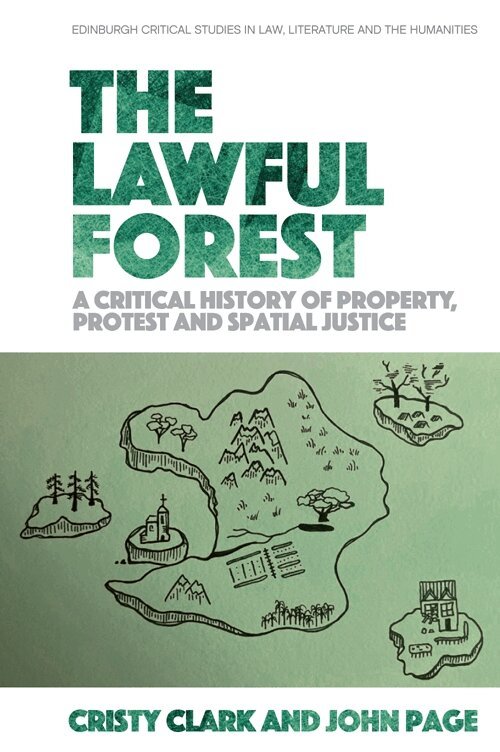
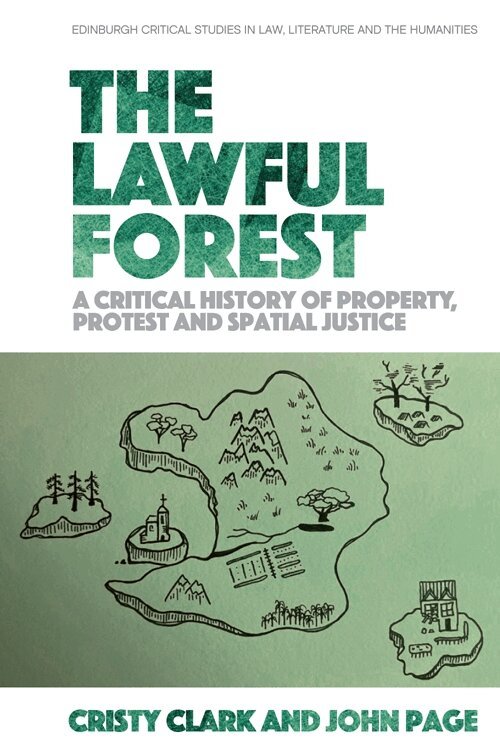
This book is a study of the critical history of space, and the ways in which a dominant property ideology has entrenched an exclusionary and profoundly alienating version of spatial ordering. It focuses on select periods in time, when the seemingly linear trajectory of enclosure momentarily wavers and alternate spatial paths briefly materialize, before 'disappearing' from plain sight. Using the forest as a thematic device, Clark and Page explore the tensions that pervade our propertied relationships; between commodity and community, abstraction and context, and private enclosure and the public square.The book draws on a range of case studies including the 13th century Forest Charter, Thomas More's Utopia, the Diggers' radical agrarianism, the Paris Commune's battle for the right to the city, and Australian forest protestors of the late 20th and early 21st centuries. Through analysis of these movements and their contexts, the authors illustrate the origin, history and legal status of the lawful forest and its modern-day companions. Although the dominant spatial paradigm is one where private rights prevail, this book shows that communal relationships with land have always been part of our law and culture.
284 kr
Skickas
Using the forest as a thematic device, Clark and Page explore the tensions that pervade our propertied relationships; between commodity and community, abstraction and context, and private enclosure and the public square. They draw on a range of case studies including the 13th century Forest Charter, Thomas More's Utopia, the Diggers' radical agrarianism, the Paris Commune's battle for the right to the city, and Australian forest protestors of the late 20th and early 21st centuries. By analysing these movements and their contexts, Clark and Page illustrate the origin, history and legal status of the lawful forest and its modern-day companions. Although the dominant spatial paradigm is one where private rights prevail, this book shows that communal relationships with land have always been part of our law and culture.