Curtis Marez - Böcker
Visar alla böcker från författaren Curtis Marez. Handla med fri frakt och snabb leverans.
6 produkter
6 produkter
1 513 kr
Skickas inom 3-6 vardagar
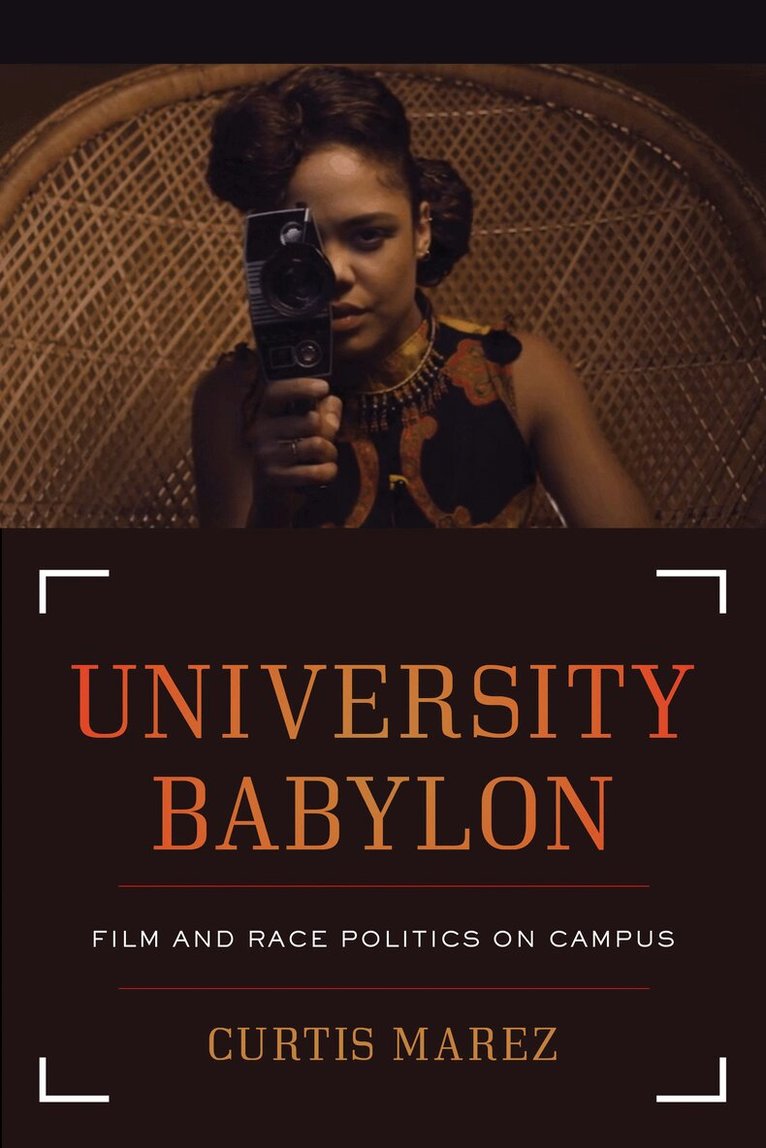
From the silent era to the present, film productions have shaped the way the public views campus life. Collaborations between universities and Hollywood entities have disseminated influential ideas of race, gender, class, and sexual difference. Even more directly, Hollywood has drawn writers, actors, and other talent from ranks of professors and students while also promoting the industry in classrooms, curricula, and film studies programs. In addition to founding film schools, university administrators have offered campuses as filming locations. In University Babylon, Curtis Marez argues that cinema has been central to the uneven incorporation and exclusion of different kinds of students, professors, and knowledge. Working together, Marez argues, film and educational institutions have produced a powerful ideology that links respectability to academic merit in order to marginalize and manage people of color. Combining concepts and methods from critical university studies, ethnic studies, native studies, and film studies, University Babylon analyzes the symbolic and institutional collaborations between Hollywood filmmakers and university administrators over the representation of students and, by extension, college life more broadly.
250 kr
Skickas inom 7-10 vardagar
From the silent era to the present, film productions have shaped the way the public views campus life. Collaborations between universities and Hollywood entities have disseminated influential ideas of race, gender, class, and sexual difference. Even more directly, Hollywood has drawn writers, actors, and other talent from ranks of professors and students while also promoting the industry in classrooms, curricula, and film studies programs. In addition to founding film schools, university administrators have offered campuses as filming locations. In University Babylon, Curtis Marez argues that cinema has been central to the uneven incorporation and exclusion of different kinds of students, professors, and knowledge. Working together, Marez argues, film and educational institutions have produced a powerful ideology that links respectability to academic merit in order to marginalize and manage people of color. Combining concepts and methods from critical university studies, ethnic studies, native studies, and film studies, University Babylon analyzes the symbolic and institutional collaborations between Hollywood filmmakers and university administrators over the representation of students and, by extension, college life more broadly.
965 kr
Skickas inom 7-10 vardagar
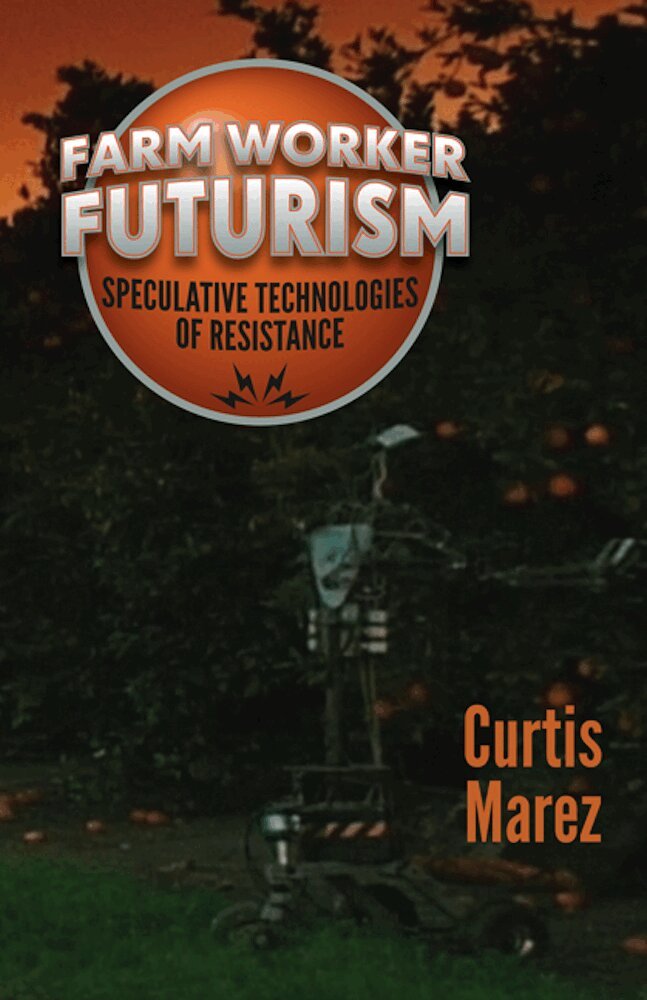
When we think of literature and film about farm workers, The Grapes of Wrath may come to mind, but Farm Worker Futurism reveals that the historical role of technology, especially new media, has in fact had much more to do with depicting the lives of farm laborers-Mexican migrants in particular-in the United States. From the late 1940s, when Ernesto Galarza led a strike in the San Joaquin Valley, to the early 1990s, when the United Farm Workers (UFW) helped organize a fast in solidarity with janitors at Apple Computers in the Santa Clara Valley, this book explores the friction between agribusiness and farm workers through the lens of visual culture.Marez looks at how the appropriation of photography, film, video, and other media technologies expressed a “farm worker futurism,” a set of farm worker social formations that faced off against corporate capitalism and government policies. In addition to drawing fascinating links between the worlds envisioned in UFW videos on the one hand and visions of Cold War geopolitics on the other, he demonstrates how union cameras and computer screens put the farm worker movement in dialogue with futurist thinking and speculative fictions of all sorts, including the films of George Lucas and the art of Ester Hernandez. Finally Marez examines the legacy of farm worker futurism in recent cinema and literature, contemporary struggles for immigrant rights, management–labor conflicts in computer hardware production, and the antiprison movement.In contrast with cultural histories of technology that take a top-down perspective, Farm Worker Futurism tells the story from below, showing how working-class people of color have often been early adopters and imaginative users of new media. In doing so, it presents a completely novel analysis of speculative fiction’s engagements with the farm worker movement in ways that illuminate both.
282 kr
Skickas inom 7-10 vardagar
When we think of literature and film about farm workers, The Grapes of Wrath may come to mind, but Farm Worker Futurism reveals that the historical role of technology, especially new media, has in fact had much more to do with depicting the lives of farm laborers-Mexican migrants in particular-in the United States. From the late 1940s, when Ernesto Galarza led a strike in the San Joaquin Valley, to the early 1990s, when the United Farm Workers (UFW) helped organize a fast in solidarity with janitors at Apple Computers in the Santa Clara Valley, this book explores the friction between agribusiness and farm workers through the lens of visual culture.Marez looks at how the appropriation of photography, film, video, and other media technologies expressed a “farm worker futurism,” a set of farm worker social formations that faced off against corporate capitalism and government policies. In addition to drawing fascinating links between the worlds envisioned in UFW videos on the one hand and visions of Cold War geopolitics on the other, he demonstrates how union cameras and computer screens put the farm worker movement in dialogue with futurist thinking and speculative fictions of all sorts, including the films of George Lucas and the art of Ester Hernandez. Finally Marez examines the legacy of farm worker futurism in recent cinema and literature, contemporary struggles for immigrant rights, management–labor conflicts in computer hardware production, and the antiprison movement.In contrast with cultural histories of technology that take a top-down perspective, Farm Worker Futurism tells the story from below, showing how working-class people of color have often been early adopters and imaginative users of new media. In doing so, it presents a completely novel analysis of speculative fiction’s engagements with the farm worker movement in ways that illuminate both.
952 kr
Skickas inom 10-15 vardagar
The hidden cost of TV production for communities of colorProducing Precarity is a long-overdue examination of the television industry's practice of "offshoring" production to impoverished sites within the US. The author, Curtis Marez, focuses on state efforts to attract film and TV producers to poor places with tax incentives, discounted public lands, and subsidized infrastructures. He argues that these efforts result in the redistribution of wealth from poor people of color, Indigenous people, and other taxpayers to Los Angeles-based media makers, while also diverting money that could be used for education and health care to the wealthy.The popular series produced in these places, such as Breaking Bad, The Watchmen, Lovecraft Country, The Walking Dead, and Vida, are praised by critics and awards organizations and highlighted by streaming services for challenging genre, casting, and narrative conventions. However, many of these shows rely on racialized and gendered low-wage labor for production, and diversity, equity, and inclusion representations can sometimes perpetuate repression, such as depicting police as diversity champions.Producing Precarity examines how contemporary streaming shows from these areas promote racial inequality in ideology and content, as well as materially through their local production methods, and perceptually through streaming distribution modes that discourage viewers from understanding how TV is made. Marez also provides examples of local resistance, including movements against a police training center and a film studio in Atlanta, as well as anti-gentrification movements in Latinx neighborhoods of LA.
297 kr
Skickas
The hidden cost of TV production for communities of colorProducing Precarity is a long-overdue examination of the television industry's practice of "offshoring" production to impoverished sites within the US. The author, Curtis Marez, focuses on state efforts to attract film and TV producers to poor places with tax incentives, discounted public lands, and subsidized infrastructures. He argues that these efforts result in the redistribution of wealth from poor people of color, Indigenous people, and other taxpayers to Los Angeles-based media makers, while also diverting money that could be used for education and health care to the wealthy.The popular series produced in these places, such as Breaking Bad, The Watchmen, Lovecraft Country, The Walking Dead, and Vida, are praised by critics and awards organizations and highlighted by streaming services for challenging genre, casting, and narrative conventions. However, many of these shows rely on racialized and gendered low-wage labor for production, and diversity, equity, and inclusion representations can sometimes perpetuate repression, such as depicting police as diversity champions.Producing Precarity examines how contemporary streaming shows from these areas promote racial inequality in ideology and content, as well as materially through their local production methods, and perceptually through streaming distribution modes that discourage viewers from understanding how TV is made. Marez also provides examples of local resistance, including movements against a police training center and a film studio in Atlanta, as well as anti-gentrification movements in Latinx neighborhoods of LA.