
Curtis W. Freeman – författare
Visar alla böcker från författaren Curtis W. Freeman. Handla med fri frakt och snabb leverans.
5 produkter
5 produkter
515 kr
Skickas inom 10-15 vardagar
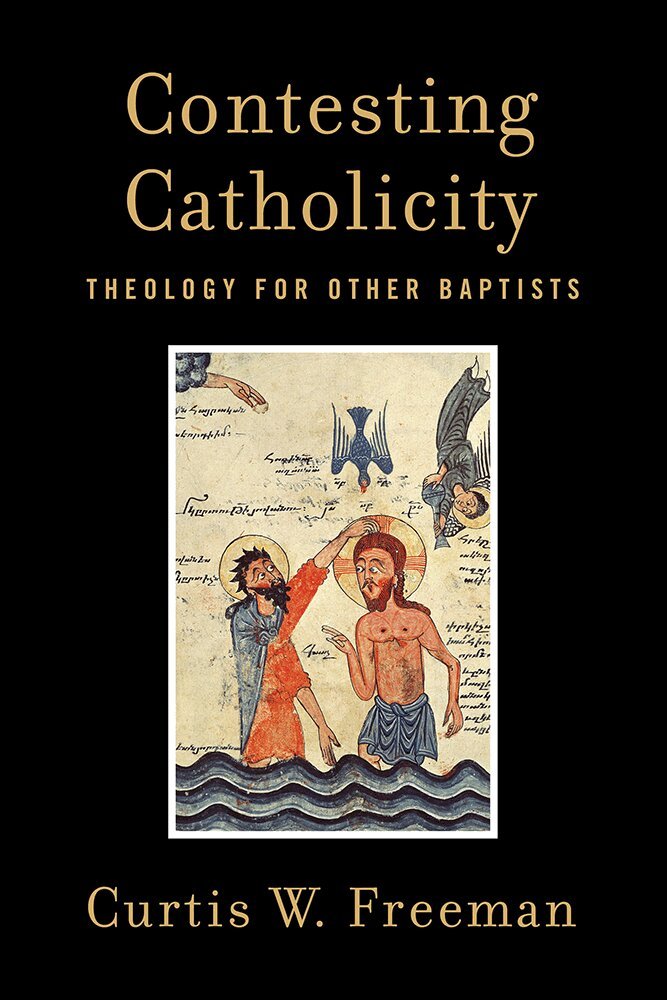
Baptists originated as a protest movement within the church but have developed over time into a distinct sect, one committed to preserving its place in the hierarchy of denominations. In today's postmodern, disestablished context, Baptists are in danger of becoming either a religious affinity group, a collection of individuals who share experiences and commitments to a set of principles, or a countercultural sect that retreats to early Enlightenment propositions for consolation and support.In Contesting Catholicity, Curtis W. Freeman offers an alternative Baptist identity, an "Other" kind of Baptist, one that stands between the liberal and fundamentalist options. By discerning an elegant analogy among some late modern Baptist preachers, seventeenth- and eighteenth-century Baptist founders, and early patristic theologians, Freeman narrates the Baptist story as a community that grapples with the convictions of the church catholic.Deep analogical conversation across the centuries enables Freeman to gain new leverage on all of the supposedly distinctive Baptist theological identifiers. From believer's baptism, the sacraments, and soul competency, to the Trinity, the priesthood of every believer, and local church autonomy, Freeman's historical reconstruction demonstrates that Baptists did and should understand themselves as a spiritual movement within the one, holy, catholic, and apostolic church.A "catholic Baptist" is fully participant in the historic church and at the very same time is fully Baptist. This radical Baptist catholicity is more than a quantitative sense of historical and ecumenical communion with the wider church. This Other Baptist identity envisions a qualitative catholicity that is centered on the confession of faith in Jesus Christ and historic Trinitarian orthodoxy enacted in the worship of the church in and through word and sacrament.
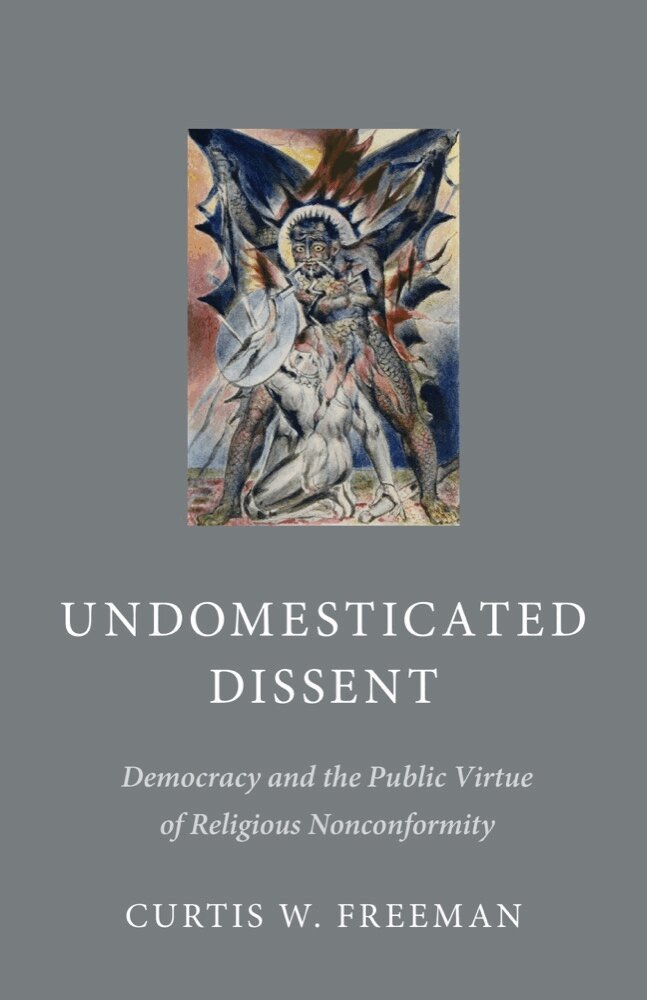
Undomesticated Dissent
Democracy and the Public Virtue of Religious Nonconformity
Inbunden, Engelska, 2017
681 kr
Skickas inom 3-6 vardagar
On the north end of London lies an old nonconformist burial ground named Bunhill Fields. Bunhill became the final resting place for some of the most honored names of English Protestantism. Burial outside the city walls symbolized that those interred at Bunhill lived and died outside the English body politic. Bunhill, its location declares, is the proper home for undomesticated dissenters. Among more than 120,000 graves, three monuments stand in the central courtyard: one for John Bunyan (1628-1688), a second for Daniel Defoe (1660?-1731), and a third for William Blake (1757-1827). Undomesticated Dissent asks, ""why these three monuments?"" The answer, as Curtis Freeman leads readers to discover, is an idea as vital and transformative for public life today as it was unsettling and revolutionary then. To tell the untold tale of the Bunhill graves, Freeman focuses on the three classic texts by Bunyan, Defoe, and Blake - The Pilgrim's Progress, Robinson Crusoe, and Jerusalem - as testaments of dissent. Their enduring literary power, as Freeman shows, derives from their original political and religious contexts. But Freeman also traces the abiding prophetic influence of these texts, revealing the confluence of great literature and principled religious nonconformity in the checkered story of democratic political arrangements. Undomesticated Dissent provides a sweeping intellectual history of the public virtue of religiously motivated dissent from the seventeenth century to the present, by carefully comparing, contrasting, and then weighing the various types of dissent - evangelical and spiritual dissent (Bunyan), economic and social dissent (Defoe), radical and apocalyptic dissent (Blake).Freeman offers dissenting imagination as a generative source for democracy, as well as a force for resistance to the coercive powers of domestication. By placing Bunyan, Defoe, and Blake within an extended argument about the nature and ends of democracy, Undomesticated Dissent reveals how these three men transmitted their democratic ideas across the globe, hidden within the text of their stories. Freeman concludes that dissent, so crucial to the establishing of democracy, remains equally essential for its flourishing. Buried deep in their full narrative of religion and resistance, the three monuments at Bunhill together declare that dissent is not disloyalty, and that democracy depends on dissent.
196 kr
Skickas
188 kr
Skickas
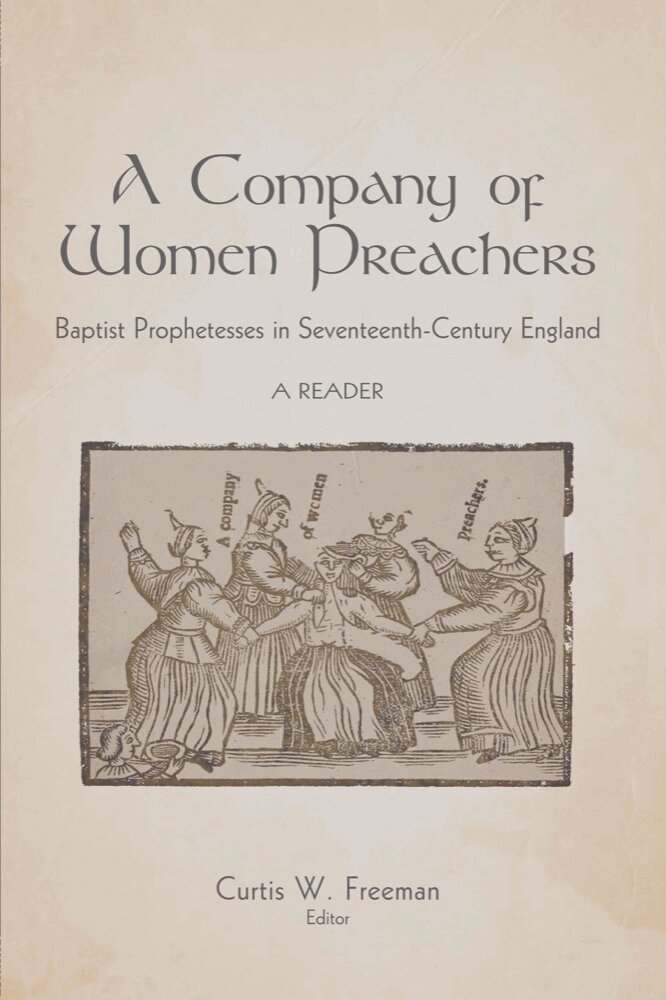
Company of Women Preachers
Baptist Prophetesses in Seventeenth-Century England
Inbunden, Engelska, 2011
983 kr
Skickas inom 11-20 vardagar
When the Baptist movement began four centuries ago, revolutionary forces had destabilized the centers of social control that had long kept women in their place. In the early seventeenth century, Baptist women began to speak their minds. Through their prophetic writings, these women came to exercise considerable influence and authority among the early churches. When Baptists became more institutionalized later in the century, the egalitarian distinction dissipated and women's voices again, for a long history, were silenced. However, long ago, in early Baptist life in England, women did preach well and often.In A Company of Women Preachers, Curtis Freeman collects and presents a critical edition of these prophetic women's texts, retrieving their voices so that their messages and contributions to the tradition may once again be recognized.