Cynthia Bansak - Böcker
Visar alla böcker från författaren Cynthia Bansak. Handla med fri frakt och snabb leverans.
3 produkter
3 produkter
1 094 kr
Tillfälligt slut
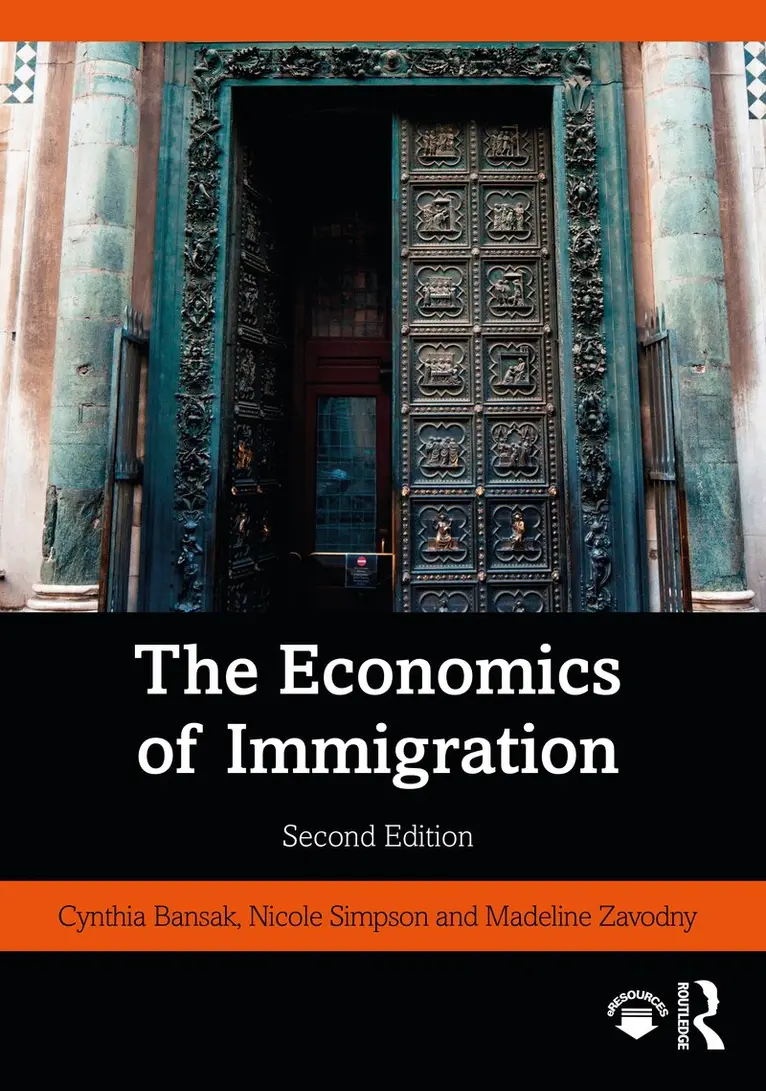
This book, in its second edition, introduces readers to the economics of immigration, which is a booming field within economics. The main themes and objectives of the book are for readers to understand the decision to migrate, the impacts of immigration on markets and government budgets and the consequences of immigration policies in a global context. Our goal is for readers to be able to make informed economic arguments about key issues related to immigration around the world.This book applies economic tools to the topic of immigration to answer questions like whether immigration raises or lowers the standard of living of people in a country. The book examines many other consequences of immigration as well, such as the effect on tax revenues and government expenditures, the effect on how and what firms decide to produce and the effect on income inequality, to name just a few. It also examines questions like what determines whether people choose to move and where they decide to go. It even examines how immigration affects the ethnic diversity of restaurants and financial markets.Readers will learn how to apply economic tools to the topic of immigration. Immigration is frequently in the news as more people move around the world to work, to study and to join family members. The economics of immigration has important policy implications. Immigration policy is controversial in many countries. This book explains why this is so and equips the reader to understand and contribute to policy debates on this important topic.
861 kr
Skickas inom 10-15 vardagar
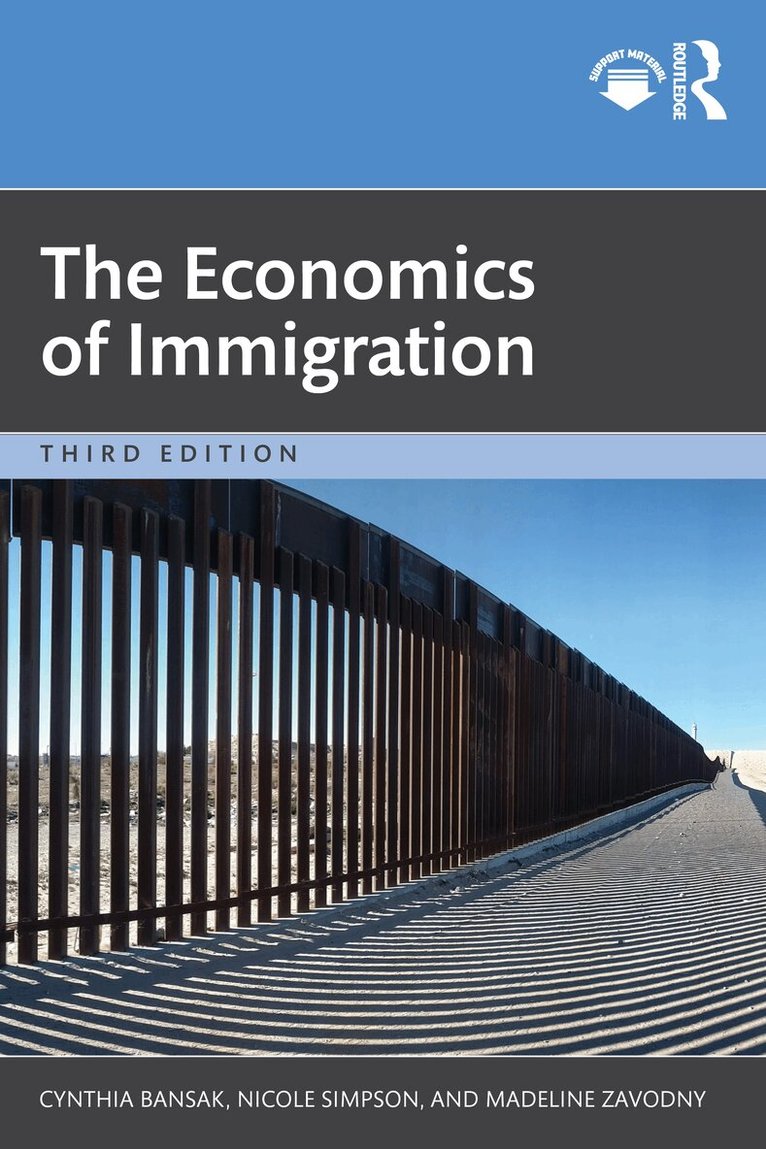
The Economics of Immigration provides students with the tools needed to examine the impact of immigration and immigration policies over the past century. The main objectives of the book are for students to understand the decision to migrate, the impacts of immigration on markets and government budgets, and the consequences of immigration policies in a global context.Students will develop an appreciation of the importance of immigration as a separate academic field within labor economics and international economics. Topics covered include the effects of immigration on labor markets, housing markets, international trade, tax revenues, human capital accumulation, government fiscal balances, and climate migration. The book also considers the impacts of immigration on what firms choose to produce, the ethnic diversity of restaurants, and financial markets, as well as the theory and evidence on immigrants’ economic assimilation. The textbook includes comparisons of immigration policies in a number of immigrant-receiving and sending countries, highlighting recent policy changes in Europe. Finally, the book explores immigration topics that directly affect low- and middle-income countries, such as remittances, brain drain, and human trafficking. Readers will be fully equipped with the tools needed to understand and contribute to policy debates on this controversial topic.This is the first textbook to comprehensively cover the economics of immigration, and it is suitable both for economics students and for those studying migration in other disciplines, such as sociology and political science.
2 088 kr
Skickas inom 10-15 vardagar
The Economics of Immigration provides students with the tools needed to examine the impact of immigration and immigration policies over the past century. The main objectives of the book are for students to understand the decision to migrate, the impacts of immigration on markets and government budgets, and the consequences of immigration policies in a global context.Students will develop an appreciation of the importance of immigration as a separate academic field within labor economics and international economics. Topics covered include the effects of immigration on labor markets, housing markets, international trade, tax revenues, human capital accumulation, government fiscal balances, and climate migration. The book also considers the impacts of immigration on what firms choose to produce, the ethnic diversity of restaurants, and financial markets, as well as the theory and evidence on immigrants’ economic assimilation. The textbook includes comparisons of immigration policies in a number of immigrant-receiving and sending countries, highlighting recent policy changes in Europe. Finally, the book explores immigration topics that directly affect low- and middle-income countries, such as remittances, brain drain, and human trafficking. Readers will be fully equipped with the tools needed to understand and contribute to policy debates on this controversial topic.This is the first textbook to comprehensively cover the economics of immigration, and it is suitable both for economics students and for those studying migration in other disciplines, such as sociology and political science.