Cynthia Margarita Tompkins - Böcker
Visar alla böcker från författaren Cynthia Margarita Tompkins. Handla med fri frakt och snabb leverans.
3 produkter
3 produkter
875 kr
Skickas inom 10-15 vardagar
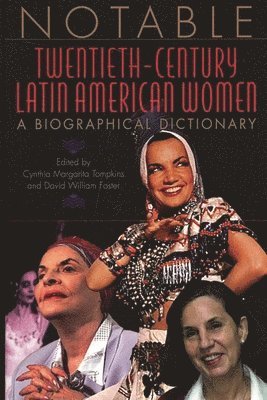
Notable Twentieth-Century Latin American Women is a powerful testimony to the outstanding contributions 72 of the most noteworthy women have made to their fields and to society. This volume covers a broad range of women excelling in the fields of politics, art, religion, government, education, literature, popular culture, and the sciences, with substantial, up-to-date biographical and career overviews. Many notables are international figures, such as former Nicaraguan President Violeta Barrios de Chamorro, Cuban Queen of Salsa Celia Cruz, and Mexican artist Frida Kahlo. Others, such as the Mirabal sisters, founders of a resistance movement against a repressive Dominican Republic regime, and Carmen Naranjo, a prolific Costa Rican author and champion of culture, merit the wider recognition offered here.An excellent introduction detailing the status of Latin American women in the twentieth century is the ideal framework for appreciating the struggles of these women. In the entries, information given includes family and background details, education, influences, obstacles faced and overcome, and achievements. Each entry includes a Further Reading section to enable students and other interested readers to learn more about the woman's life. Numerous photos enhance the text.
611 kr
Skickas inom 3-6 vardagar
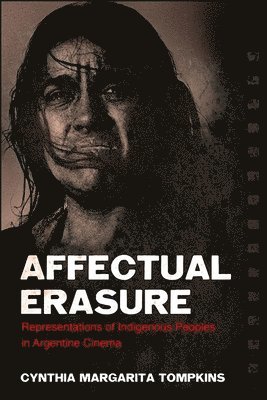
Comprehensive examination of how Indigenous peoples have been represented in Argentine film.Affectual Erasure examines how Argentine cinema has represented Indigenous peoples throughout a period spanning roughly a century. Cynthia Margarita Tompkins interrelates her discussion of films with the ethnographic context of the Indigenous peoples represented and an analysis of the affective dimensions at play. These emotions underscore the inherent violence of generic conventions, as well as the continued political violence preventing Indigenous peoples from access to their ancestral lands and cultural mores. Tompkins explores a broad range of movies beginning in the silent period and includes both feature films and documentaries, underscored by archival and contemporary film stills. She traces the initial erotic projection, moving through melodrama to the conventions of the Western, into the 1960s focus on decolonization, superseded by allegorical renditions and the promise of self-expression in late twentieth-century documentaries. Each section includes an introduction to the sociohistorical events of the period and their impact on film production. Analyzed chronologically, the films evidence different stages in the projection of the hegemonic Argentine imaginary, which fails to envision the daily life of Indigenous peoples prior to conquest or in colonial times-and remains in denial of their existence in the present.
837 kr
Skickas
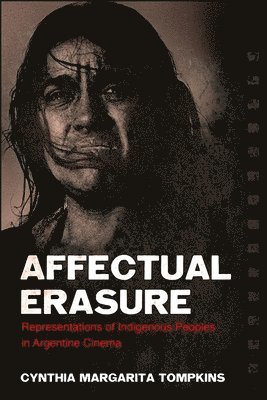
Comprehensive examination of how Indigenous peoples have been represented in Argentine film.Affectual Erasure examines how Argentine cinema has represented Indigenous peoples throughout a period spanning roughly a century. Cynthia Margarita Tompkins interrelates her discussion of films with the ethnographic context of the Indigenous peoples represented and an analysis of the affective dimensions at play. These emotions underscore the inherent violence of generic conventions, as well as the continued political violence preventing Indigenous peoples from access to their ancestral lands and cultural mores. Tompkins explores a broad range of movies beginning in the silent period and includes both feature films and documentaries, underscored by archival and contemporary film stills. She traces the initial erotic projection, moving through melodrama to the conventions of the Western, into the 1960s focus on decolonization, superseded by allegorical renditions and the promise of self-expression in late twentieth-century documentaries. Each section includes an introduction to the sociohistorical events of the period and their impact on film production. Analyzed chronologically, the films evidence different stages in the projection of the hegemonic Argentine imaginary, which fails to envision the daily life of Indigenous peoples prior to conquest or in colonial times-and remains in denial of their existence in the present.