Cynthia Russett - Böcker
Visar alla böcker från författaren Cynthia Russett. Handla med fri frakt och snabb leverans.
4 produkter
4 produkter
356 kr
Skickas inom 7-10 vardagar
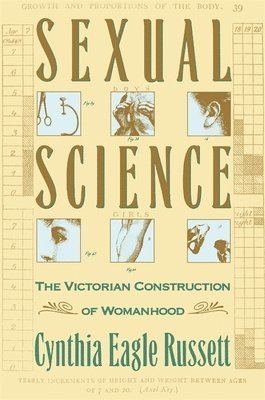
One scarcely knows whether to laugh or cry. The spectacle presented, in Cynthia Russett's splendid book, of nineteenth-century white male scientists and thinkers earnestly trying to prove women inferior to men--thereby providing, along with "savages" and "idiots," an evolutionary buffer between men and animals--is by turns appalling, amusing, and saddening. Surveying the work of real scientists as well as the products of more dubious minds, Russett has produced a learned yet immensely enjoyable chapter in the annals of human folly. At the turn of the century science was successfully challenging the social authority of religion; scientists wielded a power no other group commanded. Unfortunately, as Russett demonstrates, in Victorian sexual science, empiricism tangled with prior belief, and scientists' delineation of the mental and physical differences between men and women was directed to show how and why women were inferior to men. These men were not necessarily misogynists. This was an unsettling time, when the social order was threatened by wars, fierce economic competition, racial and industrial conflict, and the failure of society to ameliorate poverty, vice, crime, illnesses. Just when men needed the psychic lift an adoring dependent woman could give, she was demanding the vote, higher education, and the opportunity to become a wage earner! No other work has treated this provocative topic so completely, nor have the various scientific theories used to marshal evidence of women's inferiority been so thoroughly delineated and debunked. Erudite enough for scholars in the history of science, intellectual history, and the history of women, this book with its stylish presentation will also attract a large nonspecialist audience.
574 kr
Tillfälligt slut
More than 150 colleges in the United States were founded by nuns, and over time they have served many constituencies, setting some educational trends while reflecting others. In Catholic Women's Colleges in America, Tracy Schier, Cynthia Russett, and their coauthors provide a comprehensive history of these institutions and how they met the challenges of broader educational change. The authors explore how and for whom the colleges were founded and the role of Catholic nuns in their founding and development. They examine the roots of the founders' spirituality and education; they discuss curricula, administration, and student life. And they describe the changes prompted by both the church and society beginning in the 1960s, when decreasing enrollments led some colleges to opt for coeducation, while others restructured their curricula, partnered with other Catholic colleges, developed specialized programs, or sought to broaden their base of funding. Contributors: Dorothy M. Brown, Georgetown University; David R. Contosta, Chestnut Hill College; Jill Ker Conway, Massachusetts Institute of Technology; Carol Hurd Green, Boston College; Monika K.Hellwig, Association of Catholic Colleges and Universities; Karen Kennelly, president emerita of Mount Saint Mary's College, Los Angeles; Jeanne Knoerle, president emerita of Saint Mary-of-the-Woods College; Thomas M. Landy, College of the Holy Cross; Kathleen A. Mahoney, Humanitas Foundation; Melanie M. Morey, Leadership and Legacy Associates, Boston; Mary J. Oates, Regis College; Jane C. Redmont, Graduate Theological Union in Berkeley; Cynthia Russett, Yale University; Tracy Schier, Boston College.
Second to None
A Documentary History of American Women. Volume 1, from the Sixteenth Century to 1865
Häftad, Engelska, 1994
323 kr
Skickas inom 10-15 vardagar
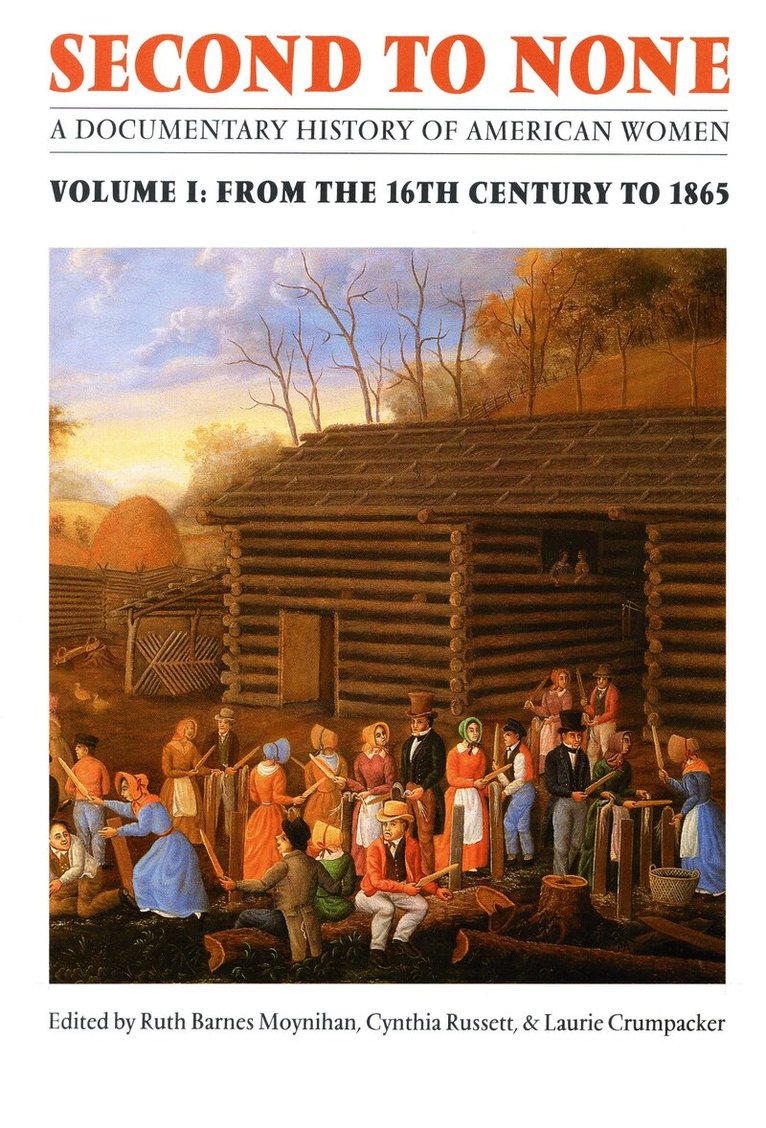
"Tis woman's strongest vindication for speaking that the world needs to hear her voice," wrote Anna Julia Cooper, a nineteenth-century African American abolitionist, teacher, and novelist. Argu-ing that the voices of women still need to be heard, the editors of this comprehensive collection have assembled a diverse selection of writings to illustrate the daily lives of ordinary and extraordinary women and the historical significance of their thoughts and deeds. Here are women who are shapers of history, as well as its victims. In diaries, letters, speeches, songs, petitions, essays, photographs, and cartoons they describe, rejoice, exhort, complain, advertise, and joke, revealing women's role as community builders in every time and locale and registering their emergence into the public spheres of political, social, and economic life. The documents also demonstrate the value of gender analysis, for women's differences—in age, race, sexual orientation, class, geographical or ethnic origin, abilities or disabilities, and values—are shown to be as important as their commonalities.Volume 1, which comprises 153 selections, opens with a Navajo origin myth and presents Native American, Hispanic, African, and Euro-American women from the sixteenth century through the Civil War. Both volumes include section introductions that set the historical stage and comment on the significance of the selections.
Second to None
A Documentary History of American Women. Volume 2, from 1865 to the Present
Häftad, Engelska, 1994
314 kr
Skickas inom 10-15 vardagar
At the beginning of the twentieth century it was still necessary for women to ask lawmakers, "Are women persons?" The rights and treatment of women in their homes, workplaces, and government were issues that men in power often preferred to ignore. But women refused to remain silent. This volume of Second to None, like volume 1, presents a multiplicity of voices, demonstrating that there is not a representative American woman, but many women worth remembering. Here are women who are shapers of history, as well as its victims. In diaries, letters, speeches, songs, petitions, essays, photographs, and cartoons they describe, rejoice, exhort, complain, advertise, and joke, revealing women's role as community builders in every time and locale and registering their emergence into the public spheres of political, social, and economic life. The documents also demonstrate the value of gender analysis, for women's differences—in age, race, sexual orientation, class, geographical or ethnic origin, abilities or disabilities, and values—are shown to be as important as their commonalities.Volume 2 contains 122 selections, ranging from a tract by Elizabeth Cady Stanton to the testimony of Anita Hill. Both volumes include section introductions that set the historical stage and comment on the significance of the selections.