D. A. Low - Böcker
Visar alla böcker från författaren D. A. Low. Handla med fri frakt och snabb leverans.
9 produkter
9 produkter
835 kr
Skickas inom 3-6 vardagar
Soundings in Modern South Asian History, edited by D. A. Low, is a wide-ranging collection of essays that probes the complexity of India’s political and social transformation in the late nineteenth and early twentieth centuries. The book opens with the 1907 travels of Keir Hardie, the British Labour M.P., whose encounters with India’s nationalist leaders reveal both the commonalities and striking regional contrasts in political life at the time. Hardie’s meetings with Bengali bhadralok elites, Punjabi Arya Samaj activists, and divided factions in Bombay demonstrate how nationalist energy was concentrated unevenly across the subcontinent. His relative lack of reception in the United Provinces underscores the political inertia of a region that would later dominate Indian politics through figures like Motilal and Jawaharlal Nehru. Low uses this narrative as a springboard to emphasize the importance of studying regional variations, cautioning against overly unified, textbook accounts of the national movement.From this starting point, the essays expand into broader explorations of social, cultural, and political change. Contributions investigate the persistence of local elite cultures, such as the Indo-Persian husk tradition of Oudh, and their gradual decline under the pressures of agrarian unrest, linguistic shifts, and nationalist mobilization. Other chapters juxtapose regional case studies—Maharashtra, the Panjab, Bengal—highlighting the different trajectories of agrarian society, elite reform, and popular politics under colonial rule. Running through the collection is a concern with authority, identity, and ideology: whether in debates over liberal constitutionalism, the rise of mass nationalism, or the tensions between Hindu and Muslim political identities. Taken together, the essays argue that modern South Asian history cannot be reduced to a simple story of British impact and nationalist response, but must be understood as a kaleidoscope of shifting regional dynamics, social transformations, and contested visions for India’s future.This title is part of UC Press's Voices Revived program, which commemorates University of California Press’s mission to seek out and cultivate the brightest minds and give them voice, reach, and impact. Drawing on a backlist dating to 1893, Voices Revived makes high-quality, peer-reviewed scholarship accessible once again using print-on-demand technology. This title was originally published in 1968.
1 513 kr
Skickas inom 3-6 vardagar
Soundings in Modern South Asian History, edited by D. A. Low, is a wide-ranging collection of essays that probes the complexity of India’s political and social transformation in the late nineteenth and early twentieth centuries. The book opens with the 1907 travels of Keir Hardie, the British Labour M.P., whose encounters with India’s nationalist leaders reveal both the commonalities and striking regional contrasts in political life at the time. Hardie’s meetings with Bengali bhadralok elites, Punjabi Arya Samaj activists, and divided factions in Bombay demonstrate how nationalist energy was concentrated unevenly across the subcontinent. His relative lack of reception in the United Provinces underscores the political inertia of a region that would later dominate Indian politics through figures like Motilal and Jawaharlal Nehru. Low uses this narrative as a springboard to emphasize the importance of studying regional variations, cautioning against overly unified, textbook accounts of the national movement.From this starting point, the essays expand into broader explorations of social, cultural, and political change. Contributions investigate the persistence of local elite cultures, such as the Indo-Persian husk tradition of Oudh, and their gradual decline under the pressures of agrarian unrest, linguistic shifts, and nationalist mobilization. Other chapters juxtapose regional case studies—Maharashtra, the Panjab, Bengal—highlighting the different trajectories of agrarian society, elite reform, and popular politics under colonial rule. Running through the collection is a concern with authority, identity, and ideology: whether in debates over liberal constitutionalism, the rise of mass nationalism, or the tensions between Hindu and Muslim political identities. Taken together, the essays argue that modern South Asian history cannot be reduced to a simple story of British impact and nationalist response, but must be understood as a kaleidoscope of shifting regional dynamics, social transformations, and contested visions for India’s future.This title is part of UC Press's Voices Revived program, which commemorates University of California Press’s mission to seek out and cultivate the brightest minds and give them voice, reach, and impact. Drawing on a backlist dating to 1893, Voices Revived makes high-quality, peer-reviewed scholarship accessible once again using print-on-demand technology. This title was originally published in 1968.
523 kr
Skickas inom 7-10 vardagar
The middle decades of the twentieth century witnessed the great dramas of the ending of Western imperial rule in Africa and Asia. A series of nationalist onslaughts was launched against the British Empire and these greatly reshaped the modern world. Professor Anthony Low has studied the end of the British Empire and its aftermath for many years. This volume brings together for the first time many of his major essays on the subject.
1 024 kr
Skickas inom 7-10 vardagar
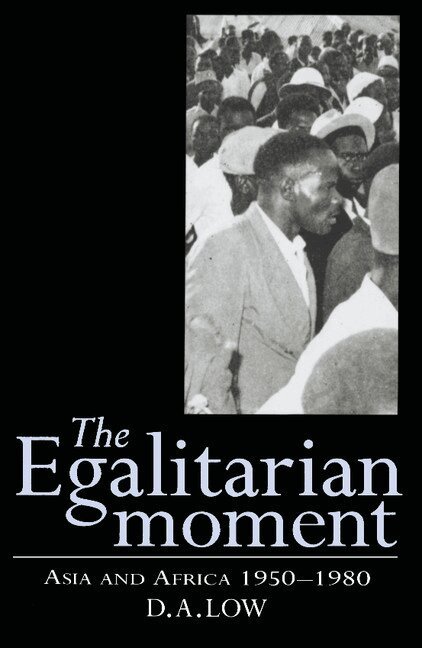
General histories of the twentieth century will have much to say about the establishment, spread, maintenance and sudden collapse of Soviet Communism. This book outlines a major feature of twentieth-century world history that arguably affected more people than the rise and fall of Soviet Communism. It was the first to discuss as related developments the many attempts in Asia and Africa in the third quarter of the twentieth century to create egalitarian rural societies (landlord abolition in Egypt, India and Iran; ujamaa in Tanzania; land reform in Indonesia; collectivization in China, Vietnam and Ethiopia), their failure, and the differentiated rural regimes which, despite landlord abolition, remain there to this day. The case studies include Egypt, India, the three East African countries, Papua New Guinea, Iran, Thailand, Malaysia, Indonesia, Ethiopia, China and Vietnam. The book highlights a major and hitherto disaggregated aspect of twentieth-century world history.
956 kr
Skickas inom 7-10 vardagar
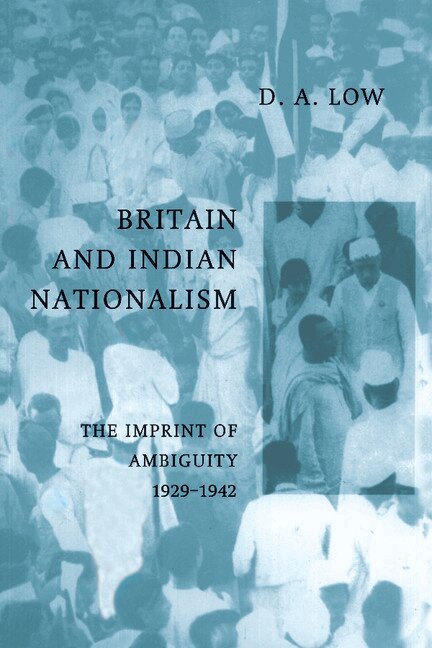
India's struggle for independence was arguably the most momentous of the twentieth century, and central to it was the generation of powerful nationalist forces. In a series of detailed studies Anthony Low shows how the ambiguity of the British position conditioned the distinctive character of this struggle: how the British determination to hold fast their Indian empire (unlike the Americans in the Philippines) prior to 1942 was nonetheless complemented by a reluctance to resist their nationalist opponents in the unyielding ways of the French in Vietnam and the Dutch in Indochina. Much that Gandhi did, Professor Low concludes, would have been unnecessary in the Philippines and impossible in Indonesia and Vietnam, but astutely fitted the peculiar conditions of the nationalist struggle against the British in India. Published on the fiftieth anniversary of Indian independence, Britain and Indian Nationalism makes a major contribution to the historiography of modern India, to Britain's relations with its empire, and to the history of decolonisation in the twentieth century.
331 kr
Skickas inom 7-10 vardagar
General histories of the twentieth century will have much to say about the establishment, spread, maintenance and sudden collapse of Soviet Communism. This book outlines a major feature of twentieth-century world history that arguably affected more people than the rise and fall of Soviet Communism. It was the first to discuss as related developments the many attempts in Asia and Africa in the third quarter of the twentieth century to create egalitarian rural societies (landlord abolition in Egypt, India and Iran; ujamaa in Tanzania; land reform in Indonesia; collectivization in China, Vietnam and Ethiopia), their failure, and the differentiated rural regimes which, despite landlord abolition, remain there to this day. The case studies include Egypt, India, the three East African countries, Papua New Guinea, Iran, Thailand, Malaysia, Indonesia, Ethiopia, China and Vietnam. The book highlights a major and hitherto disaggregated aspect of twentieth-century world history.
1 431 kr
Skickas inom 7-10 vardagar
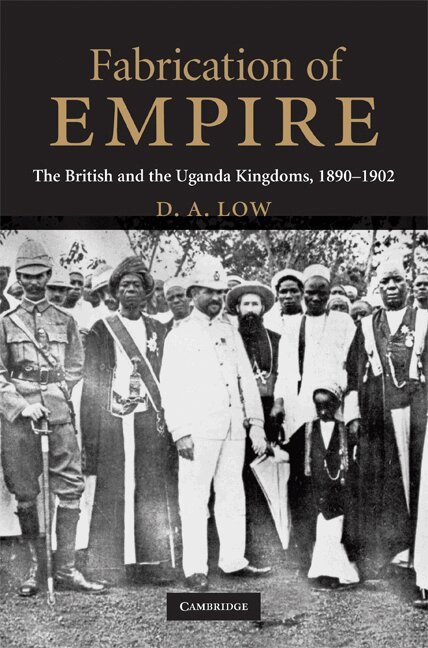
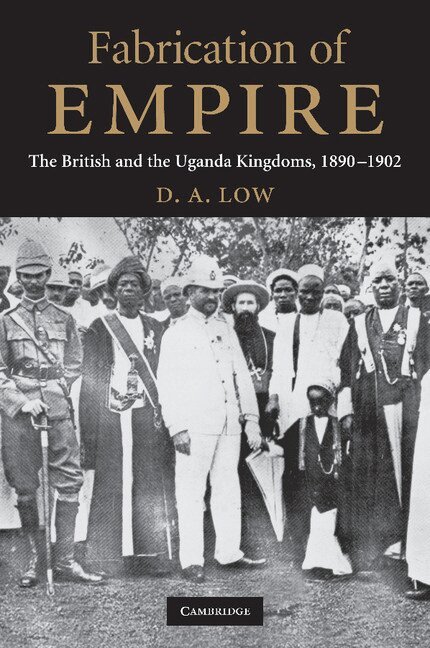
During the 1890s, the Scramble for Africa created the new country of Uganda. This inland territory carved out by British agents first encompassed some 20-30 African kingdoms. In his magisterial study, Anthony Low examines how and why the British were able to dominate these rulerships and establish a colonial government. At the same time, the book goes beyond providing a simple narrative account of events; rather, Low seeks to analyse the conditions under which such a transformation was possible. By skilfully negotiating the many complex political and social undercurrents of this period, Low presents a groundbreaking theoretical model of colonial conquest and rule. The result is a major contribution to debates about the making of empire that will appeal to Africanists and imperial historians alike.
618 kr
Skickas inom 7-10 vardagar
India's struggle for independence was arguably the most momentous of the twentieth century, and central to it was the generation of powerful nationalist forces. In a series of detailed studies Anthony Low shows how the ambiguity of the British position conditioned the distinctive character of this struggle: how the British determination to hold fast their Indian empire (unlike the Americans in the Philippines) prior to 1942 was nonetheless complemented by a reluctance to resist their nationalist opponents in the unyielding ways of the French in Vietnam and the Dutch in Indochina. Much that Gandhi did, Professor Low concludes, would have been unnecessary in the Philippines and impossible in Indonesia and Vietnam, but astutely fitted the peculiar conditions of the nationalist struggle against the British in India. Published on the fiftieth anniversary of Indian independence, Britain and Indian Nationalism makes a major contribution to the historiography of modern India, to Britain's relations with its empire, and to the history of decolonisation in the twentieth century.
645 kr
Skickas inom 7-10 vardagar
During the 1890s, the Scramble for Africa created the new country of Uganda. This inland territory carved out by British agents first encompassed some 20-30 African kingdoms. In his magisterial study, Anthony Low examines how and why the British were able to dominate these rulerships and establish a colonial government. At the same time, the book goes beyond providing a simple narrative account of events; rather, Low seeks to analyse the conditions under which such a transformation was possible. By skilfully negotiating the many complex political and social undercurrents of this period, Low presents a groundbreaking theoretical model of colonial conquest and rule. The result is a major contribution to debates about the making of empire that will appeal to Africanists and imperial historians alike.