D. A. Miller - Böcker
Visar alla böcker från författaren D. A. Miller. Handla med fri frakt och snabb leverans.
7 produkter
7 produkter
225 kr
Skickas inom 7-10 vardagar
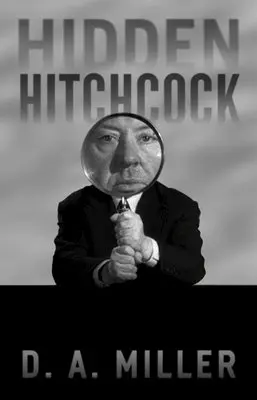
No filmmaker has more successfully courted mass-audience understanding than Alfred Hitchcock, and none has been studied more intensively by scholars. In Hidden Hitchcock, D. A. Miller does what seems impossible: he discovers what has remained unseen in Hitchcock's movies, a secret style that imbues his films with a radical duplicity. Focusing on three films Strangers on a Train, Rope, and The Wrong Man Miller shows how Hitchcock anticipates, even demands a "Too-Close Viewer." Dwelling within us all and vigilant even when everything appears to be in good order, this Too-Close Viewer attempts to see more than the director points out, to expand the space of the film and the duration of the viewing experience. And, thanks to Hidden Hitchcock, that obsessive attention is rewarded. In Hitchcock's visual puns, his so-called continuity errors, and his hidden appearances (not to be confused with his cameos), Miller finds wellsprings of enigma.Hidden Hitchcock is a revelatory work that not only shows how little we know this best known of filmmakers, but also how near such too-close viewing comes to cinephilic madness.
778 kr
Skickas inom 7-10 vardagar
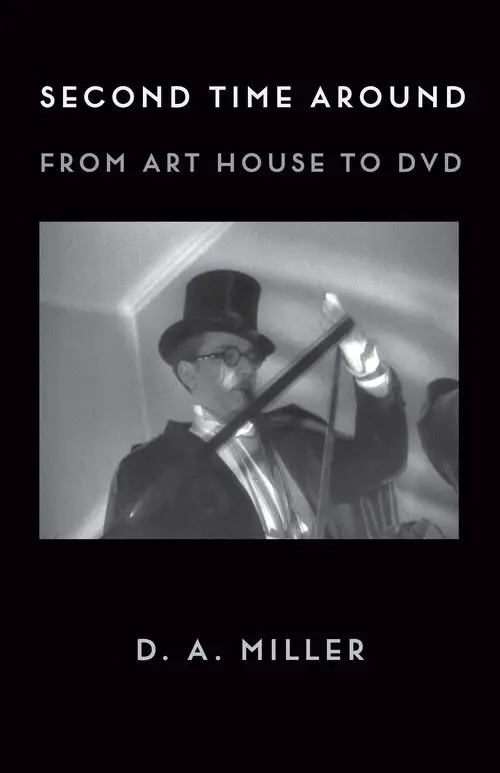
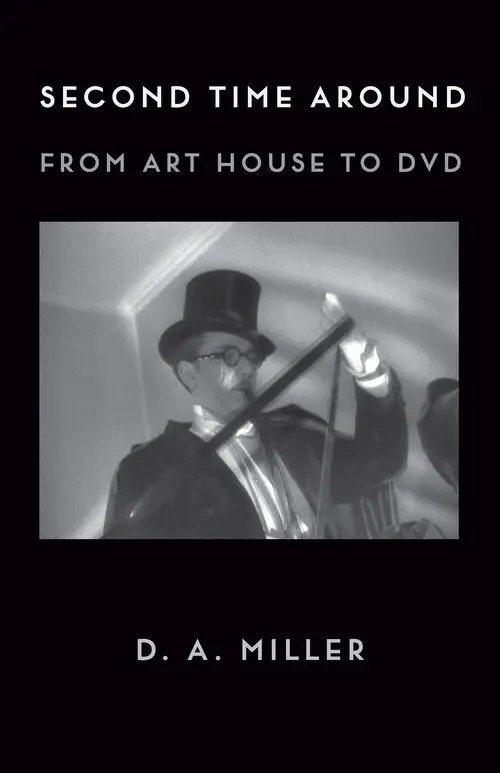
The art houses and cinema clubs of his youth are gone, but the films that D. A. Miller discovered there in the 1960s and ’70s are now at his fingertips. With DVDs and streaming media, technology has turned the old cinematheque’s theatrical offerings into private viewings that anyone can repeat, pause, slow, and otherwise manipulate at will.In Second Time Around, Miller seizes this opportunity; across thirteen essays, he watches digitally restored films by directors from Mizoguchi to Pasolini and from Hitchcock to Honda, looking to find not only what he first saw in them but also what he was then kept from seeing by quick camerawork, normal projection speed, missing frames, or simple censorship. At last he has an unobstructed view of the gay leather scene in Cruising, the expurgated special effects in The H-Man, and the alternative ending to Vertigo. Now he can pursue the finer details of Chabrol’s debt to Hitchcock, Visconti’s mystificatory Marxism, or the unemotive emotion in Godard.Yet this recaptured past is strangely disturbing; the films and the author have changed in too many ways for their reunion to be like old times. The closeness of Miller’s attention clarifies the painful contradictions of youth and decline, damaged prints and flawless restorations.
210 kr
Skickas inom 7-10 vardagar
The art houses and cinema clubs of his youth are gone, but the films that D. A. Miller discovered there in the 1960s and ’70s are now at his fingertips. With DVDs and streaming media, technology has turned the old cinematheque’s theatrical offerings into private viewings that anyone can repeat, pause, slow, and otherwise manipulate at will.In Second Time Around, Miller seizes this opportunity; across thirteen essays, he watches digitally restored films by directors from Mizoguchi to Pasolini and from Hitchcock to Honda, looking to find not only what he first saw in them but also what he was then kept from seeing by quick camerawork, normal projection speed, missing frames, or simple censorship. At last he has an unobstructed view of the gay leather scene in Cruising, the expurgated special effects in The H-Man, and the alternative ending to Vertigo. Now he can pursue the finer details of Chabrol’s debt to Hitchcock, Visconti’s mystificatory Marxism, or the unemotive emotion in Godard.Yet this recaptured past is strangely disturbing; the films and the author have changed in too many ways for their reunion to be like old times. The closeness of Miller’s attention clarifies the painful contradictions of youth and decline, damaged prints and flawless restorations.
298 kr
Skickas inom 7-10 vardagar
Through a series of readings in the work of the decisive triumvirate of Victorian fiction, Dickens, Trollope and Wilkie Collins, Miller investigates the novel as an oblique form of social control.
306 kr
Skickas inom 10-15 vardagar
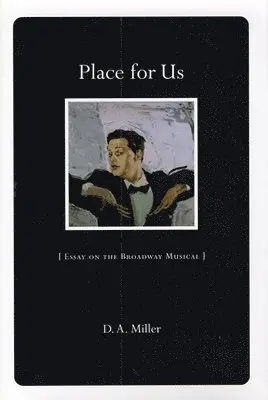
It used to be a secret that, in its postwar heyday, the Broadway musical recruited a massive underground following of gay men. But though this once silent social fact currently spawns jokes that every sitcom viewer is presumed to be in on, it has not necessarily become better understood.In Place for Us, D. A. Miller probes what all the jokes laugh off: the embarrassingly mutual affinity between a "general" cultural form and the despised "minority" that was in fact that form's implicit audience. In a style that is in turn novelistic, memorial, autobiographical, and critical, the author restores to their historical density the main modes of reception that so many gay men developed to answer the musical's call: the early private communion with original cast albums, the later camping of show tunes in piano bars, the still later reformatting of these same songs at the post-Stonewall disco. In addition, through an extended reading of Gypsy, Miller specifies the nature of the call itself, which he locates in the postwar musical's most basic conventions: the contradictory relation between the show and the book, the mimetic tendency of the musical number, the centrality of the female star. If the postwar musical may be called a "gay" genre, Miller demonstrates, this is because its regular but unpublicized work has been to indulge men in the spectacular thrills of a femininity become their own.
181 kr
Skickas
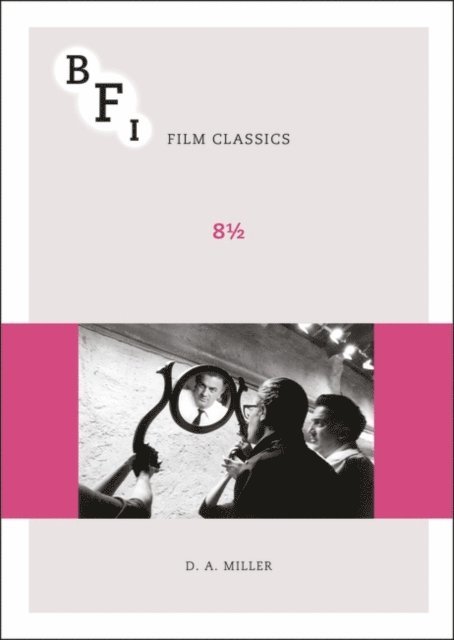
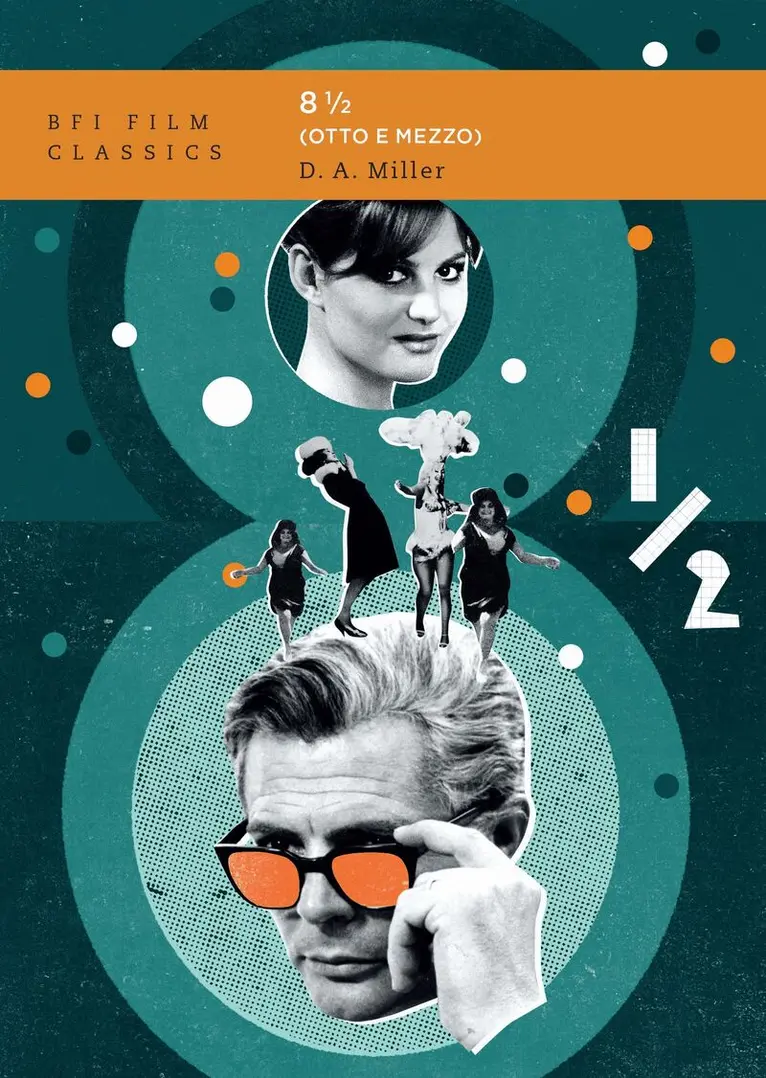
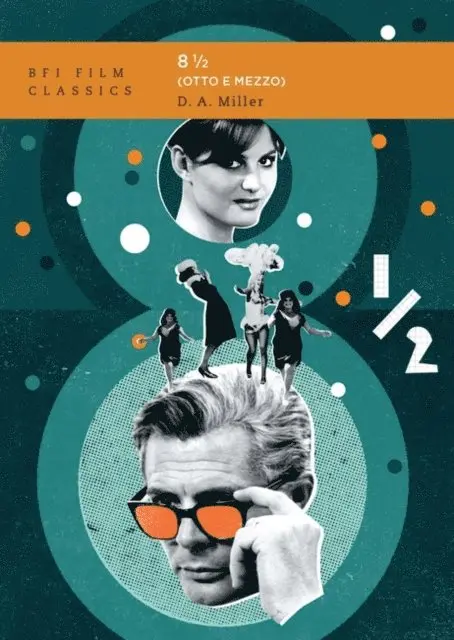
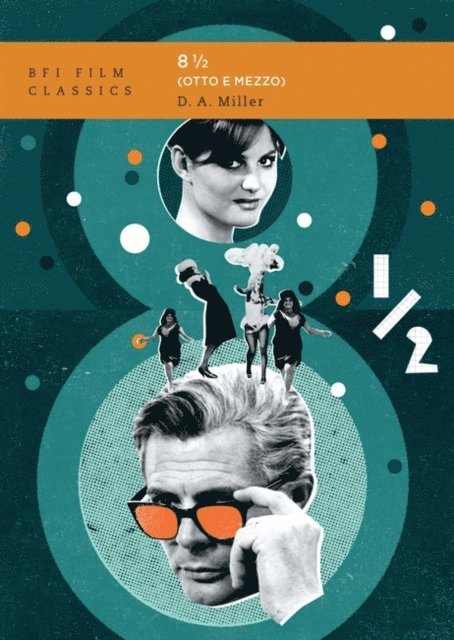
Federico Fellini's masterpiece 8 1/2 (Otto e mezzo) shocked audiences around the world when it was released in 1963 by its sheer auteurist gall. The hero, a film director named Guido Anselmi, seemed to be Fellini's mirror image, and the story to reflect the making of 8 1/2 itself. Whether attacked for self-indulgence or extolled for self-consciousness, 8 1/2 became the paradigm of personal filmmaking, and numerous directors, including Fassbinder, Truffaut, Scorsese, Bob Fosse and Bruce LaBruce, paid homage to the film and its themes of personal and creative ennui in their own work.Now that 8 1/2's conceit is less shocking, D.A. Miller argues, we can see more clearly how tentative, even timid, Fellini's ground-breaking incarnation always was. Guido is a perfect blank, or is trying his best to seem one. By his own admission he doesn't even have an artistic or social statement to offer: 'I have nothing to say, but I want to say it anyway.' 8 1/2's deepest commitment is not to this man (who is never quite 'all there') or to his message (which is lacking entirely) but to its own flamboyant manner. The enduring timeliness of 8 1/2 lies, Miller suggests, in its aggressive shirking of the shame that falls on the man – and the artist – who fails his appointed social responsibilities.
240 kr
Skickas inom 3-6 vardagar