D. Allan Bromley – författare
Visar alla böcker från författaren D. Allan Bromley. Handla med fri frakt och snabb leverans.
13 produkter
President’s Scientists
Reminiscences of a White House Science Advisor
Häftad, 1994
522 kr
Lägg i varukorg
D. Allan Bromley, one of the world's leading nuclear physicists, was The Assistant to President George Bush for Science and Technology Policy from August 1989 to January 1993. He was the first Science Advisor to have this Cabinet-level rank.In this engrossing memoir of his years at the White House, …
Facets of Physics
E-bok, 2012
717 kr
Lägg i varukorg
Facets of Physics contains the major papers in the symposium on May 3, 1968 dedicated to Gregory Breit''s honor. This book covers different facets of physics and the contributions made by Breit. The book reviews the development of the current knowledge of the nucleon-nucleon interaction, the status …
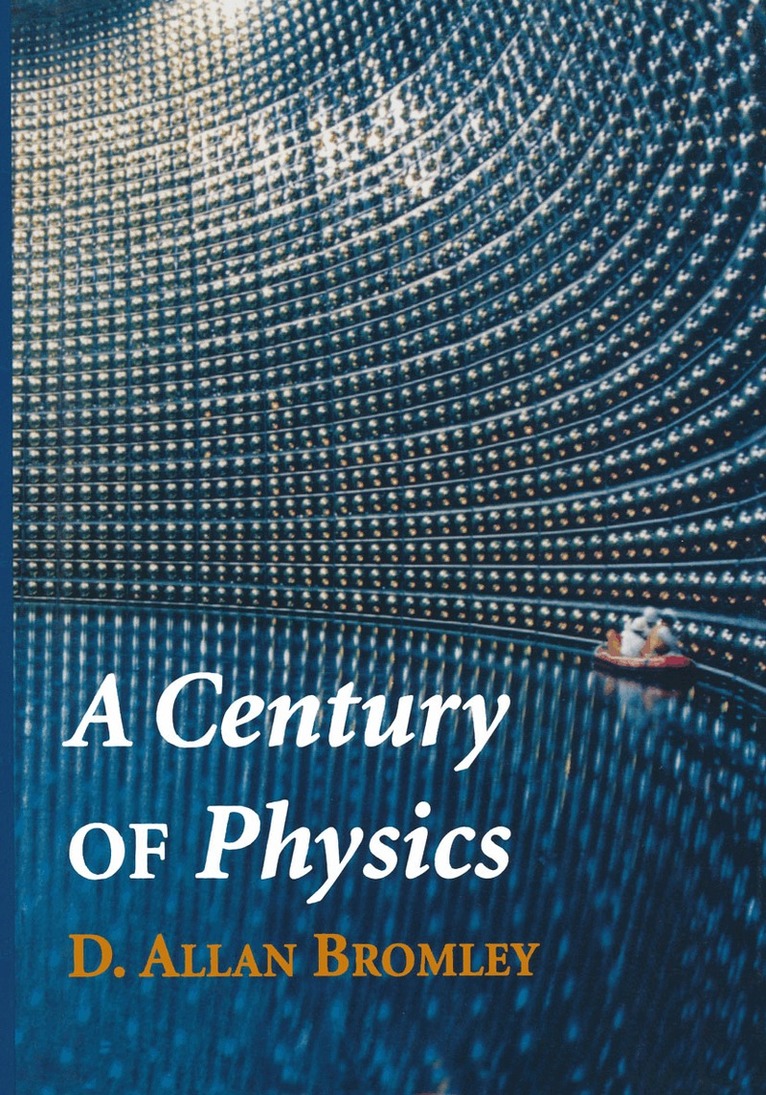
Century of Physics
Inbunden, 2001
507 kr
Lägg i varukorg
In this amazing tour d'horizon, D. Allan Bromley uses the occasion of the centenary of the American Physical Society to reflect upon the growth of physics over the past 100 years, its fragmentation into numerous subdisciplines, the impact physics has had upon modern technology, and the re-emergence …
Treatise on Heavy-Ion Science
Volume 6: Astrophysics, Chemistry, and Condensed Matter
Av D. Allan Bromley, D.A. Bromley
Häftad, 2012
551 kr
Lägg i varukorg
For 75 years the stopping of energetic ions in matter has been a subject of great theoretical and experimental interest. The theoretical treatment of the stopping of ions in matter is largely due to the work of Bohr, 1-3 Bethe,4-6 Bloch,7. s and Lindhard,9-12 and it has been reviewed by Bohr,3 …
Century of Physics
E-bok, 2013
554 kr
Lägg i varukorg
In this amazing tour d''horizon, D. Allan Bromley uses the occasion of the centenary of the American Physical Society to reflect upon the growth of physics over the past 100 years, its fragmentation into numerous subdisciplines, the impact physics has had upon modern technology, and the …
Century of Physics
Häftad, 2013
406 kr
Lägg i varukorg
In this amazing tour d'horizon, D. Allan Bromley uses the occasion of the centenary of the American Physical Society to reflect upon the growth of physics over the past 100 years, its fragmentation into numerous subdisciplines, the impact physics has had upon modern technology, and the re-emergence …
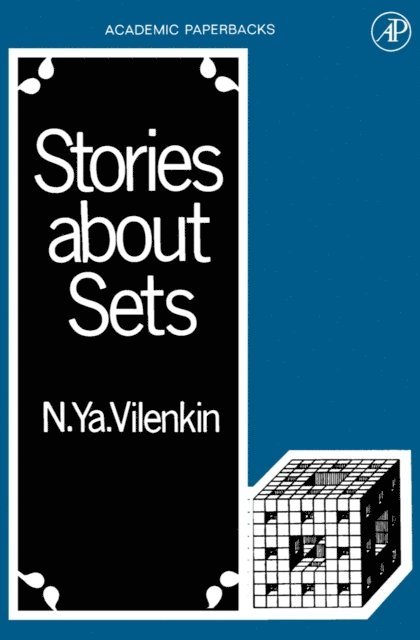
Stories About Sets
Av N. Ya. Vilenkin, W. Magnus m. fl.
E-bok, 2014
367 kr
Lägg i varukorg
Stories About Sets discusses the cardinality of sets and mathematical concepts, such as function, curve, surface, dimensions, and the paradoxical properties of curves and surfaces. The book reviews sets, operations on sets, the empty set, subsets, the universal sets, intersection of sets, union of …
Crystals
Their Role in Nature and in Science
Av Charles Bunn, Nicholas Declaris m. fl.
E-bok, 2013
789 kr
Lägg i varukorg
Crystals: Their Role in Nature and in Science provides the description of the phenomena and concepts and essential facts and ideas in the study of crystals. The book is divided into two parts. Part 1 discusses the growth and various forms of crystals. Under this section, topics on the etymology of …
Finite Permutation Groups
Av Helmut Wielandt, Nicholas DeClaris m. fl.
E-bok, 2014
367 kr
Lägg i varukorg
Finite Permutation Groups provides an introduction to the basic facts of both the theory of abstract finite groups and the theory of permutation groups. This book deals with older theorems on multiply transitive groups as well as on simply transitive groups. Organized into five chapters, this book …
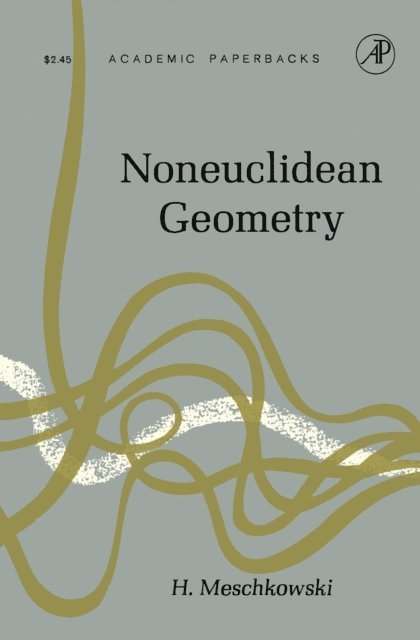
NonEuclidean Geometry
Av Herbert Meschkowski, W. Magnus m. fl.
E-bok, 2014
359 kr
Lägg i varukorg
Noneuclidean Geometry focuses on the principles, methodologies, approaches, and importance of noneuclidean geometry in the study of mathematics. The book first offers information on proofs and definitions and Hilbert''s system of axioms, including axioms of connection, order, congruence, and …
Euclidean and Affine Transformations
Geometric Transformations
Av A. S. Parkhomenko, P. S. Modenov m. fl.
E-bok, 2014
359 kr
Lägg i varukorg
Geometric Transformations, Volume 1: Euclidean and Affine Transformations focuses on the study of coordinates, trigonometry, transformations, and linear equations. The publication first takes a look at orthogonal transformations, including orthogonal transformations of the first and second kinds; …
Projective Transformations
Geometric Transformations
Av A. S. Parkhomenko, P. S. Modenov m. fl.
E-bok, 2014
356 kr
Lägg i varukorg
Geometric Transformations, Volume 2: Projective Transformations focuses on collinearity-preserving transformations of the projective plane. The book first offers information on projective transformations, as well as the concept of a projective plane, definition of a projective mapping, fundamental …
Complex Numbers in Geometry
Av I. M. Yaglom, Nicholas DeClaris m. fl.
E-bok, 2014
807 kr
Lägg i varukorg
Complex Numbers in Geometry focuses on the principles, interrelations, and applications of geometry and algebra. The book first offers information on the types and geometrical interpretation of complex numbers. Topics include interpretation of ordinary complex numbers in the Lobachevskii plane; …