D. C. Coleman - Böcker
Visar alla böcker från författaren D. C. Coleman. Handla med fri frakt och snabb leverans.
2 produkter
2 produkter
441 kr
Skickas inom 7-10 vardagar
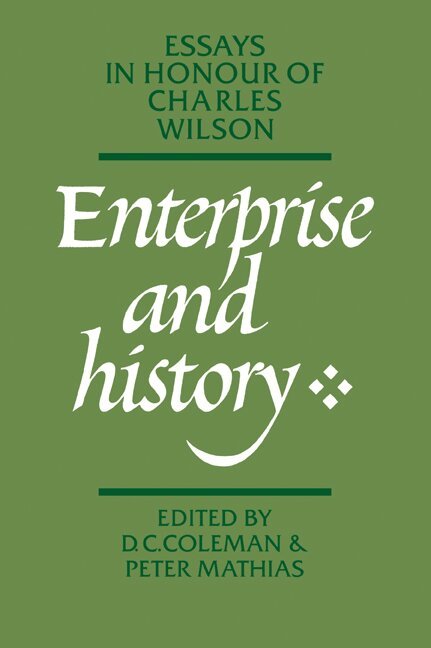
This collection of original essays is a tribute to Charles Wilson, Emeritus Professor of Modern History in the University of Cambridge and Fellow of Jesus College. They have been written by friends, colleagues and former students to honour him on his seventieth birthday. Running through the essays is the theme of enterprise in history and especially in the two fields in which Charles Wilson has been pre-eminent: business history and the economic relations of England and the Netherlands. As is appropriate for an historian with such international interests, the essays cover a wide field. They include contributions from a number of distinguished economic historians in continental Europe and the USA, as well as essays by several well-known British historians on different aspects of enterprise, including the Industrial Revolution, in Britain. The volume thus presents a comprehensive set of studies of diverse examples of the forms, consequences and interpretations of economic enterprise in history. It will thus be of substantial interest not only to business historians but also to a broad range of economic historians.
1 619 kr
Skickas inom 10-15 vardagar
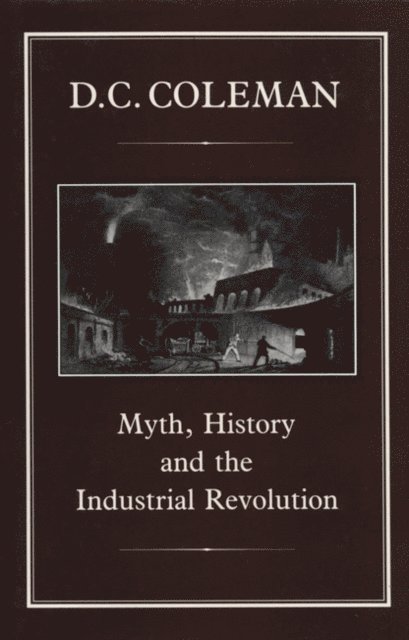
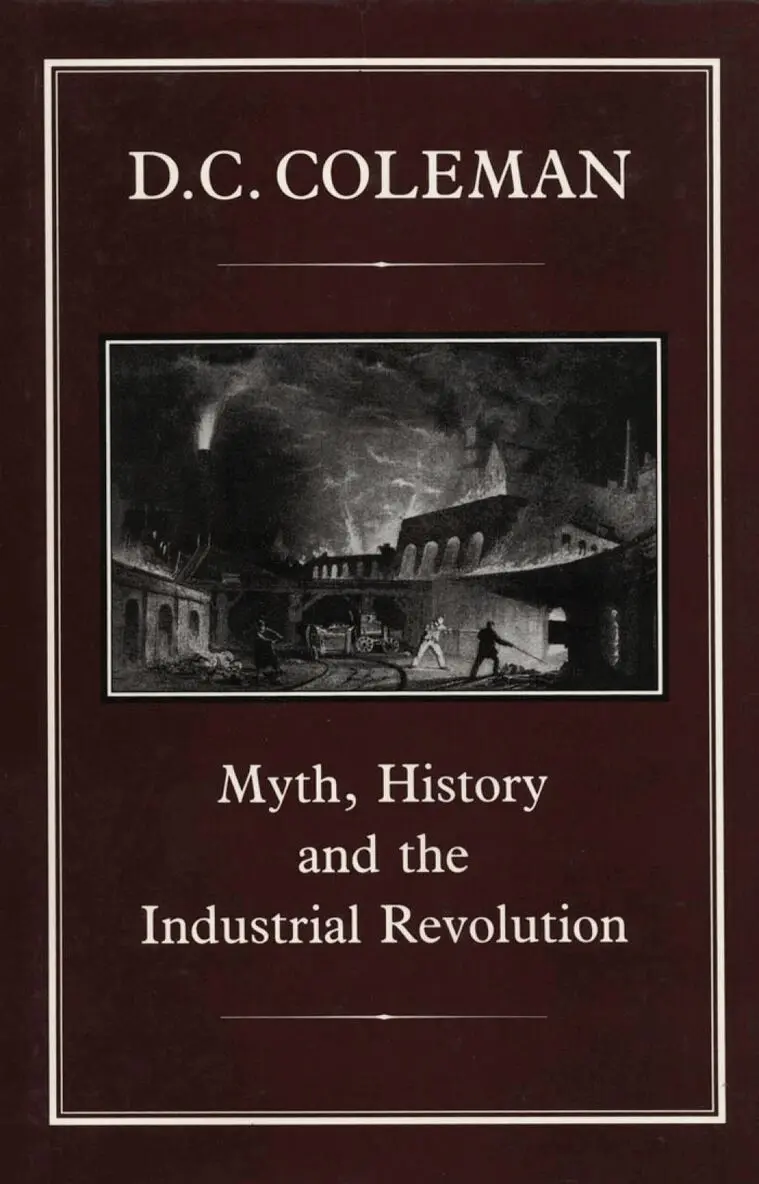
Tourists are today urged to visit the 'birthplace of the Industrial Revolution', packaged as part of 'a glorious heritage'. Half a century and more ago the picture was very different. Then the Industrial Revolution was commonly treated as having been a social catastrophe which had brought 'a new barbarism' to the country. Donald Coleman traces the history of the term 'Industrial Revolution' and the uses to which it has been put. Originating in European radical Romanticism, popularised in English by Arnold Toynbee in the 1 880s, it has achieved, with its meaning transformed, the status of potent myth in the nation's history. The book examines industrial revolutions real and imaginary; illuminates some of the activities of businessmen engaged therein; considers attitudes towards the businessmen who have thus come to occupy the historical stage; and discusses the academic study of business history -- a subject hardly imaginable without the Industrial Revolution. In the course of investigating these inter-related topics, the volume as a whole offers valuable insights into the ways in which economic history has been written and the concepts which have been invented and deployed in an effort to understand a central event in British history. This book provides an excellent introduction to the subject.