D. Dudley Williams – författare
Visar alla böcker från författaren D. Dudley Williams. Handla med fri frakt och snabb leverans.
3 produkter
3 produkter
1 000 kr
Skickas inom 7-10 vardagar
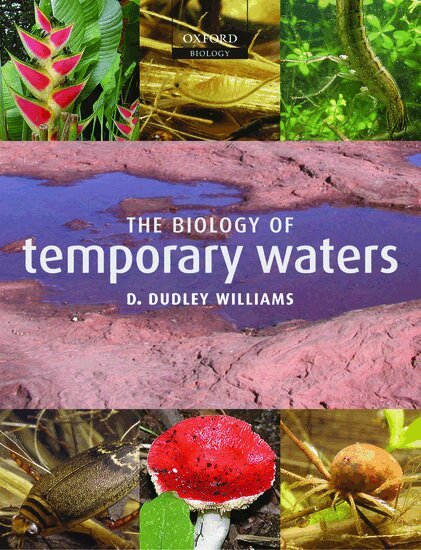
Temporary waters are found throughout the world, and include intermittent streams and ponds, episodic rain puddles, seasonal limestone lakes, the water-retaining structures of plants, such as bromeliads and pitcher plants, and a variety of man-made container habitats. They are probably populated by various plant, animal, and microscopic communities ranging from the very simple to the highly complex. Temporary waters therefore represent fascinating and significant arenas in which to study the properties of species, as the latter deal with the rigours of living in highly variable environments. Obligate temporary water species display a remarkable array of adaptations to the periodic loss of their primary medium that largely set them apart from the inhabitants of permanent water bodies. Survival of individuals frequently depends upon exceptional physiological tolerance or effective migrational abilities that are timed to appropriate habitat phases. Quite apart from their inherent biological interest, temporary waters are now in the limelight from a conservation perspective as these habitats come more and more into conflict with human activities. Traditionally, many temporary waters (be they ponds, pools, streams, or wetlands) have been considered to be 'wasted' areas of land, potentially convertible to agriculture once drained. In reality, they are natural features of the global landscape that represent distinct and unique habitats for many species, some that are found nowhere else and others that reach their maximum abundance and/or genetic diversity there. Temporary waters are also very important from a human health perspective since they function as breeding places for the vectors of many disease organisms, including those that spread malaria, schistosomiasis, yellow fever, and dengue. Most of these exact a high toll in terms of global human suffering and reduced regional economies. This book collates and synthesises the highly scattered and diverse global literature on pure and applied aspects of these habitats and their biota. It examines the ecology of temporary waters in both natural and human environments, and seeks to identify common evolutionary themes. It will be of particular interest to aquatic ecologists, invertebrate and vertebrate biologists, environmental biologists, wetland managers and conservationists, those charged with controlling water-associated diseases, entomologists, educators, and natural historians.
665 kr
Skickas inom 3-6 vardagar
1 062 kr
Skickas inom 10-15 vardagar
The primary role of this book is to introduce the reader to, and hopefully stimulate interest in, the ecology of temporary aquatic habi tats. The book assumes that the reader will have, already, some gen eral knowledge of ecology but this is not essential. Temporary waters exhibit amplitudes in both physical and chemical parameters which are much greater than those found in most waterbodies. The organisms that live in these types of habitats have, therefore, to be very well adapted to these conditions if they are to survive. Survival depends largely on exceptional physiological tolerance or effective immigration and emigration abilities. Examples of such adaptations are given throughout the book and it is hoped that these will aid the reader in gaining an insight into the structure and function of plant and animal communities of these unusual habi tats. The final chapter suggests field and laboratory projects that should be useful to students in school and university studies.