D. H. Green - Böcker
Visar alla böcker från författaren D. H. Green. Handla med fri frakt och snabb leverans.
10 produkter
10 produkter
584 kr
Skickas inom 7-10 vardagar
Despite the fashionable standing of irony in studies of modern literature and its occasional application to medieval studies in a number of recent works, no sustained analysis of this phenomenon has yet been attempted for medieval literature. Professor Green attempts to fill the most important part of this lacuna by discussing irony in the medieval genre in which it is employed most frequently and with the greatest sophistication, the romance. The approach is therefore directed more towards the genre as such than to any specific example, and, although the book is written primarily from a Germanist's point of view, it also takes into account the romances of Chrétien de Troyes and their German adaptations, various examples from the Tristan tradition in France and Germany, Flamenca as an example from Provence, as well as Chaucer's Troilus and Criseyde, and Sir Gawain and the Green Knight from England. Proceeding from a working definition of medieval irony and a survey of the signals which may allow us to perceive its presence, Professor Green considers the possibilities, rhetorical and otherwise, of registering irony in courtly literature at large. From this he moves on to discuss the major themes to which irony may be applied (chivalry and love), as well as the ways in which the narrative is organised so as to bring out any ironic implications of these themes. Subsequent chapters are concerned with the various types of irony to be distinguished: verbal irony, irony of the narrator, dramatic irony, the irony of values, and structural irony. A concluding chapter sums up the reasons, aesthetic and social, for the prevalence of irony in this particular genre of medieval literature.
Del 47 - Cambridge Studies in Medieval Literature
The Beginnings of Medieval Romance
Fact and Fiction, 1150-1220
Häftad, Engelska, 2007
584 kr
Skickas inom 7-10 vardagar
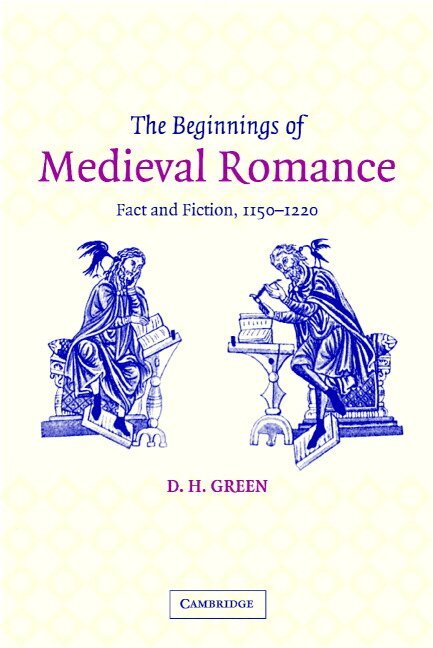
Up to the twelfth century writing in the western vernaculars dealt almost exclusively with religious, historical and factual themes, all of which were held to convey the truth. The second half of the twelfth century saw the emergence of a new genre, the romance, which was consciously conceived as fictional and therefore allowed largely to break free from traditional presuppositions. Dennis Green explores how and why this happened, and examines this period of crucial importance for the birth of the romance and the genesis of medieval fiction in the vernacular. Although the crucial innovative role of writers in Germany is Green's main concern, he also takes literature in Latin, French and Anglo-Norman into account. This study offers a definition of medieval fictionality in its first formative period in the twelfth century, and underlines the difficulties encountered in finding a place for the fictional romance within earlier literary traditions.
674 kr
Skickas inom 7-10 vardagar
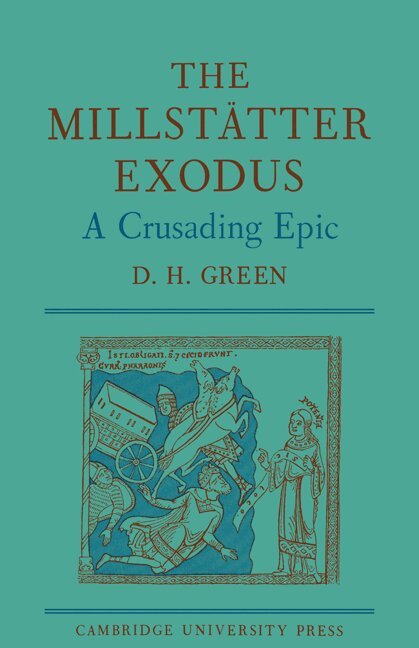
The Millstatter Exodus, a German epic of the twelfth century, is a poetic version of the opening chapters of the book of Exodus, treating the events of the early life of Moses and culminating in the crossing of the Red Sea and the destruction of the Hebrews' pagan enemies. In form it represents the second attempt at a biblical epic on the large scale after the revival of German vernacular literature in the late eleventh century. Professor Green analyses the Millstatter Exodus in form and in context. He compares it with its predecessor, the Wiener Genesis, and with its biblical source, throwing light on the early development of the German epic in the twelfth century and on the poetic intentions of the author of the Exodus. Professor Green believes that the Millstatter Exodus can best be understood allegorically against the background of the crusading movement, and he shows that it is one of the first literary attempts in Germany to come to terms with the crusades and the problem of Christian warfare.
Del 65 - Cambridge Studies in Medieval Literature
Women Readers in the Middle Ages
Häftad, Engelska, 2011
584 kr
Skickas inom 7-10 vardagar
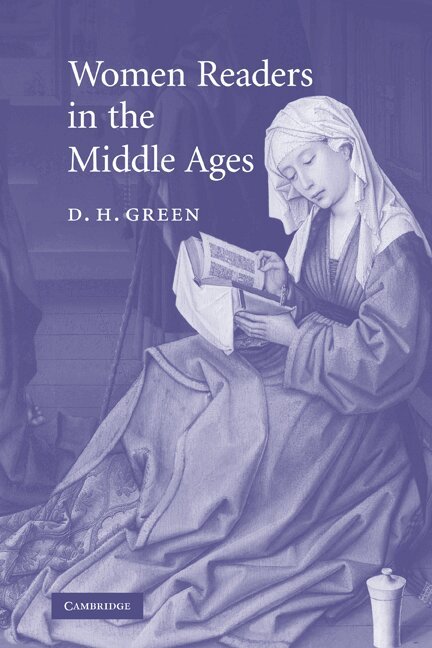
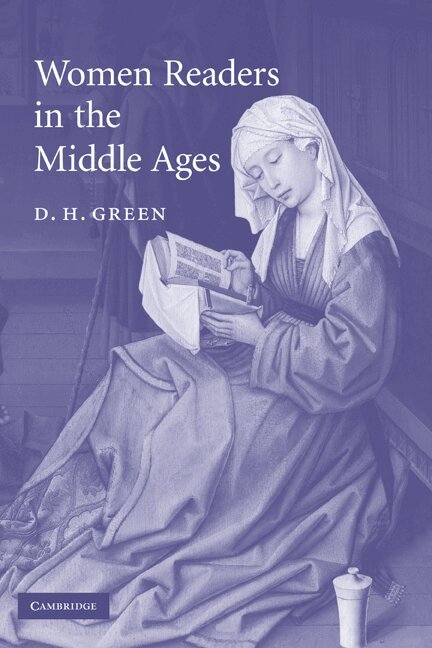
Throughout the Middle Ages, the number of female readers was far greater than is commonly assumed. D. H. Green shows that, after clerics and monks, religious women were the main bearers of written culture and its expansion. Moreover, laywomen played a vital part in the process whereby the expansion of literacy brought reading from religious institutions into homes, and increasingly from Latin into vernacular languages. This study assesses the various ways in which reading was practised between c.700 and 1500 and how these differed from what we mean by reading today. Focusing on Germany, France and England, it considers the different categories of women for whom reading is attested (laywomen, nuns, recluses, semi-religious women, heretics), as well as women's general engagement with literature as scribes, dedicatees, sponsors and authors. This fascinating study opens up the world of the medieval woman reader to new generations of scholars and students.
1 119 kr
Skickas inom 7-10 vardagar
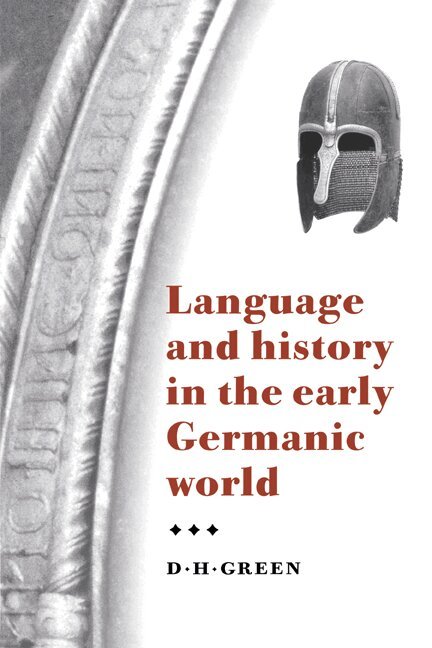
This book offers a distinctive and accessible approach to the earliest encounters of the Germanic tribes of Northern Europe with classical antiquity and with early Christianity. It brings together linguistic evidence from across Europe and dating from before Caesar to about 900 AD, to shed light on important aspects of Germanic culture. It shows how semantics and loanword studies, often avoided by non-specialists, can provide important clues for historians and archaeologists of the period. Likewise, it demonstrates that philologists and linguists ignore historical evidence at their peril.
Del 74 - Cambridge Studies in Medieval Literature
Women and Marriage in German Medieval Romance
Inbunden, Engelska, 2009
1 431 kr
Skickas inom 7-10 vardagar
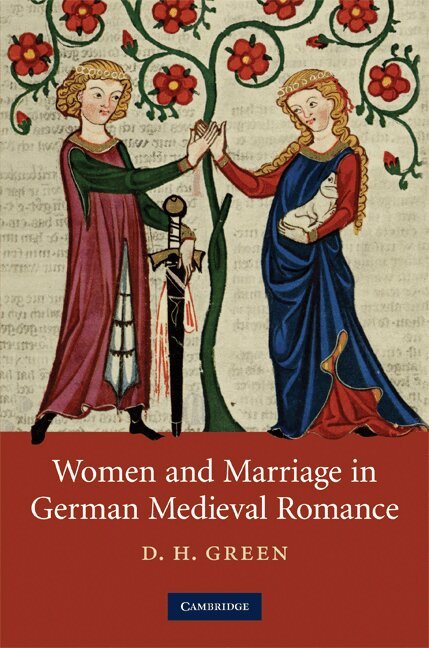
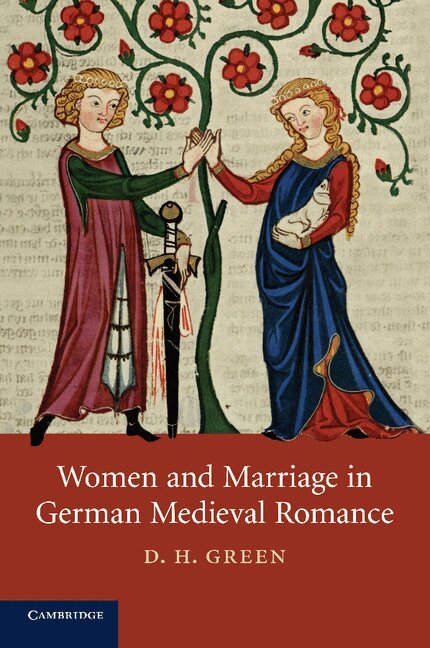
In contrast to the widespread view that the Middle Ages were a static, unchanging period in which attitudes to women were uniformly negative, D. H. Green argues that around 1200 the conventional relationship between men and women was subject to significant challenge through discussions in the vernacular literature of the period. Hitherto scholarly interest in gender relations in such literature has largely focused on French romance or on literature in English from a later period. By turning the focus on the rich material to be garnered from Germany - the romances Erec, Tristan and Parzival - Professor Green shows how some vernacular writers devised methods to debate and challenge the undoubted antifeminism of the day by presenting a Utopian model, supported by a revision of views by the Church, to contrast with contemporary practice.
694 kr
Skickas inom 7-10 vardagar
This book offers a distinctive and accessible approach to the earliest encounters of the Germanic tribes of Northern Europe with classical antiquity and with early Christianity. It brings together linguistic evidence from across Europe and dating from before Caesar to about 900 AD, to shed light on important aspects of Germanic culture. It shows how semantics and loanword studies, often avoided by non-specialists, can provide important clues for historians and archaeologists of the period. Likewise, it demonstrates that philologists and linguists ignore historical evidence at their peril.
Del 47 - Cambridge Studies in Medieval Literature
The Beginnings of Medieval Romance
Fact and Fiction, 1150-1220
Inbunden, Engelska, 2002
1 431 kr
Skickas inom 7-10 vardagar
Up to the twelfth century writing in the western vernaculars dealt almost exclusively with religious, historical and factual themes, all of which were held to convey the truth. The second half of the twelfth century saw the emergence of a new genre, the romance, which was consciously conceived as fictional and therefore allowed largely to break free from traditional presuppositions. Dennis Green explores how and why this happened, and examines this period of crucial importance for the birth of the romance and the genesis of medieval fiction in the vernacular. Although the crucial innovative role of writers in Germany is Green's main concern, he also takes literature in Latin, French and Anglo-Norman into account. This study offers a definition of medieval fictionality in its first formative period in the twelfth century, and underlines the difficulties encountered in finding a place for the fictional romance within earlier literary traditions.
Del 65 - Cambridge Studies in Medieval Literature
Women Readers in the Middle Ages
Inbunden, Engelska, 2007
1 431 kr
Skickas inom 7-10 vardagar
Throughout the Middle Ages, the number of female readers was far greater than is commonly assumed. D. H. Green shows that, after clerics and monks, religious women were the main bearers of written culture and its expansion. Moreover, laywomen played a vital part in the process whereby the expansion of literacy brought reading from religious institutions into homes, and increasingly from Latin into vernacular languages. This study assesses the various ways in which reading was practised between c.700 and 1500 and how these differed from what we mean by reading today. Focusing on Germany, France and England, it considers the different categories of women for whom reading is attested (laywomen, nuns, recluses, semi-religious women, heretics), as well as women's general engagement with literature as scribes, dedicatees, sponsors and authors. This fascinating study opens up the world of the medieval woman reader to new generations of scholars and students.
Del 74 - Cambridge Studies in Medieval Literature
Women and Marriage in German Medieval Romance
Häftad, Engelska, 2014
493 kr
Skickas inom 7-10 vardagar
In contrast to the widespread view that the Middle Ages were a static, unchanging period in which attitudes to women were uniformly negative, D. H. Green argues that around 1200 the conventional relationship between men and women was subject to significant challenge through discussions in the vernacular literature of the period. Hitherto scholarly interest in gender relations in such literature has largely focused on French romance or on literature in English from a later period. By turning the focus on the rich material to be garnered from Germany - the romances Erec, Tristan and Parzival - Professor Green shows how some vernacular writers devised methods to debate and challenge the undoubted antifeminism of the day by presenting a Utopian model, supported by a revision of views by the Church, to contrast with contemporary practice.