D. J. S. Cross - Böcker
Visar alla böcker från författaren D. J. S. Cross. Handla med fri frakt och snabb leverans.
5 produkter
5 produkter
1 169 kr
Kommande
Deleuze and Affect brings together work from emerging and established scholars to address and reassess the role of affect in Deleuze’s work and its legacy in the critical humanities. Affects are not merely new sensations; they are, more radically, new sensibilities. They therefore have the potential to redefine the very conditions of experience, to open new relations to the world, and to reshape each discipline.The multidisciplinary contributors to this volume place affect squarely at the intersection of diverse fields and disciplines from philosophy and literature, visual studies and film studies, art and architecture, through to politics and economics.In an age in which the sciences unlock more and more secrets of a body that is also, paradoxically, becoming more and more precarious, this volume examines the stakes and spectrum of what it means 'to affect’ and 'to be affected'.
1 886 kr
Skickas inom 3-6 vardagar
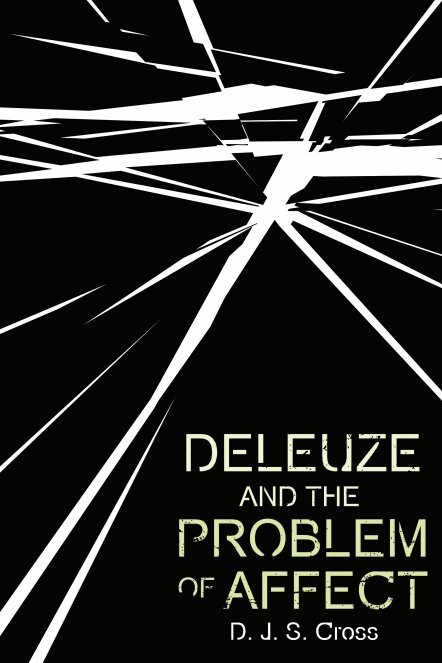
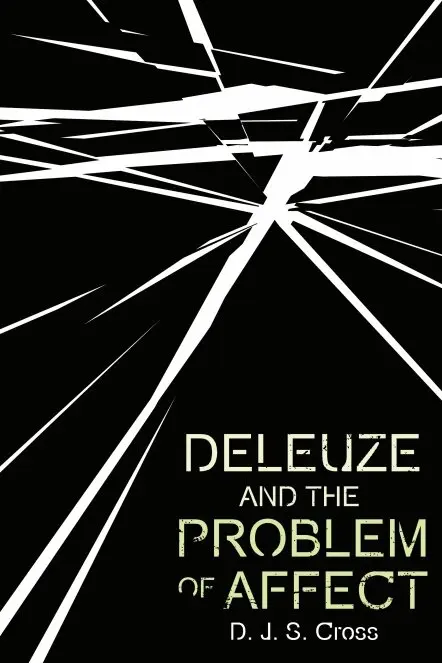
Perhaps more than any other philosopher, Deleuze has been pivotal for the recent 'affective turn' in philosophy and the humanities at large. Critics and proponents alike, however, have yet to appreciate the extent to which Deleuze himself remains profoundly ambivalent toward affect and embodiment in general. D. J. S. Cross argues that this ambivalence and its longevity have been overlooked because they only become apparent through a systematic analysis of affect throughout Deleuze's work. By outlining the ways in which, from beginning to end, Deleuze's system of thought both ruptures and complies with the tradition, Cross recalibrates Deleuze's philosophy and the recent 'affective turn' that hinges upon it.
496 kr
Skickas inom 3-6 vardagar
Systematically analyses affect as the fundamental problem in and for Deleuze's philosophyRe-examines Deleuze's status as a pillar of affect theory and, a fortiori, affect theory itselfDemonstrates simultaneously 'radical' and 'conservative' tendencies of Deleuze's philosophy Develops affect as the operator of interdisciplinarity according to DeleuzeChallenges the portrayal of Deleuze as an unambiguous champion of affectPerhaps more than any other philosopher, Deleuze has been pivotal for the recent 'affective turn' in philosophy and the humanities at large. Critics and proponents alike, however, have yet to appreciate the extent to which Deleuze himself remains profoundly ambivalent toward affect and embodiment in general. In this book, D. J. S. Cross argues that this ambivalence and its longevity have been overlooked because they only become apparent through a systematic analysis of affect throughout Deleuze's work. By outlining how, from beginning to end, Deleuze's system of thought both ruptures and complies with the tradition, Cross recalibrates Deleuze's philosophy and the recent 'affective turn' that hinges upon it.
1 567 kr
Kommande
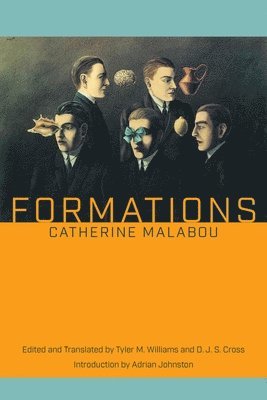
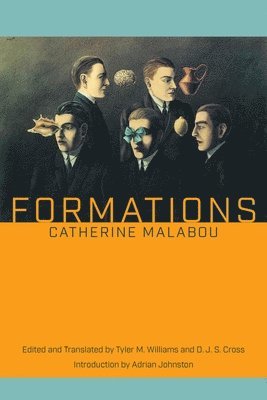
Catherine Malabou’s elaboration of the concept of plasticity has made her one of the most innovative philosophers working today. Formations collects eighteen of Malabou’s early writings, spanning 1986 to 2003, within which her initial articulations of plasticity take shape. Though Malabou might be most famous for bringing neurobiological discourse into conversation with continental philosophy, she has always maintained, as the essays in Formation make clear, that "plasticity" circulates dynamically within the history of philosophy. Across readings of Hegel, Marx, Derrida, Rousseau, Heidegger, Ricoeur, Plato, Aristotle, and many others, these essays highlight the deep entrenchment of plasticity within the history of philosophy.Formations puts on full display Malabou’s associations with deconstruction, her negotiations with structuralism, her interdisciplinary investments in philosophical calibrations of literature, and the unique form of dialectics that will shape her later thought. A critical introduction by Adrian Johnston situates these essays within the contexts of French Hegelianism and Marxism, showing both the continuity of these early essays with Malabou’s later work as well as their singular contributions to the development of these still-relevant critical fields. An afterword by Malabou herself offers a biographical and bibliographic retrospective to these essays.Never just an archive of precursory traces of a later project, Formations exhibits the plastic metamorphosis of Malabou’s own thought by revealing any oeuvre, including any translation or editorial arrangement of that oeuvre, to be a product constituted by its ongoing formations. In this sense, the title reflects one of the most enduring features of Malabou’s thought: "formation" stands doubly for the rigidity of an identity and the processes by which that identity changes and takes shape.
399 kr
Kommande
Catherine Malabou’s elaboration of the concept of plasticity has made her one of the most innovative philosophers working today. Formations collects eighteen of Malabou’s early writings, spanning 1986 to 2003, within which her initial articulations of plasticity take shape. Though Malabou might be most famous for bringing neurobiological discourse into conversation with continental philosophy, she has always maintained, as the essays in Formation make clear, that "plasticity" circulates dynamically within the history of philosophy. Across readings of Hegel, Marx, Derrida, Rousseau, Heidegger, Ricoeur, Plato, Aristotle, and many others, these essays highlight the deep entrenchment of plasticity within the history of philosophy.Formations puts on full display Malabou’s associations with deconstruction, her negotiations with structuralism, her interdisciplinary investments in philosophical calibrations of literature, and the unique form of dialectics that will shape her later thought. A critical introduction by Adrian Johnston situates these essays within the contexts of French Hegelianism and Marxism, showing both the continuity of these early essays with Malabou’s later work as well as their singular contributions to the development of these still-relevant critical fields. An afterword by Malabou herself offers a biographical and bibliographic retrospective to these essays.Never just an archive of precursory traces of a later project, Formations exhibits the plastic metamorphosis of Malabou’s own thought by revealing any oeuvre, including any translation or editorial arrangement of that oeuvre, to be a product constituted by its ongoing formations. In this sense, the title reflects one of the most enduring features of Malabou’s thought: "formation" stands doubly for the rigidity of an identity and the processes by which that identity changes and takes shape.