
D. Vanbeveren – författare
Visar alla böcker från författaren . Handla med fri frakt och snabb leverans.
8 produkter
8 produkter
Inbunden, Engelska, 2001
2 166 kr
Skickas inom 10-15 vardagar
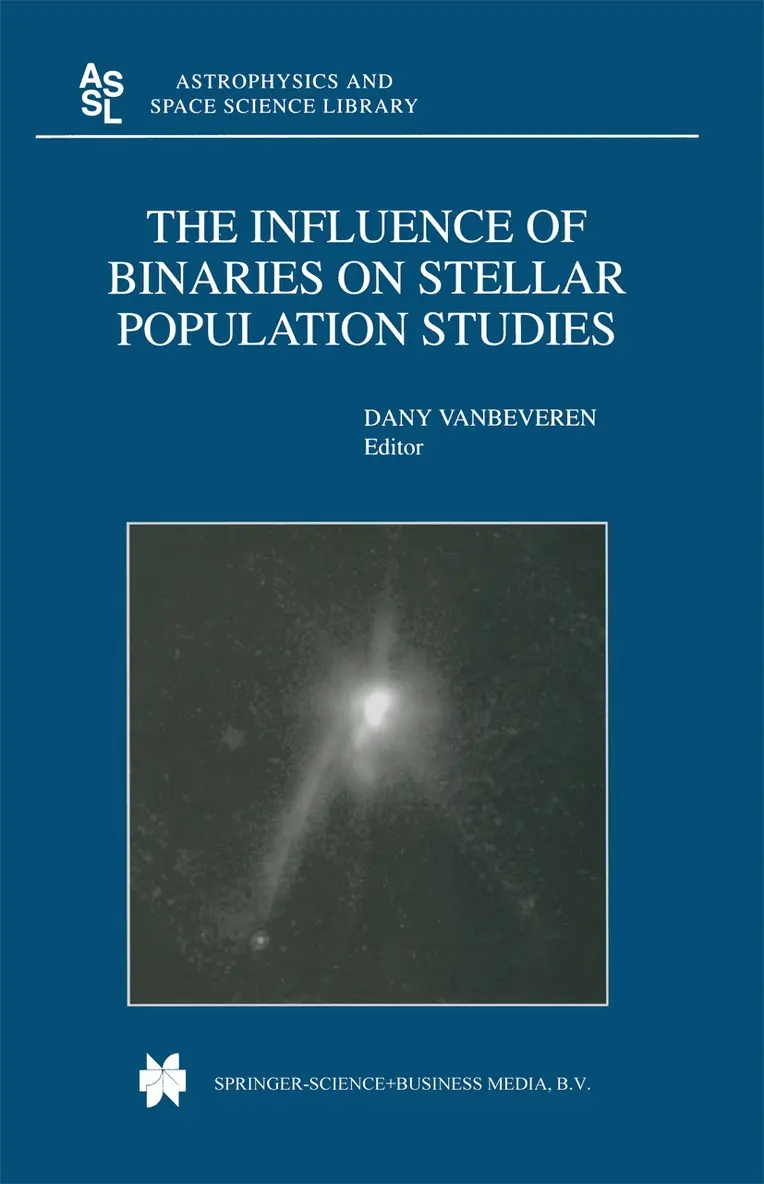
This volume reviews observations of non-evolved and evolved binary populations in clusters and the field with special emphasis on statistical biases, incompleteness and distribution functions. Different binary types are considered: cataclysmic variables, super-soft X-ray sources, double degenerate binaries, Algol-type binaries, Be binaries, X-ray binaries, and Wolf-Rayet binaries. The observational part ends with a discussion on stellar winds in massive stars, on new results of massive starbursts and on the characteristics and the rates of the different types of supernovae. Population synthesis relies on stellar evolution. Results on single star and binary evolution are presented. We then compare theoretical models of population synthesis to observations. Much attention is given at population dynamics, spectral synthesis of starbursts, number synthesis of the binaries and supernova rates discussed in the first part of this book. Finally, the book highlights the possible effects of binaries on galactic chemical evolution.
Del 232 - Astrophysics and Space Science Library
Brightest Binaries
Häftad, Engelska, 2001
547 kr
Skickas inom 10-15 vardagar
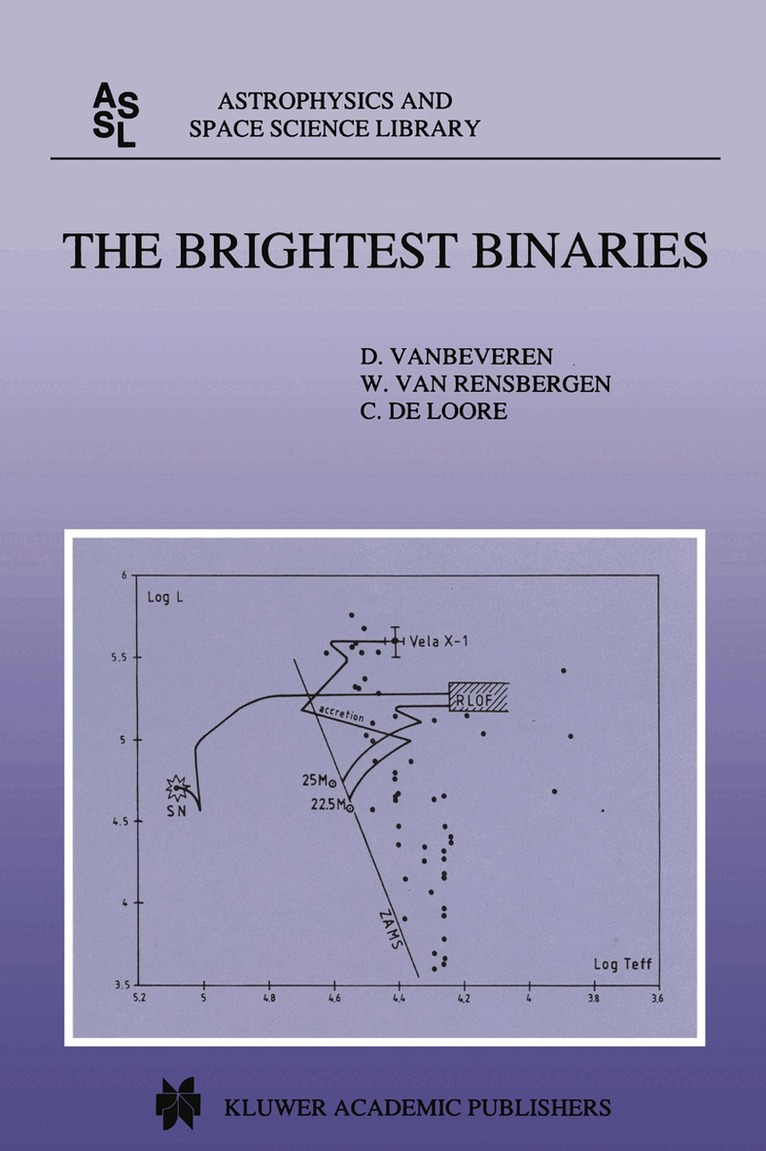
The evolution of galaxies is governed mainly by the evolution of massive stars whereas the evolution of a massive star depends primarily on its mass, chemical composition and on whether or not the star is a Single object or a binary component. To study the evolution of galaxies, it is therefore essential to know how stellar masses are distributed at birth, how many stars are formed in binaries, and what the mass ratio and orbital period distribution of binaries look like. Massive stars are intrinsically the brightest stars, so that it may be possible to discover their properties in distant groups prOvided that large telescopes can be used for basic stellar observations. However, until now the observations of massive stars have been reasonably complete only for a small region of our own Galaxy (~ 3 kpc from the Sun). One hopes that the conclusions resulting from these observations hold for the whole Galaxy, for the whole cosmos. With 'The Brightest Stars' of De Jager (1980) in mind, the present monograph is an addendum and an update in which we discuss the observations of 'The Brightest Binaries' in the framework of stellar evolution. A small or intermediate mass star close to the Sun may look brighter than a massive one far away. However, within volume limited star samples, the massive stars are on average also the brightest ones. In the present monograph (similarly as in the work of De Jager), bright means massive. The book consists of four main chapters.
E-bok
PDF, Tyska, 2013821 kr
Läs direkt efter köp
Häftad, Tyska, 2013
814 kr
Skickas inom 10-15 vardagar
Das Buch richtet sich an Projektmanager, Projektverantwortliche, Consultants, Unternehmer und Geschäftsführer.Der praxisorientierte Leitfaden zeigt Optimierungspotentiale der Geschäftsprozesse anhand realer Fall- und Rechenbeispiele. Es geht um den Weg von der Analyse bis zur Realisierung konkreter B2B-Lösungen. Das Buch stellt die optimale Umsetzung der Materialbewirtschaftung (Supply Chain Management) mit Fulfillment und der erforderlichen kontinuierlichen Leistungsmessung und -bewertung heraus. Durch den projektorientierten Ansatz kann das vermittelte Wissen sofort umgesetzt werden.
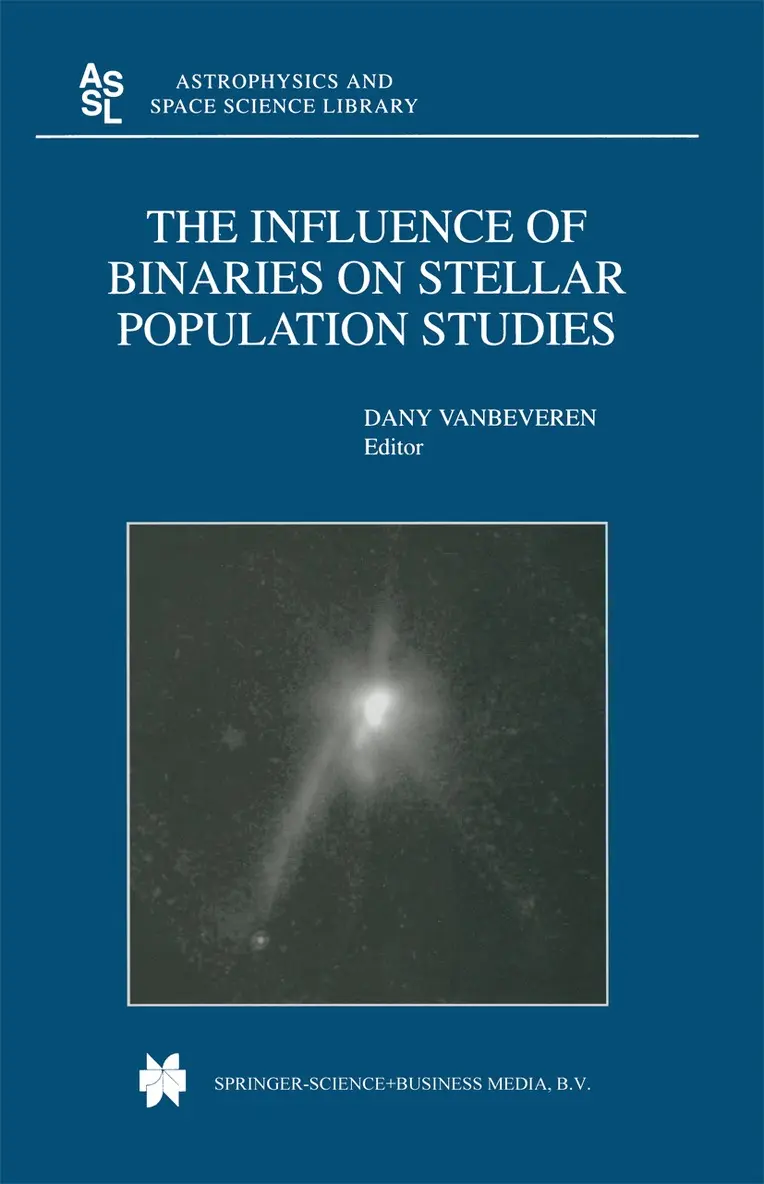
Del 264 - Astrophysics and Space Science Library
Influence of Binaries on Stellar Population Studies
Häftad, Engelska, 2010
2 157 kr
Skickas inom 10-15 vardagar
A star in a binary may interact with its companion and this complicates significantly its structure and evolution. During several decades in the past many astronomers hoped that the number of binaries is small. This is sometimes reflected in theoretical studies dealing with large populations of stars where it is ASSUMED (without any justification) that binaries do not alter the results. The number of confirmed binaries increases as observations improve and we there fore thought that the time was right to organize a meeting where the main topic would be the effect of binaries on stellar population studies. The SOC proposed a program with extended general overviews and highlights of non-evolved and evolved binaries, with low mass, intermediate mass and massive components, the link with supernova explosions, pulsars and gamma-ray bursts, the effect of binaries on the chemical evo lution of galaxies. Specialists in the different research fields were invited and have given very interesting and highly educational talks. As can be noticed by reading the proceedings, the authors have put a lot of effort in preparing their contribution.
Häftad, Engelska, 2012
1 082 kr
Skickas inom 10-15 vardagar
Massive stars occupy an exceptional place in general astrophysics. They trigger many if not all of the important processes in galactic evolution whereas due to their intrinsic brightness, they offer the (only until now) possibility to study the stellar content and stellar behaviour in distant galaxies. The last, say, 25 years, massive stars have been the subject of numerous meetings discussing the influence of massive stars on population synthesis, the number distribution of different types of massive stars, the LBV phenomenon, WR stars, X-ray binaries, stellar winds in massive stars, chemical pecularities in massive stars, supernova explosions of massive stars and the important SN1987A event, the influence of massive stars and chemical evolution of galaxies. It is clear that without a theory of stellar evolution, the study of these topics loses a lot of its significance. Massive star evolution therefore got a chance in these meetings, but rarely as a prime subject. The state of the art, the physical processes and the uncertainties in stellar evolution were barely touched. Even more, the influence of close binaries in all these massive star meetings slowly disappeared the last, say, 13 years without any scientific justification, although a significant fraction of stars occurs in close binaries with periods small enough so that both components will interact during their evolution. Denying the binaries or not discussing their influence on results and conclusions, makes the latter very uncertain or even completely unreliable.
E-bok
PDF, Engelska, 20121 413 kr
Läs direkt efter köp
Massive stars occupy an exceptional place in general astrophysics. They trigger many if not all of the important processes in galactic evolution whereas due to their intrinsic brightness, they offer the (only until now) possibility to study the stellar content and stellar behaviour in distant galaxies. The last, say, 25 years, massive stars have been the subject of numerous meetings discussing the influence of massive stars on population synthesis, the number distribution of different types of massive stars, the LBV phenomenon, WR stars, X-ray binaries, stellar winds in massive stars, chemical pecularities in massive stars, supernova explosions of massive stars and the important SN1987A event, the influence of massive stars and chemical evolution of galaxies. It is clear that without a theory of stellar evolution, the study of these topics loses a lot of its significance. Massive star evolution therefore got a chance in these meetings, but rarely as a prime subject. The state of the art, the physical processes and the uncertainties in stellar evolution were barely touched. Even more, the influence of close binaries in all these massive star meetings slowly disappeared the last, say, 13 years without any scientific justification, although a significant fraction of stars occurs in close binaries with periods small enough so that both components will interact during their evolution. Denying the binaries or not discussing their influence on results and conclusions, makes the latter very uncertain or even completely unreliable.
E-bok
PDF, Engelska, 20132 833 kr
Läs direkt efter köp
A star in a binary may interact with its companion and this complicates significantly its structure and evolution. During several decades in the past many astronomers hoped that the number of binaries is small. This is sometimes reflected in theoretical studies dealing with large populations of stars where it is ASSUMED (without any justification) that binaries do not alter the results. The number of confirmed binaries increases as observations improve and we there fore thought that the time was right to organize a meeting where the main topic would be the effect of binaries on stellar population studies. The SOC proposed a program with extended general overviews and highlights of non-evolved and evolved binaries, with low mass, intermediate mass and massive components, the link with supernova explosions, pulsars and gamma-ray bursts, the effect of binaries on the chemical evo lution of galaxies. Specialists in the different research fields were invited and have given very interesting and highly educational talks. As can be noticed by reading the proceedings, the authors have put a lot of effort in preparing their contribution.