Damien Bazin - Böcker
Visar alla böcker från författaren Damien Bazin. Handla med fri frakt och snabb leverans.
4 produkter
4 produkter
2 165 kr
Skickas inom 10-15 vardagar
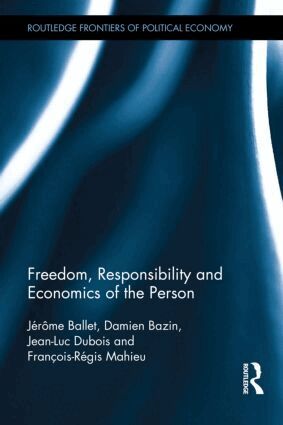
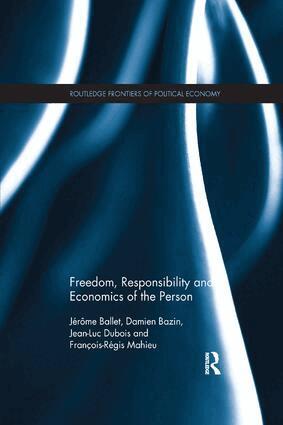
The capability approach has developed significantly since Amartya Sen was awarded the Nobel Prize in Economics in 1998. It is now recognised as being highly beneficial in the analysis of poverty and inequality, but also in the redefinition of policies aimed at improving the well-being of individuals.The approach has been applied within numerous sectors, from health and education to sustainable development, but beyond the obvious interest that it represents for the classical economics tradition, it has also encountered certain limitations. While acknowledging the undeniable progress that the approach has made in renewing the thinking on the development and well-being of a population, this book takes a critical stance. It focuses particularly on the approach’s inadequacy vis-à-vis the continental phenomenological tradition and draws conclusions about the economic analysis of development. In a more specific sense, it highlights the fact that the approach is too bound by standard economic logic, which has prevented it from taking account of a key ‘person’ dimension — namely, the ability of an individual to assume responsibility. As a result, this book advocates the notion that if the approach is used carelessly in relation to development policies, it can cause a number of pernicious effects, some of which may lead to disastrous consequences.Due to its multidisciplinary nature, this book will be of interest to those working in the fields of economics, philosophy, development studies and sociology.
Positive Ethics in Economics
Volume 14, Praxiology: The International Annual of Practical Philosophy and Methodology
Inbunden, Engelska, 2006
2 098 kr
Skickas inom 10-15 vardagar
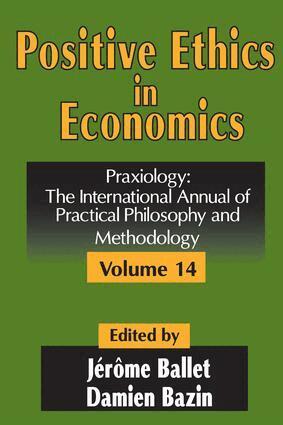
Economics is often accused of being "a-ethical"--lacking a moral perspective--if not altogether immoral. Its detractors criticize economic models of pure and perfect competition, and claim that economics should be concerned with social effects and strive to be equitable. Yet, these critics fail to understand that the discipline has many dimensions. Economics has also developed a group of concerns directly related to ethics. The presence of practical ethics is evident in the economic analysis of behavior that incorporates ethical preference, altruism, and a responsible calculation based on norms. It is fair today that economics differentiates ethics from purely financial matters, and the discipline can be associated with morality in man's daily life.Volume 14 of the distinguished Praxiology series, examine the concept of positive ethics in economics. While normative ethics moralizes economics, trying to render it more "just," positive ethics is first and foremost a model for the construction of theoretical economic reasoning: It reflects on ethical practices within economics, and introduces a model of reasoning that takes individual ethical behavior and its aftereffects into account. The book is divided into three parts. In "Altruism," the contributors discuss the notion of unselfish concern for the welfare of others, and its place in economic practice. In "Commitment," the authors discuss reason as being central to economic theory, as well as the position of ethical behavior. In "Responsibility," the idea that man is not an island unto himself, but a being involved in a set of relationships, is examined. If a person is simultaneously responsible for himself and others, then how far does his responsibility extend?Essays on Positive Ethics in Economics is thought-provoking volume that will be of interest to economists, policymakers, philosophers, and students of ethics and morality.JÚr¶me Ballet is senior lecturer in economics at the University of Versailles and senior research fellow at the C3ED (Economics and Ethics Center for Environment and Development). He is the editor of the online journal Ethics and Economics and has published several books and articles on ethics and economics.Damien Bazin is a research fellow at the C3ED, where his specialization is economic philosophy. He is associate editor of Ethics and Economics.
698 kr
Skickas inom 10-15 vardagar
The capability approach has developed significantly since Amartya Sen was awarded the Nobel Prize in Economics in 1998. It is now recognised as being highly beneficial in the analysis of poverty and inequality, but also in the redefinition of policies aimed at improving the well-being of individuals.The approach has been applied within numerous sectors, from health and education to sustainable development, but beyond the obvious interest that it represents for the classical economics tradition, it has also encountered certain limitations. While acknowledging the undeniable progress that the approach has made in renewing the thinking on the development and well-being of a population, this book takes a critical stance. It focuses particularly on the approach’s inadequacy vis-à-vis the continental phenomenological tradition and draws conclusions about the economic analysis of development. In a more specific sense, it highlights the fact that the approach is too bound by standard economic logic, which has prevented it from taking account of a key ‘person’ dimension — namely, the ability of an individual to assume responsibility. As a result, this book advocates the notion that if the approach is used carelessly in relation to development policies, it can cause a number of pernicious effects, some of which may lead to disastrous consequences.Due to its multidisciplinary nature, this book will be of interest to those working in the fields of economics, philosophy, development studies and sociology.
Positive Ethics in Economics
Volume 14, Praxiology: The International Annual of Practical Philosophy and Methodology
Häftad, Engelska, 2017
685 kr
Skickas inom 10-15 vardagar
Economics is often accused of being "a-ethical"--lacking a moral perspective--if not altogether immoral. Its detractors criticize economic models of pure and perfect competition, and claim that economics should be concerned with social effects and strive to be equitable. Yet, these critics fail to understand that the discipline has many dimensions. Economics has also developed a group of concerns directly related to ethics. The presence of practical ethics is evident in the economic analysis of behavior that incorporates ethical preference, altruism, and a responsible calculation based on norms. It is fair today that economics differentiates ethics from purely financial matters, and the discipline can be associated with morality in man's daily life.Volume 14 of the distinguished Praxiology series, examine the concept of positive ethics in economics. While normative ethics moralizes economics, trying to render it more "just," positive ethics is first and foremost a model for the construction of theoretical economic reasoning: It reflects on ethical practices within economics, and introduces a model of reasoning that takes individual ethical behavior and its aftereffects into account. The book is divided into three parts. In "Altruism," the contributors discuss the notion of unselfish concern for the welfare of others, and its place in economic practice. In "Commitment," the authors discuss reason as being central to economic theory, as well as the position of ethical behavior. In "Responsibility," the idea that man is not an island unto himself, but a being involved in a set of relationships, is examined. If a person is simultaneously responsible for himself and others, then how far does his responsibility extend?Essays on Positive Ethics in Economics is thought-provoking volume that will be of interest to economists, policymakers, philosophers, and students of ethics and morality.JÚr¶me Ballet is senior lecturer in economics at the University of Versailles and senior research fellow at the C3ED (Economics and Ethics Center for Environment and Development). He is the editor of the online journal Ethics and Economics and has published several books and articles on ethics and economics.Damien Bazin is a research fellow at the C3ED, where his specialization is economic philosophy. He is associate editor of Ethics and Economics.