Damir Karakas – författare
Visar alla böcker från författaren Damir Karakas. Handla med fri frakt och snabb leverans.
5 produkter
5 produkter
Häftad, Engelska, 2024
179 kr
Skickas
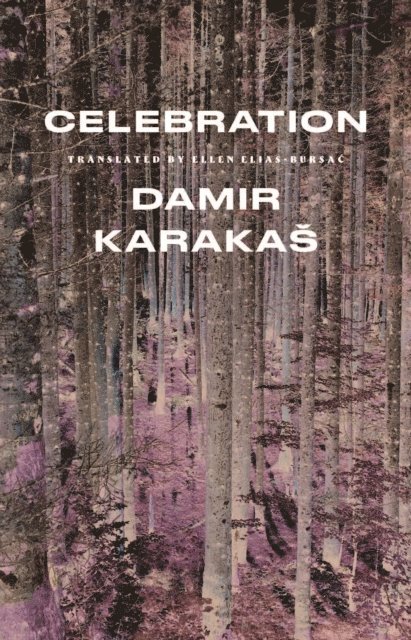
A Paris Review Book of the Year.In four fragmentary stories set in the mountainous Lika region of Croatia, Mijo's life unfurls not with the chronology of time but in episodes, each in flow with the textural grain of this remote earth. With sparest of prose, Karakas has crafted an exquisite sense of place and of family within it. The result is among the most powerful modern homages to a landscape and its people.As an unwilling combatant on the run in "The House", Mijo has not strayed far from home. From his hiding place in the woods above their cabin he observes through the cross hairs of his rifle his beloved wife go about her daily routine. Autumn is advancing and Drenka has agreed that at night it might be safe for his return to the crawl space beneath the house.In "Dogs" Mijo is a child working on his family's land the day the local authorities pass an edict that all dogs in the valley must be killed. No reason is given. Around the table, his father and mother evaluate a warm life in terms of raw pragmatism, and the journey Mijo decides to make will become his pilgrimage to adulthood.Mijo arrives at the door of his girlfriend, Drenka, on a day of festivity in the final, eponymous story, "Celebration". The couple plans to walk through summer fields to the revelry in town. With her brother as chaperone, the two lovers lag behind. The contours of the horizon have shifted with the seasons and their direction becomes as uncertain as the events that will unfurl at the festivity awaiting them.
Häftad, Engelska, 2025
185 kr
Skickas
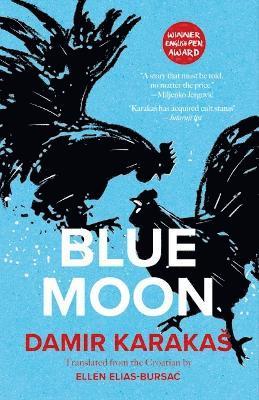
"A time of polarization, a time when we were called upon to inhale the air of the nation, a time when it mattered who belonged to which ethnic group. But our hero wants to belong to his own, special, rockabilly nation, founded on music, freedom, the freedom of the spirit, the freedom to decide, to choose his clothes, his hairstyle. . ."-Boris Lijesevic, theatre director of 'Blue Moon', the playCarli left his mountain village and his past to study agronomy in Zagreb. Failing miserably his commitment to most endeavours is falling into question. Nobody, however, can surpass the time he spends on his hair and his music.Most days Carli whiles away the hours grooming his pompadour. Even crossing the street, he pays attention to the direction of the wind so that his quiff, his pride and joy, is not displaced. And most evenings he spends with friends in the city's underground clubs from which the sound of rockabilly music echoes through cobbled streets and into the night.When he meets the red-haired Eli, a street-smart city girl, Carli is thunderstruck, and an unlikely relationship begins. Eli quotes the lyrics of Leonard Cohen and has little time for rockabilly music. She is an A-student, competent. When news of impending fatherhood sparks an existential crisis, Eli is there to keep him from the precipice.However, the ominous signs of Yugoslavia's instability become more apparent as Carli's downward spiral intensifies. Sinister figures from past decades return to manufacture discontent and the facade of peaceful co-existence begins to crack under the weight of history until a precise moment of witness when the future of a generation and of a country comes to a thunderous halt."This story about the disappearance and transformation of the Serbs of Zagreb-a story that the scoundrels would never dare tell, even if Blue Moon were awarded every Croatian literary prize-has been told with unusual care, touching attention and a sense of responsibility; the responsibility of a writer for a story that must be told, no matter the price for telling it."-Miljenko Jergovic
E-bok
Engelska, 2024121 kr
Läs direkt efter köp
Mijo, a soldier in the Nazi-allied Ustaša force, has returned to his village at the end of the war. He’s hiding in a hole in the woods, watching as the soldiers who want him dead return again and again to his house, disturbing his wife and children at all hours of the day. If he can just wait long enough, he naively believes, the atrocities of the war and his own involvement in it will be forgotten, and he can have what he really wants: a quiet life farming his land with his family.
How did Mijo become the man we encounter in these pages? By facing poverty? Enduring heartbreak? Nurturing ignorance? Damir Karakaš, a war reporter who witnessed the horrors of the breakup of Yugoslavia firsthand, examines the recent history of an unsettled region in evocative prose, contrasting the beauty of nature against the failings of people. Celebration, translated by the incomparable Ellen Elias-Bursać, traces a dark path—from hapless individual to world-changing catastrophe—in search of a way to break the cycle of political violence.
E-bok
Tyska, 2014150 kr
Läs direkt efter köp
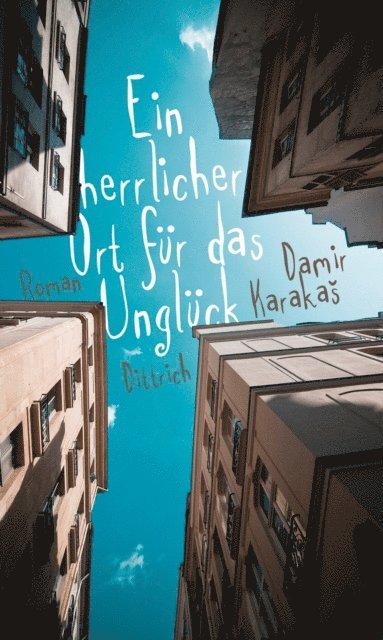
Von der Mehrheit der Franzosen als Landstreicher und Penner verachtet und in Paris nicht akzeptiert, erzählt der Autor in seinem autobiografischen Roman von seinem "französischen Traum", den er vergeblich zu verwirklichen sucht.Im Roman schildert er Paris aus der Sicht des Außenseiters. Paris erscheint als ein finsteres Loch, in dem die Einwandererschicksale einander ähneln. Ein Leben in unerträglichen Wohnverhältnissen, Gelegenheitsjobs am Rande der Legalität. Straßenkünstler werden von der Polizei verfolgt. Der Leser erlebt Straßen und Ecken von Paris, berühmte Touristenziele, die als "Arbeitsplatz " der Straßenkünstler einen ganz anderen Einblick gewähren. Der Balkan, dessen Armut der Held entflieht, holt ihn in Gestalt von Kriminellen ein. Als er es ablehnt, mit ihnen gemeinsame Sache zu machen, muss er um sein Leben fürchten. Gleichzeitig macht der Protagonist eine Ausbildung an der Universität, besucht die faszinierenden Bibliothekenund Museen, führt intensive Gespräche mit anderen Künstlern. Aber Paris erlebt er als eine fremdenfeindliche Stadt, in der die Einflüsse der herrschenden Politiker und auch die rechtsextreme Partei Front National von Le Pen tiefe Spuren hinterlassen haben. Die Immigranten sind unerwünscht, vor allem, wenn sie aus Ländern stammen, die keine EU-Mitglieder sind.Bei einer Razzia wird der Protagonist von der Polizei abgeführt und grundlos inhaftiert. Die Untersuchungshaft verbringt er in apokalyptischen Katakomben, in denen einst, während der Revolution, die Insassen auf die Guillotine warteten. Trotz legaler Reisepapiere folgt nach einem kafkaesken Prozess die Abschiebung in sein Heimatland.
E-bok
Tyska, 2019190 kr
Läs direkt efter köp
Damir Karakaš erzählt die archaische Welt eines Bauernjungen.Es ist eine raue bäuerliche Welt, der ein Junge mit kindlichen Spielen und kleinen Fluchten trotzt. Von Geburt an schwer herzkrank, ist er nicht der Stammhalter, den sein Vater sich wünscht, und nicht die Arbeitskraft, die auf dem Hof, auf dem der Mangel regiert, benötigt wird. Die stumme Gewalt des rackernden und ständig hadernden Patriarchen ist allgegenwärtig, und weder die Mutter noch die Großmutter können den Jungen davor schützen. Aus der gottverlassenen kroatischen Provinz, die geprägt ist von Kühe-Hüten, von Aberglauben und Hexerei, von verdrehten Seelen und Tierärzten, die Menschen behandeln, sowie von schneelosen apokalyptischen Wintern, flüchtet sichder Junge in imaginierte Welten und unerfüllbare Berufsträume: Armeeoffzier, Basketballspieler, Bodybuilder, Bärentöter. Mit seinen Fantasien unterdrückt er zugleich alle Gefühle der Schwäche, bis sie aus ihm herausbrechen …