Dan Arnold - Böcker
Visar alla böcker från författaren Dan Arnold. Handla med fri frakt och snabb leverans.
9 produkter
9 produkter
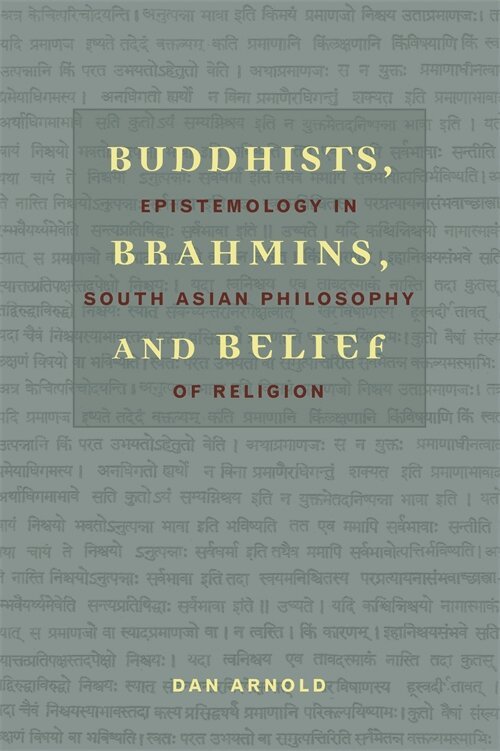
Buddhists, Brahmins, and Belief
Epistemology in South Asian Philosophy of Religion
Inbunden, Engelska, 2005
1 107 kr
Skickas inom 7-10 vardagar
In Buddhists, Brahmins, and Belief, Dan Arnold examines how the Brahmanical tradition of Purva Mimamsa and the writings of the seventh-century Buddhist Madhyamika philosopher Candrakirti challenged dominant Indian Buddhist views of epistemology. Arnold retrieves these two very different but equally important voices of philosophical dissent, showing them to have developed highly sophisticated and cogent critiques of influential Buddhist epistemologists such as Dignaga and Dharmakirti. His analysis-developed in conversation with modern Western philosophers like William Alston and J. L. Austin-offers an innovative reinterpretation of the Indian philosophical tradition, while suggesting that pre-modern Indian thinkers have much to contribute to contemporary philosophical debates. In logically distinct ways, Purva Mimamsa and Candrakirti's Madhyamaka opposed the influential Buddhist school of thought that emphasized the foundational character of perception. Arnold argues that Mimamsaka arguments concerning the "intrinsic validity" of the earliest Vedic scriptures are best understood as a critique of the tradition of Buddhist philosophy stemming from Dignaga.Though often dismissed as antithetical to "real philosophy," Mimamsaka thought has affinities with the reformed epistemology that has recently influenced contemporary philosophy of religion. Candrakirti's arguments, in contrast, amount to a principled refusal of epistemology. Arnold contends that Candrakirti marshals against Buddhist foundationalism an approach that resembles twentieth-century ordinary language philosophy-and does so by employing what are finally best understood as transcendental arguments. The conclusion that Candrakirti's arguments thus support a metaphysical claim represents a bold new understanding of Madhyamaka.
Buddhists, Brahmins, and Belief
Epistemology in South Asian Philosophy of Religion
Häftad, Engelska, 2008
592 kr
Skickas inom 3-6 vardagar
In Buddhists, Brahmins, and Belief, Dan Arnold examines how the Brahmanical tradition of Purva Mimamsa and the writings of the seventh-century Buddhist Madhyamika philosopher Candrakirti challenged dominant Indian Buddhist views of epistemology. Arnold retrieves these two very different but equally important voices of philosophical dissent, showing them to have developed highly sophisticated and cogent critiques of influential Buddhist epistemologists such as Dignaga and Dharmakirti. His analysis-developed in conversation with modern Western philosophers like William Alston and J. L. Austin-offers an innovative reinterpretation of the Indian philosophical tradition, while suggesting that pre-modern Indian thinkers have much to contribute to contemporary philosophical debates. In logically distinct ways, Purva Mimamsa and Candrakirti's Madhyamaka opposed the influential Buddhist school of thought that emphasized the foundational character of perception. Arnold argues that Mimamsaka arguments concerning the "intrinsic validity" of the earliest Vedic scriptures are best understood as a critique of the tradition of Buddhist philosophy stemming from Dignaga.Though often dismissed as antithetical to "real philosophy," Mimamsaka thought has affinities with the reformed epistemology that has recently influenced contemporary philosophy of religion. Candrakirti's arguments, in contrast, amount to a principled refusal of epistemology. Arnold contends that Candrakirti marshals against Buddhist foundationalism an approach that resembles twentieth-century ordinary language philosophy-and does so by employing what are finally best understood as transcendental arguments. The conclusion that Candrakirti's arguments thus support a metaphysical claim represents a bold new understanding of Madhyamaka.
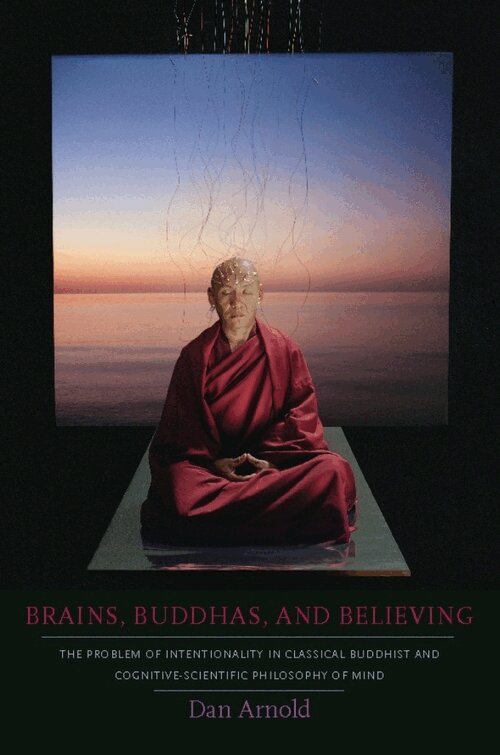
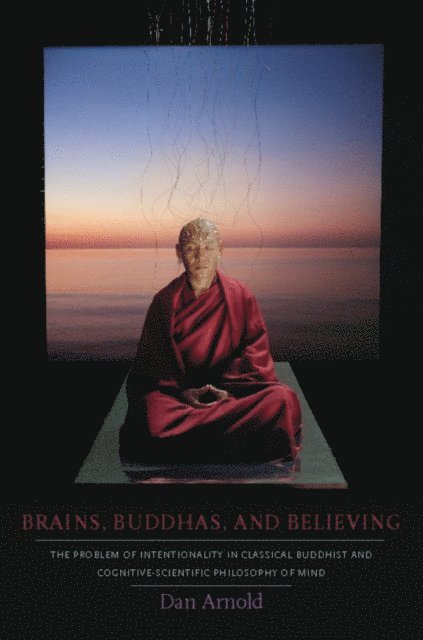
Brains, Buddhas, and Believing
The Problem of Intentionality in Classical Buddhist and Cognitive-Scientific Philosophy of Mind
Inbunden, Engelska, 2012
1 107 kr
Skickas inom 7-10 vardagar
Premodern Buddhists are sometimes characterized as veritable "mind scientists" whose insights anticipate modern research on the brain and mind. Aiming to complicate this story, Dan Arnold confronts a significant obstacle to popular attempts at harmonizing classical Buddhist and modern scientific thought: since most Indian Buddhists held that the mental continuum is uninterrupted by death (its continuity is what Buddhists mean by "rebirth"), they would have no truck with the idea that everything about the mental can be explained in terms of brain events. Nevertheless, a predominant stream of Indian Buddhist thought, associated with the seventh-century thinker Dharmakirti, turns out to be vulnerable to arguments modern philosophers have leveled against physicalism. By characterizing the philosophical problems commonly faced by Dharmakirti and contemporary philosophers such as Jerry Fodor and Daniel Dennett, Arnold seeks to advance an understanding of both first-millennium Indian arguments and contemporary debates on the philosophy of mind. The issues center on what modern philosophers have called intentionality-the fact that the mind can be about (or represent or mean) other things.Tracing an account of intentionality through Kant, Wilfrid Sellars, and John McDowell, Arnold argues that intentionality cannot, in principle, be explained in causal terms. Elaborating some of Dharmakirti's central commitments (chiefly his apoha theory of meaning and his account of self-awareness), Arnold shows that despite his concern to refute physicalism, Dharmakirti's causal explanations of the mental mean that modern arguments from intentionality cut as much against his project as they do against physicalist philosophies of mind. This is evident in the arguments of some of Dharmakirti's contemporaneous Indian critics (proponents of the orthodox Brahmanical Mimasa school as well as fellow Buddhists from the Madhyamaka school of thought), whose critiques exemplify the same logic as modern arguments from intentionality. Elaborating these various strands of thought, Arnold shows that seemingly arcane arguments among first-millennium Indian thinkers can illuminate matters still very much at the heart of contemporary philosophy.
Brains, Buddhas, and Believing
The Problem of Intentionality in Classical Buddhist and Cognitive-Scientific Philosophy of Mind
Häftad, Engelska, 2014
282 kr
Skickas inom 7-10 vardagar
Premodern Buddhists are sometimes characterized as veritable "mind scientists" whose insights anticipate modern research on the brain and mind. Aiming to complicate this story, Dan Arnold confronts a significant obstacle to popular attempts at harmonizing classical Buddhist and modern scientific thought: since most Indian Buddhists held that the mental continuum is uninterrupted by death (its continuity is what Buddhists mean by "rebirth"), they would have no truck with the idea that everything about the mental can be explained in terms of brain events. Nevertheless, a predominant stream of Indian Buddhist thought, associated with the seventh-century thinker Dharmakirti, turns out to be vulnerable to arguments modern philosophers have leveled against physicalism. By characterizing the philosophical problems commonly faced by Dharmakirti and contemporary philosophers such as Jerry Fodor and Daniel Dennett, Arnold seeks to advance an understanding of both first-millennium Indian arguments and contemporary debates on the philosophy of mind. The issues center on what modern philosophers have called intentionality-the fact that the mind can be about (or represent or mean) other things.Tracing an account of intentionality through Kant, Wilfrid Sellars, and John McDowell, Arnold argues that intentionality cannot, in principle, be explained in causal terms. Elaborating some of Dharmakirti's central commitments (chiefly his apoha theory of meaning and his account of self-awareness), Arnold shows that despite his concern to refute physicalism, Dharmakirti's causal explanations of the mental mean that modern arguments from intentionality cut as much against his project as they do against physicalist philosophies of mind. This is evident in the arguments of some of Dharmakirti's contemporaneous Indian critics (proponents of the orthodox Brahmanical Mimasa school as well as fellow Buddhists from the Madhyamaka school of thought), whose critiques exemplify the same logic as modern arguments from intentionality. Elaborating these various strands of thought, Arnold shows that seemingly arcane arguments among first-millennium Indian thinkers can illuminate matters still very much at the heart of contemporary philosophy.
1 837 kr
Kommande
Stemming from the works of Nāgārjuna (ca. 150 CE), one of the most influential thinkers in the history of Buddhist philosophy, the Madhyamaka (“Middle Way”) tradition flourished for over a thousand years in India as one of two main streams of thought in Mahāyāna Buddhism. To this day, most Tibetan Buddhists consider Madhyamaka to represent the pinnacle of Buddhist thought.An anthology of original translations of Sanskrit philosophical works, A Madhyamaka Reader traces the arc of the Middle Way school over the course of its history. Presenting lengthy selections—including several complete texts—from the tradition’s main contributors, this book represents all the main currents over nearly a millennium of Madhyamaka philosophy’s development in India. The selections are prefaced by interpretive introductions that provide the background and context needed to grasp the distinctive contributions made by each text, and Dan Arnold’s clear and accessible translations enable readers to follow for themselves the arguments of some of the Buddhist world’s greatest philosophers. Suitable for a range of courses in Buddhist and comparative philosophy, A Madhyamaka Reader offers a comprehensive overview of one of the Buddhist world’s most significant traditions of thought.
471 kr
Kommande
Stemming from the works of Nāgārjuna (ca. 150 CE), one of the most influential thinkers in the history of Buddhist philosophy, the Madhyamaka (“Middle Way”) tradition flourished for over a thousand years in India as one of two main streams of thought in Mahāyāna Buddhism. To this day, most Tibetan Buddhists consider Madhyamaka to represent the pinnacle of Buddhist thought.An anthology of original translations of Sanskrit philosophical works, A Madhyamaka Reader traces the arc of the Middle Way school over the course of its history. Presenting lengthy selections—including several complete texts—from the tradition’s main contributors, this book represents all the main currents over nearly a millennium of Madhyamaka philosophy’s development in India. The selections are prefaced by interpretive introductions that provide the background and context needed to grasp the distinctive contributions made by each text, and Dan Arnold’s clear and accessible translations enable readers to follow for themselves the arguments of some of the Buddhist world’s greatest philosophers. Suitable for a range of courses in Buddhist and comparative philosophy, A Madhyamaka Reader offers a comprehensive overview of one of the Buddhist world’s most significant traditions of thought.
220 kr
Skickas inom 5-8 vardagar
266 kr
Skickas inom 5-8 vardagar
235 kr
Skickas inom 5-8 vardagar