Dan Sarooshi - Böcker
Visar alla böcker från författaren Dan Sarooshi. Handla med fri frakt och snabb leverans.
5 produkter
5 produkter
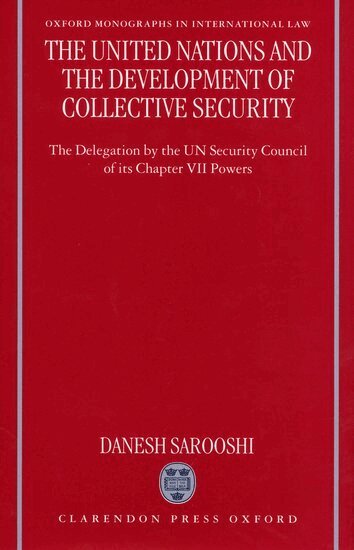
The United Nations and the Development of Collective Security
The Delegation by the UN Security Council of its Chapter VII Powers
Inbunden, Engelska, 1999
2 218 kr
Skickas inom 5-8 vardagar
This book examines one of the most important challenges facing the United Nations today: the effective and lawful use of force by or under the authority of the UN to maintain or restore peace. In particular, the book provides a legal analysis of the institutional mechanisms and processes which the UN employs to use force to maintain or restore peace. The UN Security Council is the main organ of the UN entrusted with the responsibility for the maintenance or restoration of peace. It is given broad powers of enforcement under Chapter VII of the UN Charter in order to achieve this objective. However, the Charter provision which was intended to provide the Council with a standing military force to carry out enforcement action has not as yet been implemented. In response, the Council has sought to deal with an increasing demand for military enforcement action by delegating its powers in this area to other UN organs (e.g. the UN Secretary-General in Somalia, and the War Crimes Tribunals for Rwanda and the former Yugoslavia), UN Member States (e.g. the coalition against Iraq), and regional and collective self-defence organizations (e.g. NATO in Bosnia). It is this process of delegation of military enforcement powers by the Council which is the focus of the book. By examining the legal framework which governs the process of a delegation by the Council of its Chapter VII powers; the practice relating to the exercise of these powers by each of the delegates concerned; and the policy issues relating to such delegations, the book makes a significant contribution to the content of the law pertaining to the use of force by the UN and provides guidance as to the likely future developments in the legal framework governing collective action to maintain peace under the auspices of the United Nations.
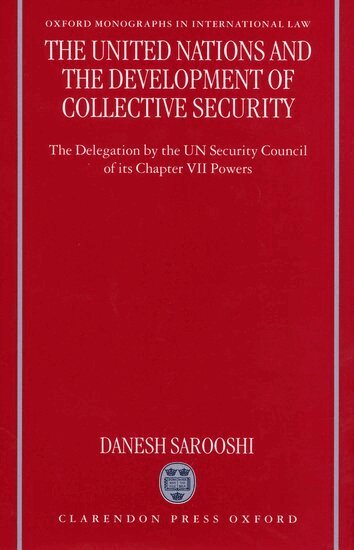
The United Nations and the Development of Collective Security
The Delegation by the UN Security Council of its Chapter VII Powers
Häftad, Engelska, 2000
895 kr
Skickas inom 5-8 vardagar
This book examines one of the most important challenges facing the United Nations today: the effective and lawful use of force by or under the authority of the UN to maintain or restore peace. In particular, the book provides a legal analysis of the institutional mechanisms and processes which the UN employs to use force to maintain or restore peace. The UN Security Council is the main organ of the UN entrusted with the responsibility for the maintenance or restoration of peace. It is given broad powers of enforcement under Chapter VII of the UN Charter in order to achieve this objective. However, the Charter provision which was intended to provide the Council with a standing military force to carry out enforcement action has not as yet been implemented. In response, the Council has sought to deal with an increasing demand for military enforcement action by delegating its powers in this area to other UN organs (e.g. the UN Secretary-General in Somalia, and the War Crimes Tribunals for Rwanda and the former Yugoslavia), UN Member States (e.g. the coalition against Iraq), and regional and collective self-defence organizations (e.g. NATO in Bosnia). It is this process of delegation of military enforcement powers by the Council which is the focus of the book. By examining the legal framework which governs the process of a delegation by the Council of its Chapter VII powers; the practice relating to the exercise of these powers by each of the delegates concerned; and the policy issues relating to such delegations, the book makes a significant contribution to the content of the law pertaining to the use of force by the UN and provides guidance as to the likely future developments in the legal framework governing collective action to maintain peace under the auspices of the United Nations.
1 008 kr
Skickas inom 5-8 vardagar
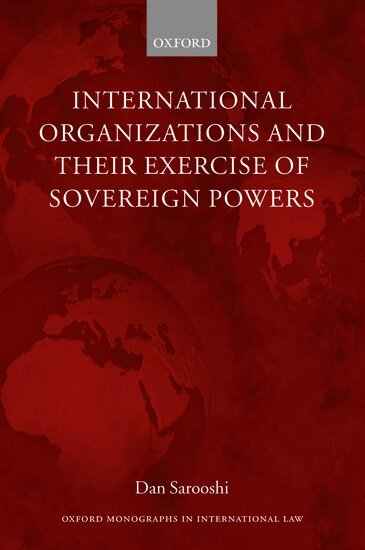
This book considers the exercise of sovereign powers by international organizations that include the United Nations, the World Trade Organization, and the European Union in order to answer fundamental questions about the relationship between an international organization and its Member States. In their membership of international organizations, States must confer some of their sovereign powers upon those organizations. In this book, Sarooshi develops a three-tiered typology of conferrals which ranges from agency relationships, to delegations of authority, to full transfers of power. The legal aspects of these conferrals are examined, and their implications for the growing importance of international organizations in international relations are assessed.
1 569 kr
Skickas inom 5-8 vardagar
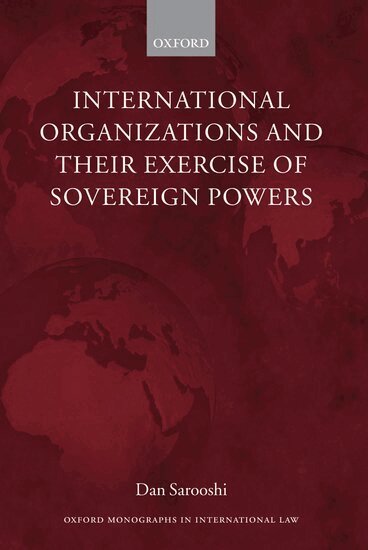
This book provides a conceptual and legal analysis of one of the most important challenges facing international organizations today: their exercise of sovereign powers. The book examines the exercise of sovereign powers by organizations such as the United Nations, the World Trade Organization, and the European Union. It makes a significant contribution to the content of the law that governs both the exercise of sovereign powers by international organizations and the relationships between organizations and their Member States. The book also tackles the fundamental question of what values should constrain international organizations in their exercise of sovereign powers. These sovereign powers have been conferred on international organizations by States and may include the full range of executive, legislative, and judicial powers. Sarooshi develops an innovative three-tiered typology of conferrals which ranges from agency relationships, to delegations of powers, to full transfers of powers. These categories prove useful in answering a number of legal issues that arise out of the relationships between international organizations and their Member States. These include: When an international organization exercises conferred powers, does it do so on its own behalf or on behalf of the State? Whose legal relations are changed by the exercise of powers: the State's or the organization's? In the case where the State has retained the right to exercise powers it has conferred on an organization, whose interpretation of the powers will prevail in the case of a conflict that arises from the concurrent exercise of powers? What fiduciary duties are owed by the organization and Member States towards each other? And who is responsible for breaches of international law that may occur as a result of the organization's exercise of conferred powers: the State or the organization or both? These issues lead on to a consideration in the book of the measures available to a State under international law when it wants to try and change the way that an organization is exercising conferred powers.
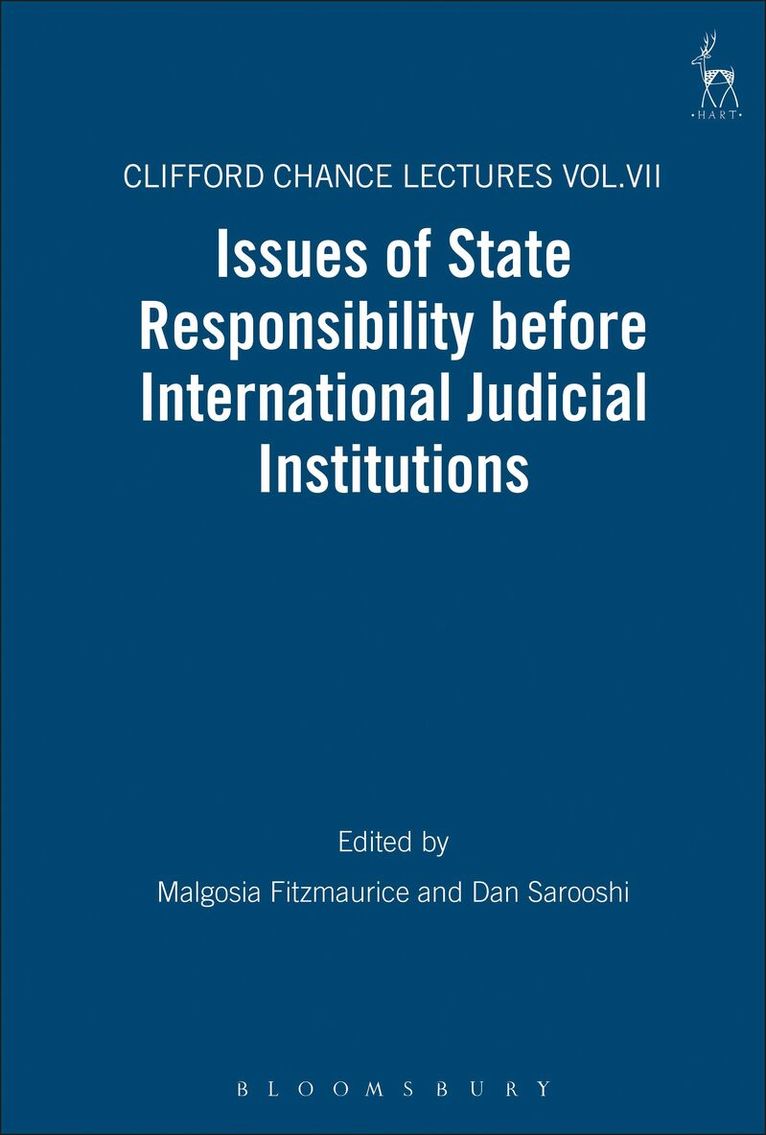
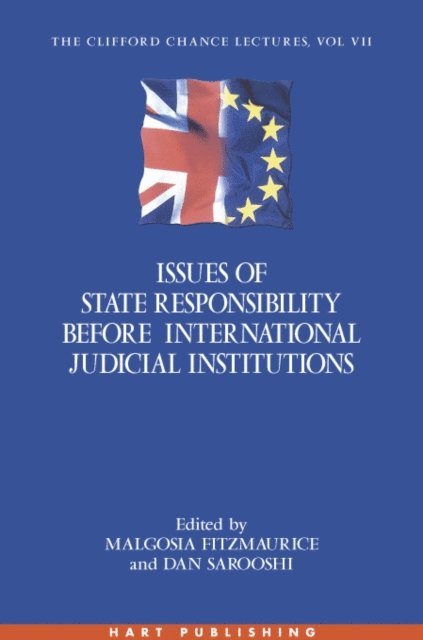
Issues of State Responsibility before International Judicial Institutions
The Clifford Chance Lectures
Inbunden, Engelska, 2004
1 235 kr
Skickas inom 10-15 vardagar
This book contains papers presented at a high-level conference that was jointly organized by the Institute of Global Law, University College London and the Institute of International Law, Queen Mary, University of London. The chapters cover issues of State Responsibility before the following international judicial institutions: the International Court of Justice, The International Tribunal for the Law of the Sea, the World Trade Organization, United Nations Compensation Commission, International Centre for the Settlement of Investment Disputes, and International & Regional Human Rights Courts. Contributors include: H.E. Judge Dame Rosalyn Higgins D.B.E., Q.C., Emeritus Professor Ian Brownlie C.B.E.,Q.C., Professor Malcolm Shaw Q.C., Professor Maurice Mendelson Q.C., Professor Christopher Greenwood C.M.G., Q.C., Professor Guy Goodwin-Gill, Dr Matthew Craven, H.E. Judge Benedetto Conforti, Professor Malcolm Evans, Professor Dominic McGoldrick, Professor Gerhard Loibl and Dr Olufemi Elias.