Dan Sinykin - Böcker
Visar alla böcker från författaren Dan Sinykin. Handla med fri frakt och snabb leverans.
5 produkter
5 produkter
1 770 kr
Skickas inom 3-6 vardagar
Apocalypse shapes the experience of millions of Americans. Not because they face imminent cataclysm, however true this is, but because apocalypse is a story they tell themselves. It offers a way out of an otherwise irredeemably unjust world. Adherence to it obscures that it is a story, rather than a description of reality. And it is old. Since its origins among Jewish writers in the first centuries BCE, apocalypse has recurred as a tempting and available form through which to express a sense of hopelessness. Why has it appeared with such force in the US now? What does it mean?This book argues that to find the meaning of our apocalyptic times we need to look at the economics of the last five decades, from the end of the postwar boom. After historian Robert Brenner, this volume calls this period the long downturn. Though it might seem abstract, the economics of the long downturn worked its way into the most intimate experiences of everyday life, including the fear that there would be no tomorrow, and this fear takes the form of 'neoliberal apocalypse'.The varieties of neoliberal apocalypse--horror at the nation's commitment to a racist, exclusionary economic system; resentment about threats to white supremacy; apprehension that the nation has unleashed a violence that will consume it; claustrophobia within the limited scripts of neoliberalism; suffocation under the weight of debt--together form the discordant chord that hums under American life in the twenty-first century. For many of us, for different reasons, it feels like the end is coming soon and this book explores how we came to this, and what it has meant for literature.
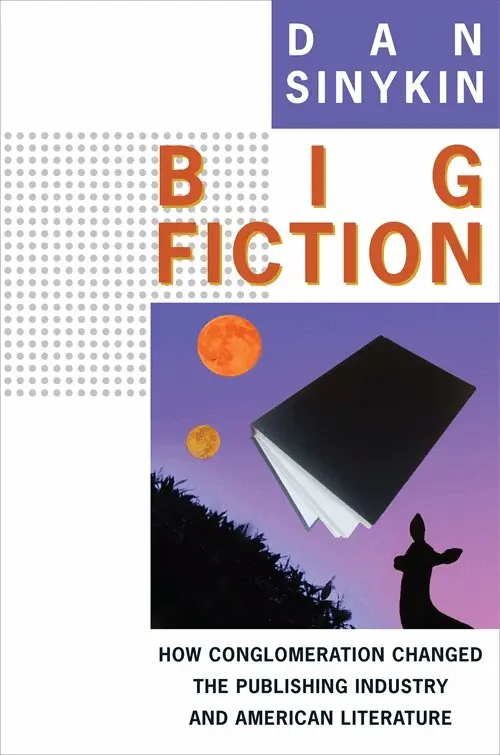
Big Fiction
How Conglomeration Changed the Publishing Industry and American Literature
Inbunden, Engelska, 2023
1 094 kr
Skickas inom 7-10 vardagar
Shortlisted, 2024 SHARP Book History Book Prize, Society for the History of Authorship, Reading, and PublishingIn the late 1950s, Random House editor Jason Epstein would talk jazz with Ralph Ellison or chat with Andy Warhol while pouring drinks in his office. By the 1970s, editors were poring over profit-and-loss statements. The electronics company RCA bought Random House in 1965, and then other large corporations purchased other formerly independent publishers. As multinational conglomerates consolidated the industry, the business of literature—and literature itself—transformed.Dan Sinykin explores how changes in the publishing industry have affected fiction, literary form, and what it means to be an author. Giving an inside look at the industry’s daily routines, personal dramas, and institutional crises, he reveals how conglomeration has shaped what kinds of books and writers are published. Sinykin examines four different sectors of the publishing industry: mass-market books by brand-name authors like Danielle Steel; trade publishers that encouraged genre elements in literary fiction; nonprofits such as Graywolf that aspired to protect literature from market pressures; and the distinctive niche of employee-owned W. W. Norton. He emphasizes how women and people of color navigated shifts in publishing, arguing that writers such as Toni Morrison allegorized their experiences in their fiction.Big Fiction features dazzling readings of a vast range of novelists—including E. L. Doctorow, Judith Krantz, Renata Adler, Stephen King, Joan Didion, Cormac McCarthy, Chuck Palahniuk, Patrick O’Brian, and Walter Mosley—as well as vivid portraits of industry figures. Written in gripping and lively prose, this deeply original book recasts the past six decades of American fiction.
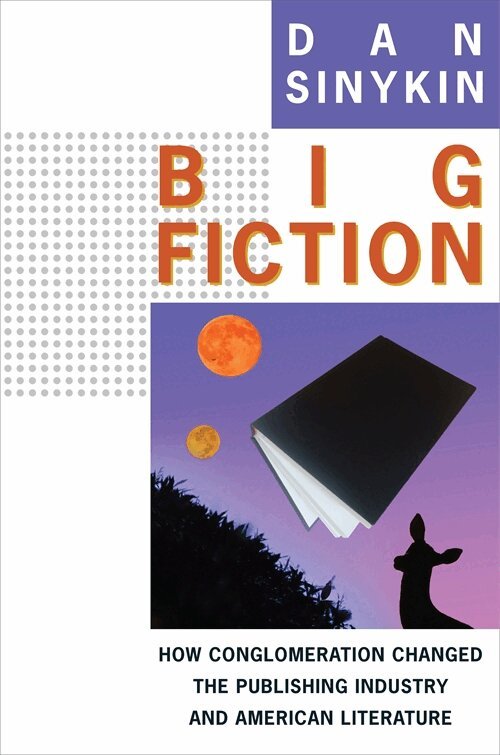
Big Fiction
How Conglomeration Changed the Publishing Industry and American Literature
Häftad, Engelska, 2023
279 kr
Skickas inom 7-10 vardagar
Shortlisted, 2024 SHARP Book History Book Prize, Society for the History of Authorship, Reading, and PublishingIn the late 1950s, Random House editor Jason Epstein would talk jazz with Ralph Ellison or chat with Andy Warhol while pouring drinks in his office. By the 1970s, editors were poring over profit-and-loss statements. The electronics company RCA bought Random House in 1965, and then other large corporations purchased other formerly independent publishers. As multinational conglomerates consolidated the industry, the business of literature—and literature itself—transformed.Dan Sinykin explores how changes in the publishing industry have affected fiction, literary form, and what it means to be an author. Giving an inside look at the industry’s daily routines, personal dramas, and institutional crises, he reveals how conglomeration has shaped what kinds of books and writers are published. Sinykin examines four different sectors of the publishing industry: mass-market books by brand-name authors like Danielle Steel; trade publishers that encouraged genre elements in literary fiction; nonprofits such as Graywolf that aspired to protect literature from market pressures; and the distinctive niche of employee-owned W. W. Norton. He emphasizes how women and people of color navigated shifts in publishing, arguing that writers such as Toni Morrison allegorized their experiences in their fiction.Big Fiction features dazzling readings of a vast range of novelists—including E. L. Doctorow, Judith Krantz, Renata Adler, Stephen King, Joan Didion, Cormac McCarthy, Chuck Palahniuk, Patrick O’Brian, and Walter Mosley—as well as vivid portraits of industry figures. Written in gripping and lively prose, this deeply original book recasts the past six decades of American fiction.
1 522 kr
Skickas inom 3-6 vardagar
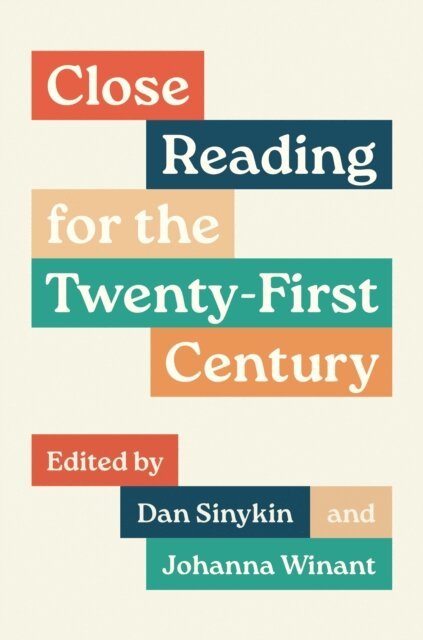
A user’s guide to the fundamental practice of literary studies, providing context, examples, and practical exercises Close reading—making an argument based in close attention to a text—is the foundation of literary studies. This book offers a guide to close reading, treating it as a skill that can be taught and practiced. It first explains what close reading is, what it does, and how it has been used across theoretical schools ranging from affect studies to Black studies to queer theory to Marxism. It then presents a series of master classes in the practice, with original contributions by scholars from a range of different institutions. Finally, it provides practical materials, worksheets, and suggested activities for instructors to use in the classroom. The tone throughout is encouraging and accessible, inviting readers of all backgrounds to hone their craft.The book divides the practice of close reading into five steps, coining a term for each step: scene setting, noticing, local claiming, regional argumentation, and global theorizing. It traces the roots of close reading, showing how it has spread far beyond its origins in practical criticism and New Criticism. In twenty-one short chapters, contemporary scholars discuss close readings by such prominent literary critics as Erich Auerbach and Helen Vendler, describing how their arguments work and how to achieve similar results. An essential resource for instructors and students at the undergraduate level and beyond, this book shows how understanding close reading can make us better readers, thinkers, and writers.
276 kr
Skickas inom 7-10 vardagar
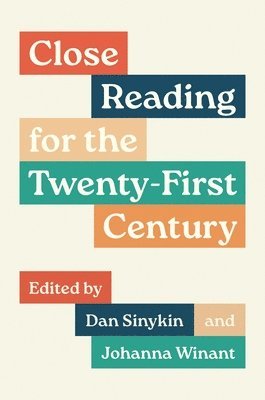
A user’s guide to the fundamental practice of literary studies, providing context, examples, and practical exercises Close reading—making an argument based in close attention to a text—is the foundation of literary studies. This book offers a guide to close reading, treating it as a skill that can be taught and practiced. It first explains what close reading is, what it does, and how it has been used across theoretical schools ranging from affect studies to Black studies to queer theory to Marxism. It then presents a series of master classes in the practice, with original contributions by scholars from a range of different institutions. Finally, it provides practical materials, worksheets, and suggested activities for instructors to use in the classroom. The tone throughout is encouraging and accessible, inviting readers of all backgrounds to hone their craft.The book divides the practice of close reading into five steps, coining a term for each step: scene setting, noticing, local claiming, regional argumentation, and global theorizing. It traces the roots of close reading, showing how it has spread far beyond its origins in practical criticism and New Criticism. In twenty-one short chapters, contemporary scholars discuss close readings by such prominent literary critics as Erich Auerbach and Helen Vendler, describing how their arguments work and how to achieve similar results. An essential resource for instructors and students at the undergraduate level and beyond, this book shows how understanding close reading can make us better readers, thinkers, and writers.