Dan T. Carter - Böcker
Visar alla böcker från författaren Dan T. Carter. Handla med fri frakt och snabb leverans.
6 produkter
6 produkter
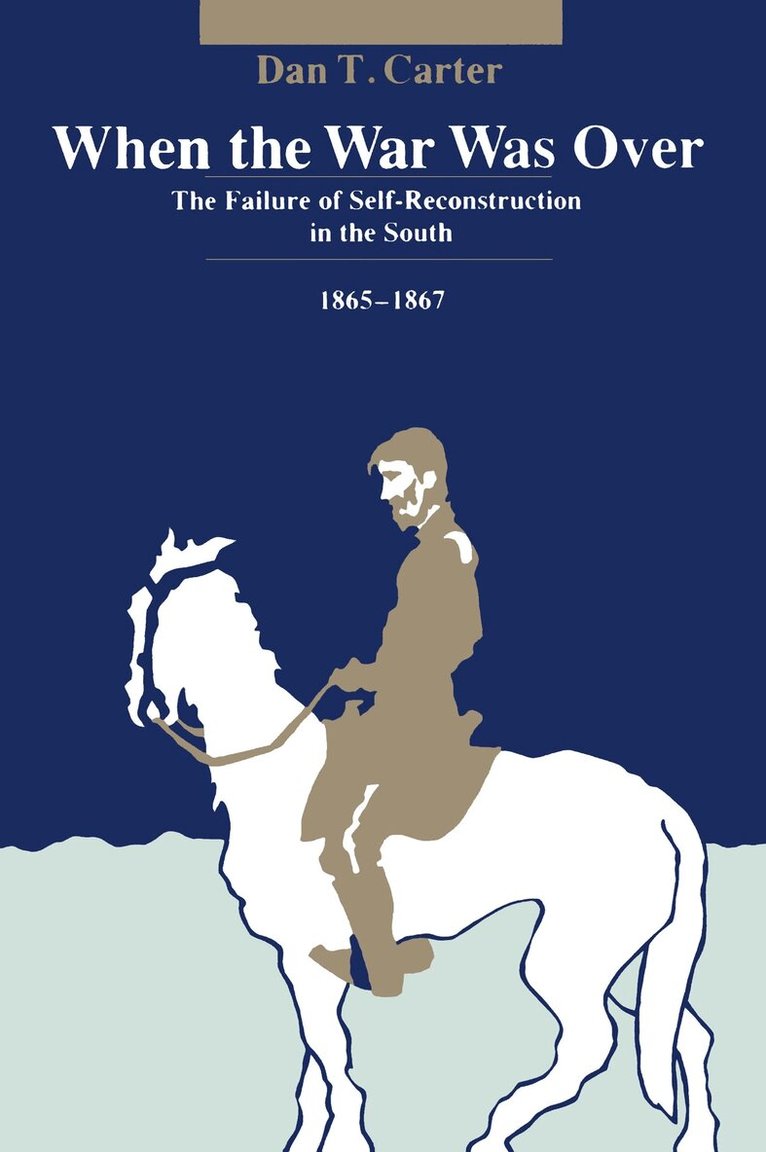
When the War Was Over
The Failure of Self-Reconstruction in the South, 1865-1867
Häftad, Engelska, 1985
324 kr
Skickas inom 10-15 vardagar
In the months after Appomattox, the South was plunged into a chaos that surpassed even the disorder of the last hard months of the war itself. Peace brought, if anything, an increased level of violence to the region as local authorities of the former Confederacy were stripped of their power and the returning foot soldiers of the defeated army, hungry and without hope, raided the already impoverished countryside for food and clothing. In the wake of the devastation that followed surrender, even some of the most virulent Yankee-haters found themselves relieved as the Union army began to bring a small level of order to the lawless southern terrain.Dan T. Carter's When the War Was Over is a social and political history of the two years following the surrender of the Confederacy - the co-called period of Presidential Reconstruction when the South, under the watchful gaze of Congress and the Union army, attempted to rebuild its shattered society and economic structure. Working primarily from rich manuscript sources, Carter draws a vivid portrait of the political leaders who emerged after the war, a diverse group of men - former loyalists as well as a few mildly repentant fire-eaters - who in some cases genuinely sought to find a place in southern society for the newly emancipated slaves, but who in many other cases merely sought to redesign the boundaries of black servitude.Carter finds that as a group the politicians who emerged in the postwar South failed critically in the test of their leadership. Not only were they unable to construct a realistic program for the region's recovery - a failure rooted in their stubborn refusal to accept the full consequences of emancipation - but their actions also served to exacerbate rather than allay the fears and apprehensions of the victorious North. Even so, Carter reveals, these leaders were not the monsters that many scholars have suggested they were, and it is misleading to dismiss them as racists and political incompetents. In important ways, they represented the most constructive, creative, and imaginative response that the white South, overwhelmed with defeat and social chaos, had to offer in 1865 and 1866. Out of their efforts would come the New South movement and, with it, the final downfall of the plantation system and the beginnings of social justice for the freed slaves.
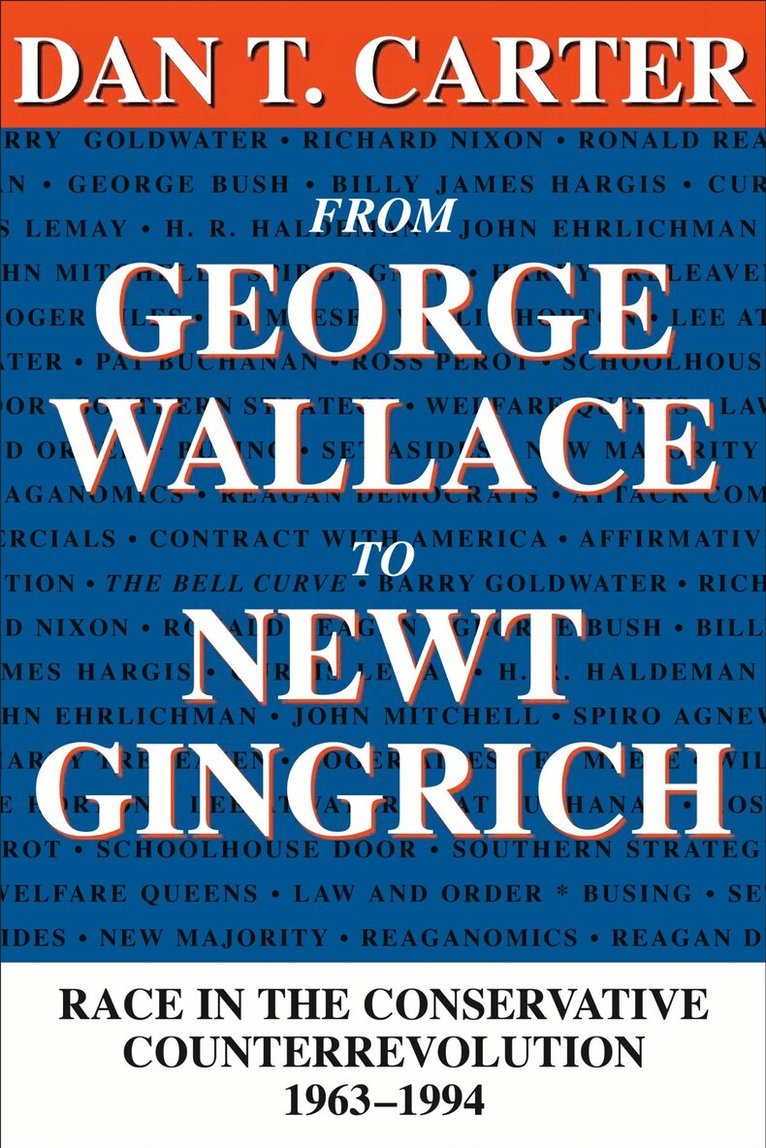
From George Wallace to Newt Gingrich
Race in the Conservative Counterrevolution, 1963-1994
Häftad, Engelska, 1999
261 kr
Skickas inom 10-15 vardagar
Carter's essays present graphic evidence of the extent to which race continues to matter in American politics. - Journal of Southern HistoryIn this penetrating survey of the last three decades, Dan T. Carter examines race as an issue in presidential politics. Drawing on his broad knowledge of recent political history, he traces the ""counterrevolutionary"" response to the civil rights movement since Wallace's emergence on the national scene in 1963, and detects a gradual intersection of racial and economic conservatism in the coalition that re-shaped American politics from the 1970s through the mid-1990s. Concise yet replete with insight, wit, and often-amusing, always-telling anecdotes, this timely, timeless book is an uncommon blend of important and enjoyable reading.
324 kr
Skickas inom 10-15 vardagar
Like many other northern clergymen after the Civil War, A. D. Mayo became interested in the role that education could play in rebuilding southern society. From 1880 to 1900 he traveled from Virgina to Texas as an educational missionary advocating the ""new education"" theories of the 1840s and 1850s. In time he came to be considered one of the most perceptive observers of southern education during the period from the end of Reconstruction to the rise of the Redeemer governments in the 1890s.Mayo was convinced that the changes in southern society that Reconstruction had failed to bring about could be realized under a sound educational system. Learning, he believed, should be based on individual needs rather than on rote memorization of facts, and teachers should be recruited from those trained in the civilizing values. In Southern Women, Mayo set forth at length the ideas that southern white women were the ideal ones to transmit learning to the young blacks. Stressing the greatly expanding role of these women because of the war, Mayo saw them as a kind of elite trained in the ideals and culture of the Old South, but receptive to the values of the New South.In their introduction Dan Carter and Amy Friedlander place Mayo in the context of nineteenth-century intellectual and social currents and provide an interesting perspective on his often surprisingly contemporary-sounding ideas on education.
374 kr
Skickas inom 7-10 vardagar
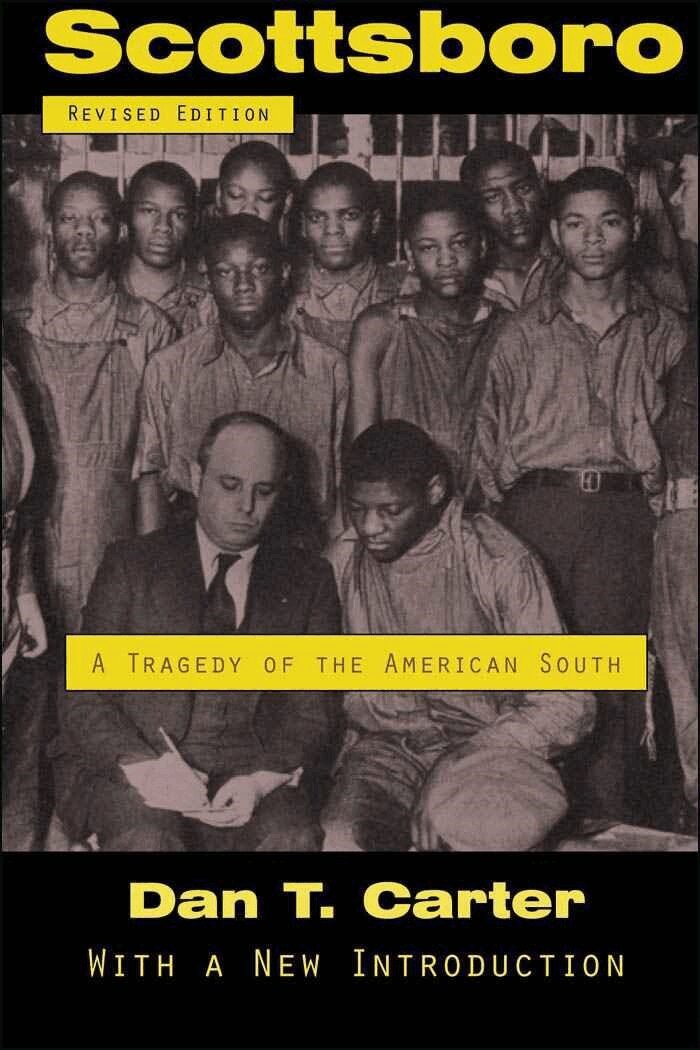
Scottsboro tells the riveting story of one of this country's most famous and controversial court cases and a tragic and revealing chapter in the history of the American South. In 1931, two white girls claimed they were savagely raped by nine young black men aboard a freight train moving across northeastern Alabama. The young men-ranging in age from twelve to nineteen-were quickly tried, and eight were sentenced to death. The age of the defendants, the stunning rapidity of their trials, and the harsh sentences they received sparked waves of protest and attracted national attention during the 1930s. Originally published in 1970, Scottsboro triggered a new interest in the case, sparking two film documentaries, several Hollywood docudramas, two autobiographies, and numerous popular and scholarly articles on the case. In his new introduction, Dan T. Carter looks back more than thirty-five years after he first wrote about the case, asking what we have learned that is new about it and what relevance the story of Scottsboro still has in the twenty-first century.
558 kr
Skickas inom 7-10 vardagar
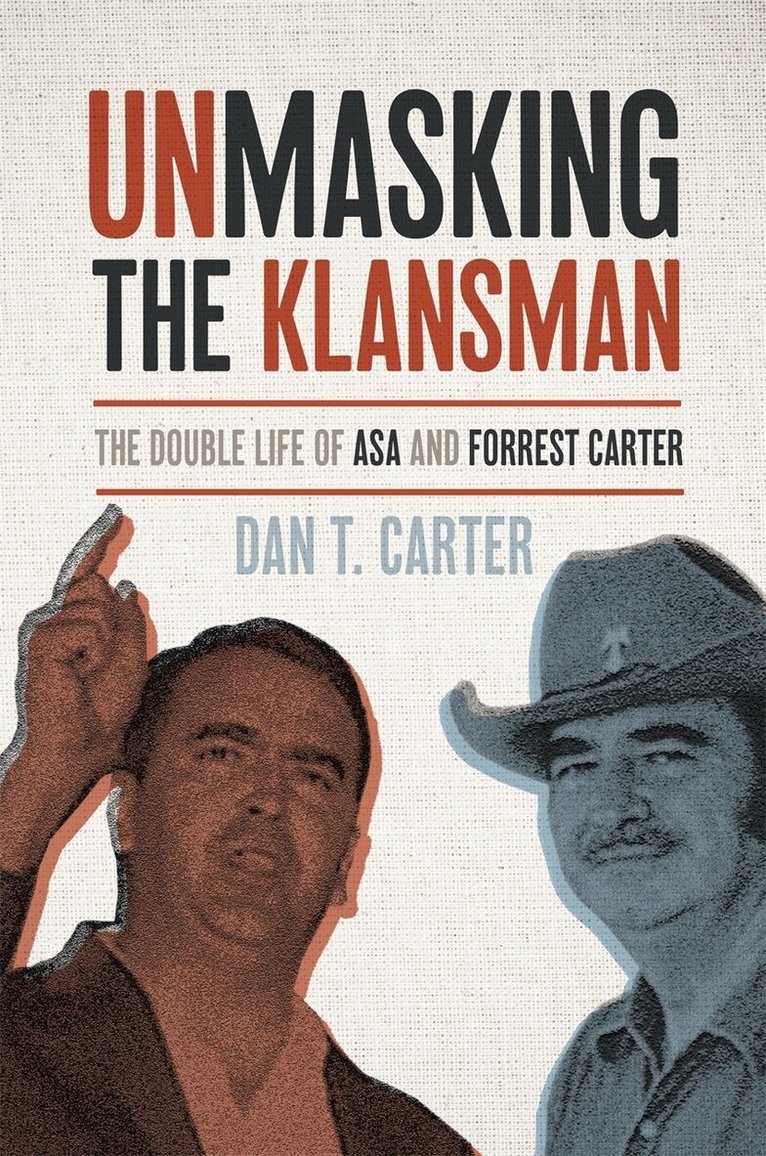
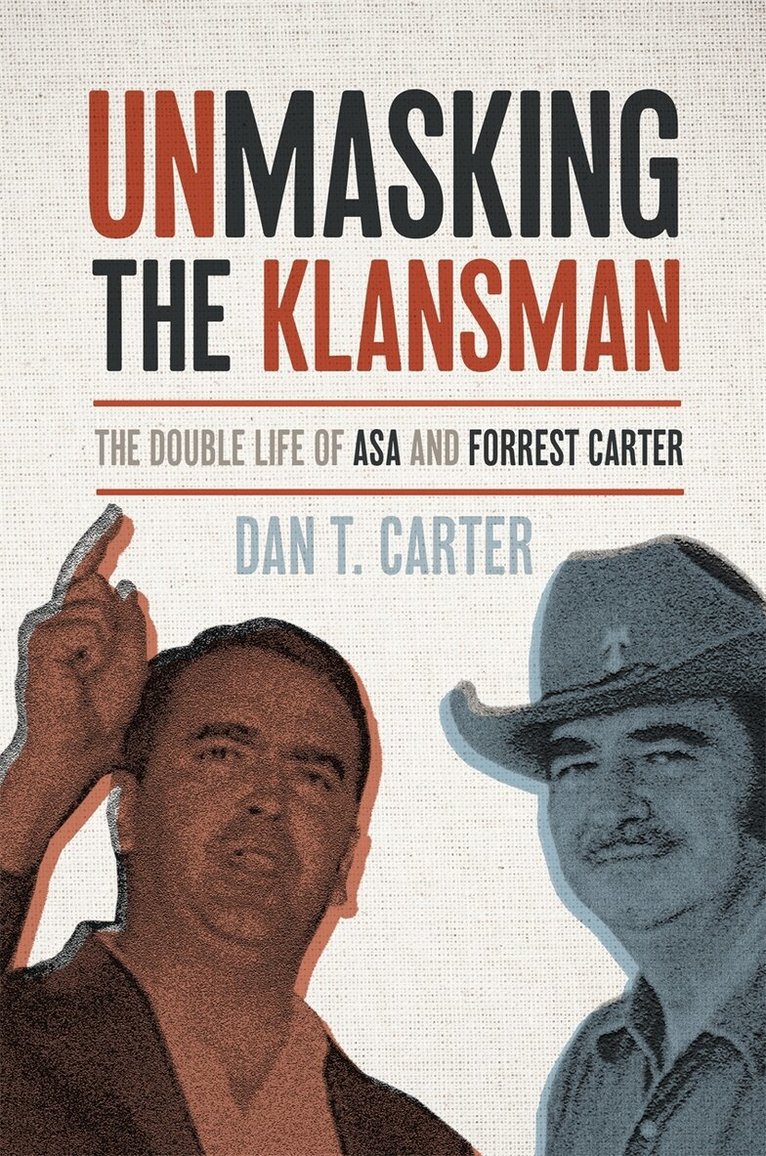
Unmasking the Klansman may read like a work of fiction but is actually a biography of Asa Carter, one of the South's most notorious white supremacists (and secret Klansman). During the 1950s, the North Alabama political firebrand became known across the region for his right-wing radio broadcasts and leadership in the white Citizens’ Council movement. Combining racism and thinly-concealed anti-Semitism, he created a secret Klan strike force that engaged in a series of brutal assaults, including an attack on jazz singer Nat King Cole as well as militant civil rights activists. Exploring his life during these years offers new insights into the legal maneuvers as well as the violence used by white Southern segregationists to derail the civil rights movement in the region. In the early 1960s Carter became a secret adviser to George Wallace and wrote the Alabama governor’s infamous 1963 inauguration speech vowing "segregation now, segregation tomorrow, segregation forever." When Carter disappeared from Alabama in 1972, few knew that he had assumed a new identity in Abilene, Texas, masquerading as a Cherokee American novelist. Using the name “Forrest” Carter, he published three successful Western novels, including The Rebel Outlaw: Josey Wales, which Clint Eastwood made into a widely acclaimed 1976 movie. His last book, The Education of Little Tree (a fake biography of his supposed Indian childhood) posthumously became a number one best-seller in 1991. Author Dan T. Carter uncovered “Forrest” Carter’s true identity while researching his biography of Georgia Wallace and in a New York Times’ op-ed he exposed Carter’s deception. Although the difficulties of uncovering the full story of the secretive Carter initially led him to abandon the project, in 2018 he gained access to more than two hundred interviews by the late Anniston newsman, Fred Burger. These recordings and his two decades of exhaustive research finally brought Asa Carter’s story into focus. Unmasking the Klansman is the result.
243 kr
Skickas inom 5-8 vardagar
Unmasking the Klansman may read like a work of fiction but is actually a biography of Asa Carter, one of the South's most notorious white supremacists (and secret Klansman). During the 1950s, the North Alabama political firebrand became known across the region for his right-wing radio broadcasts and leadership in the white Citizens’ Council movement. Combining racism and thinly-concealed anti-Semitism, he created a secret Klan strike force that engaged in a series of brutal assaults, including an attack on jazz singer Nat King Cole as well as militant civil rights activists. Exploring his life during these years offers new insights into the legal maneuvers as well as the violence used by white Southern segregationists to derail the civil rights movement in the region. In the early 1960s Carter became a secret adviser to George Wallace and wrote the Alabama governor’s infamous 1963 inauguration speech vowing "segregation now, segregation tomorrow, segregation forever." When Carter disappeared from Alabama in 1972, few knew that he had assumed a new identity in Abilene, Texas, masquerading as a Cherokee American novelist. Using the name “Forrest” Carter, he published three successful Western novels, including The Rebel Outlaw: Josey Wales, which Clint Eastwood made into a widely acclaimed 1976 movie. His last book, The Education of Little Tree (a fake biography of his supposed Indian childhood) posthumously became a number one best-seller in 1991. Author Dan T. Carter uncovered “Forrest” Carter’s true identity while researching his biography of Georgia Wallace and in a New York Times’ op-ed he exposed Carter’s deception. Although the difficulties of uncovering the full story of the secretive Carter initially led him to abandon the project, in 2018 he gained access to more than two hundred interviews by the late Anniston newsman, Fred Burger. These recordings and his two decades of exhaustive research finally brought Asa Carter’s story into focus. Unmasking the Klansman is the result.