
Dana Medoro – författare
Visar alla böcker från författaren Dana Medoro. Handla med fri frakt och snabb leverans.
3 produkter
3 produkter

Inbunden, Engelska, 2002
1 175 kr
Skickas inom 10-15 vardagar
Working from the premise that the Puritan construction of America as a return to Eden endures into American literature of the 20th century, Medoro focuses on the rhetoric of cyclical regeneration, blood, and damnation that accompanies this construction. She argues that a semiotics of menstruation infuses this rhetoric and informs the figuration of a feminine America in the nation's literary tradition: America, as a New World Eden, is haunted not only by the Fall, but also by the Curse of Eve. Placing Thomas Pynchon, William Faulkner, and Toni Morrison within this tradition, this book demonstrates that their novels link variations on the figure of the menstruating woman both to the bloody history of the United States and to a vision of the nation's redemptive promise.Detailed readings of 9 novels—3 by each author—track references to menstruation and illuminate its tropological prevalence. The readings then develop a theory of menstruation as a kind of antidote functioning within narratives of violently spilled blood and blood purity. Each chapter draws on a range of disciplines—from medical history and mythography to anthropology and psychoanalysis—and situates its analysis of menstruation in relation to contemporary theories of female sexuality, human evolution, and the sacred.
Häftad, Engelska, 2022
422 kr
Skickas inom 5-8 vardagar
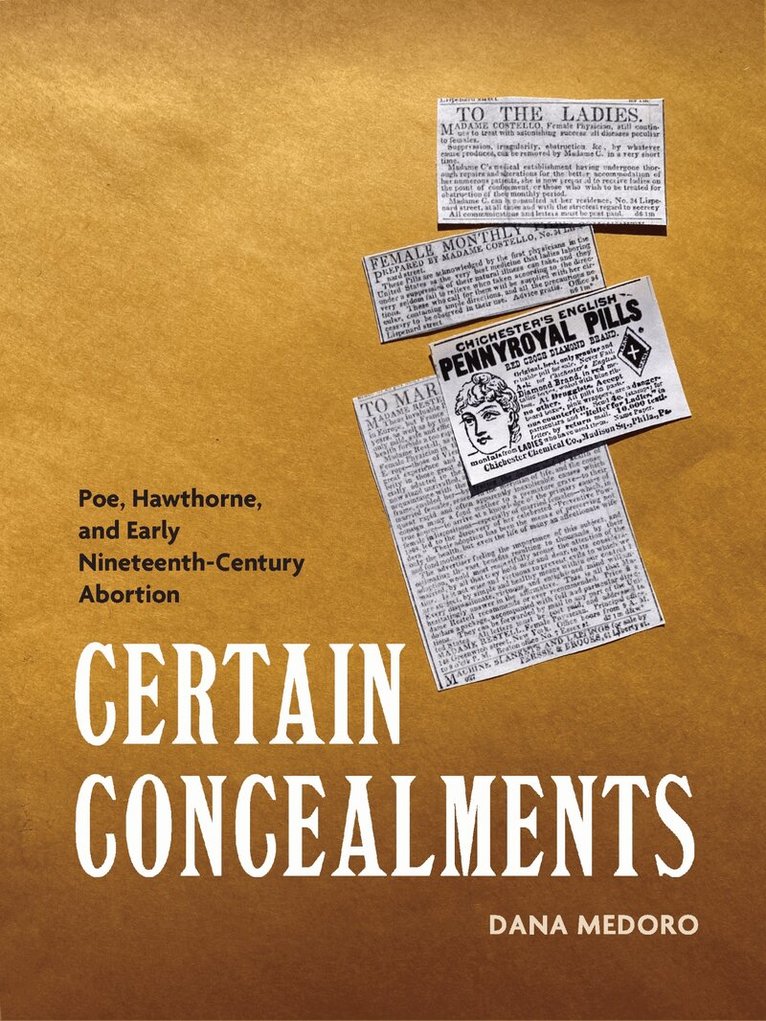
Antebellum America saw a great upsurge in abortion, driven in part by the rise of the pharmaceutical industry. Unsurprisingly, the practice became increasingly visible in the popular culture and literature of the era, appearing openly in advertisements, popular fiction, and newspaper reports. One figure would come to dominate national headlines from the 1840s onward: Madame Restell. Facing public condemnation and mob attacks at her home for her dogged support of women's reproductive rights, Restell built an empire selling her powders, pills, and services along the Eastern Seaboard.Edgar Allan Poe and Nathaniel Hawthorne undoubtedly knew of Restell's work and would go on to depict the incompatibility of abortion and nationalism in their writings. Through the thwarted plotlines, genealogical interruptions, and terminated ideas of Poe's Dupin trilogy and Hawthorne's The Scarlet Letter, The House of Seven Gables, and The Blithedale Romance, these authors consider new concepts around race, reproduction, and American exceptionalism. Dana Medoro demonstrates that their work can be usefully read in the context of debates on fetal life and personhood that circulated in the era.
Inbunden, Engelska, 2022
1 113 kr
Skickas inom 5-8 vardagar
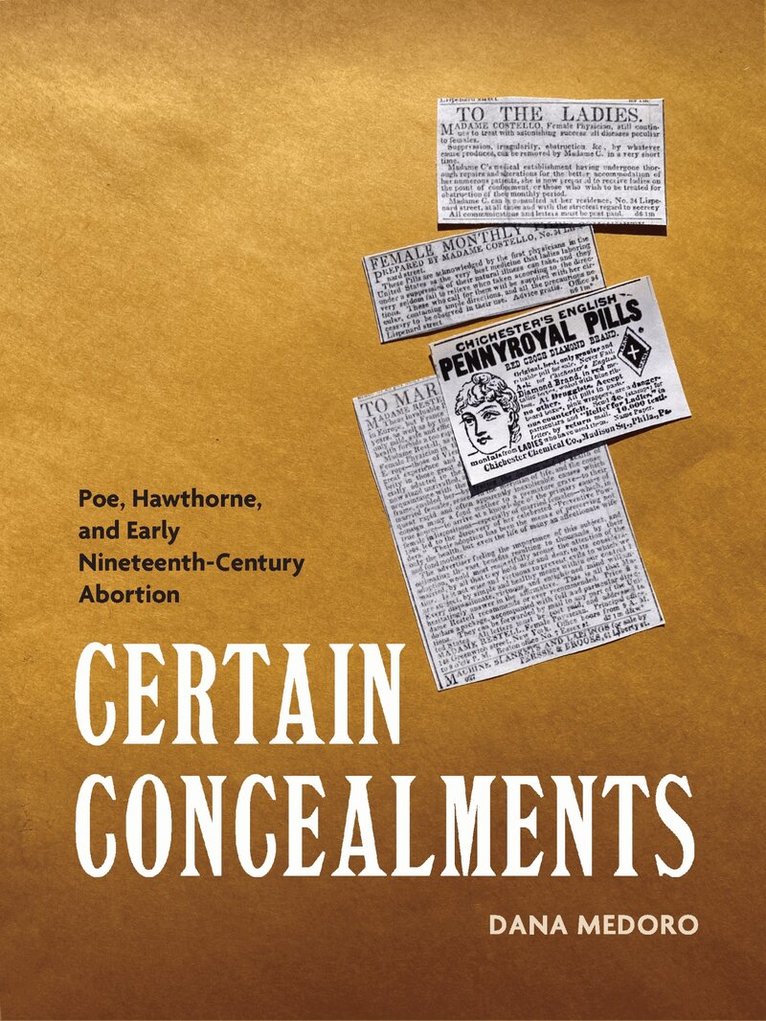
Antebellum America saw a great upsurge in abortion, driven in part by the rise of the pharmaceutical industry. Unsurprisingly, the practice became increasingly visible in the popular culture and literature of the era, appearing openly in advertisements, popular fiction, and newspaper reports. One figure would come to dominate national headlines from the 1840s onward: Madame Restell. Facing public condemnation and mob attacks at her home for her dogged support of women's reproductive rights, Restell built an empire selling her powders, pills, and services along the Eastern Seaboard.Edgar Allan Poe and Nathaniel Hawthorne undoubtedly knew of Restell's work and would go on to depict the incompatibility of abortion and nationalism in their writings. Through the thwarted plotlines, genealogical interruptions, and terminated ideas of Poe's Dupin trilogy and Hawthorne's The Scarlet Letter, The House of Seven Gables, and The Blithedale Romance, these authors consider new concepts around race, reproduction, and American exceptionalism. Dana Medoro demonstrates that their work can be usefully read in the context of debates on fetal life and personhood that circulated in the era.