Daniel Akech Thiong – författare
Visar alla böcker från författaren Daniel Akech Thiong. Handla med fri frakt och snabb leverans.
6 produkter
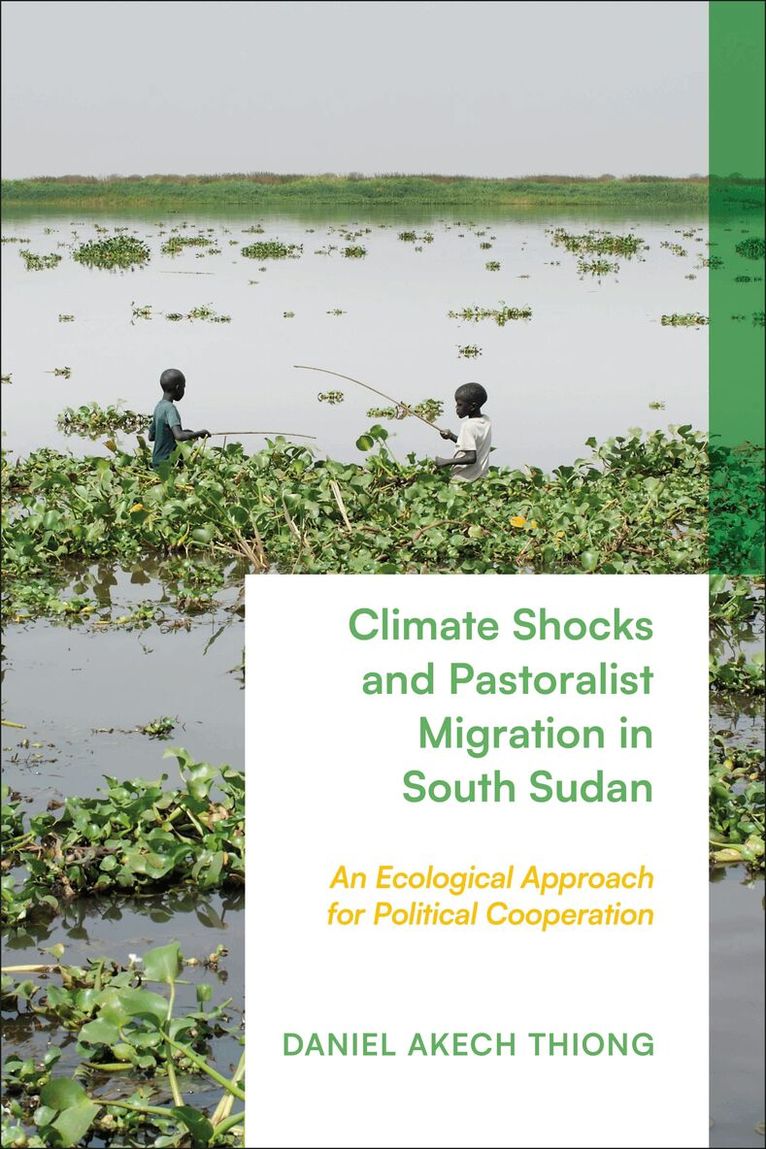
Climate Shocks and Pastoralist Migration in South Sudan
An Ecological Approach for Political Cooperation
Häftad, 2027
413 kr
Kommande
In this important, multidisciplinary, open access study, Daniel Akech Thiong shows that the relations between climate disaster, pastoralist migration, and intercommunal conflict in Africa reach farther, both in time and space, than we realize.Focusing on the climate-shock-induced migrations of the …
Climate Shocks and Pastoralist Migration in South Sudan
An Ecological Approach for Political Cooperation
Inbunden, 2025
1207 kr
Lägg i varukorg
In this important, multidisciplinary, open access study, Daniel Akech Thiong shows that the relations between climate disaster, pastoralist migration, and intercommunal conflict in Africa reach farther, both in time and space, than we realize.Focusing on the climate-shock-induced migrations of the …
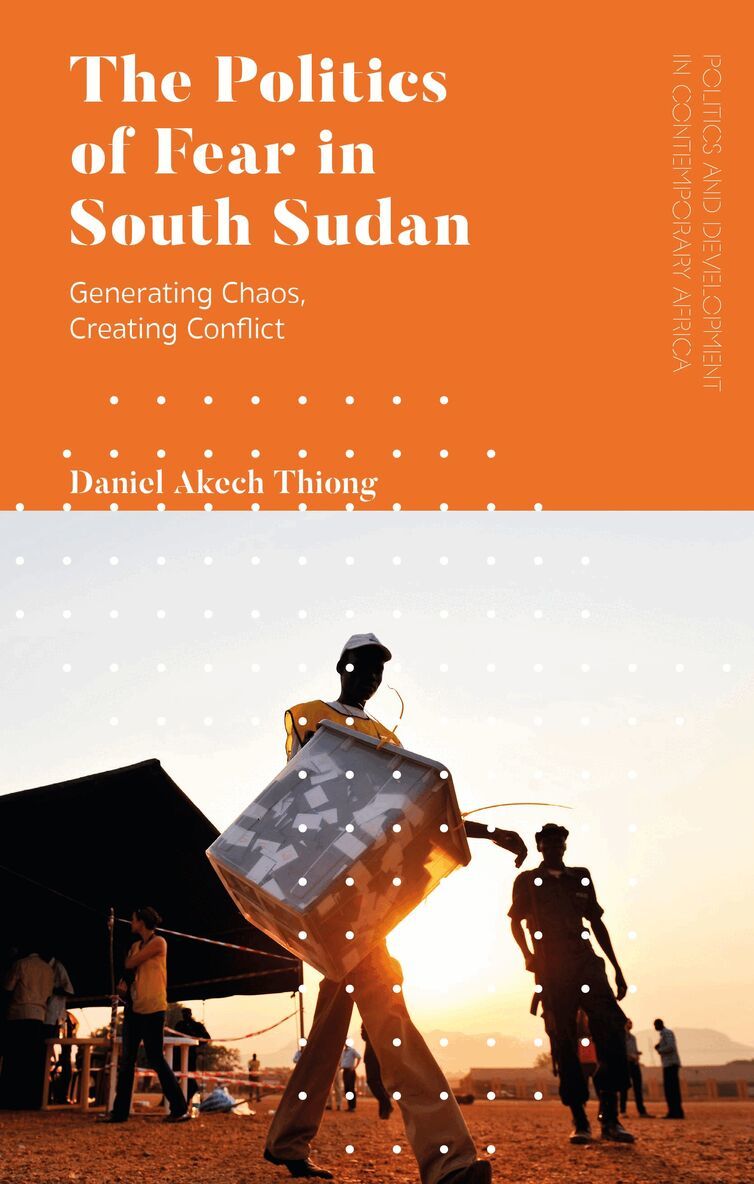
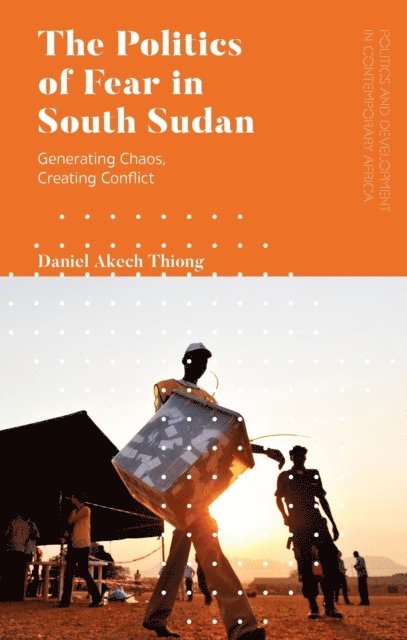
Politics of Fear in South Sudan
Generating Chaos, Creating Conflict
Inbunden, 2021
1419 kr
Lägg i varukorg
When asked in 2016 if he would step down as President of South Sudan, Salva Kiir replied ‘my exit could spark genocide.’ Kiir’s words exemplify how fear and the threat of mass violence have become central to the politics of South Sudan. As South Sudanese analyst Daniel Akech Thiong shows, it is …
Politics of Fear in South Sudan
Generating Chaos, Creating Conflict
Häftad, 2022
431 kr
Lägg i varukorg
When asked in 2016 if he would step down as President of South Sudan, Salva Kiir replied ‘my exit could spark genocide.’ Kiir’s words exemplify how fear and the threat of mass violence have become central to the politics of South Sudan. As South Sudanese analyst Daniel Akech Thiong shows, it is …
Politics of Fear in South Sudan
Generating Chaos, Creating Conflict
E-bok, 2021
468 kr
Lägg i varukorg
When asked in 2016 if he would step down as President of South Sudan, Salva Kiir replied 'my exit could spark genocide.' Kiir's words exemplify how fear and the threat of mass violence have become central to the politics of South Sudan. As South Sudanese analyst Daniel Akech Thiong shows, it is …
Politics of Fear in South Sudan
Generating Chaos, Creating Conflict
E-bok, 2021
468 kr
Lägg i varukorg
When asked in 2016 if he would step down as President of South Sudan, Salva Kiir replied 'my exit could spark genocide.' Kiir's words exemplify how fear and the threat of mass violence have become central to the politics of South Sudan. As South Sudanese analyst Daniel Akech Thiong shows, it is …