Daniel Bivona - Böcker
Visar alla böcker från författaren Daniel Bivona. Handla med fri frakt och snabb leverans.
5 produkter
5 produkter
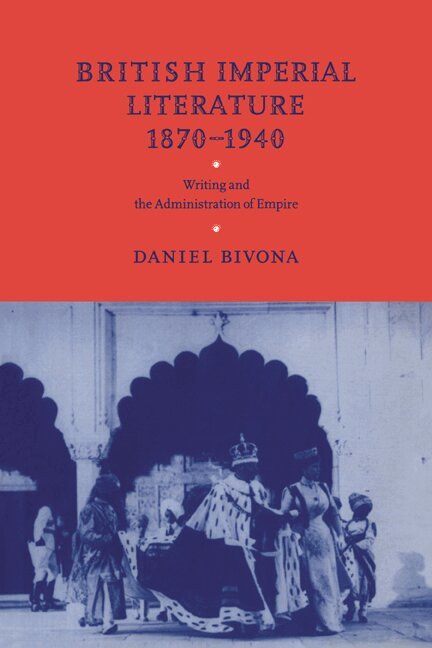
British Imperial Literature, 1870-1940
Writing and the Administration of Empire
Häftad, Engelska, 2008
614 kr
Skickas inom 7-10 vardagar
British Imperial Fiction, 1870-1940 traces the gradual process by which the colonial bureaucratic subject was constructed in nineteenth- and early twentieth-century Britain. Daniel Bivona's study offers insightful readings of a number of influential writers who were involved in promoting the ideology of bureaucratic self-sacrifice, the most important of whom are Stanley, Kipling and T. E. Lawrence. He examines how this governing ideology is treated in the novels of Joseph Conrad, Joyce Cary and George Orwell. By placing the complexities of individual texts in a much larger historical context, this study makes the original claim that the colonial bureaucrat played an ambiguous but nonetheless central role in both pro-imperial and anti-imperial discourse, his own power relationship with bureaucratic superiors shaping the terms in which the proper relationship between colonizer and colonized was debated.
British Imperial Literature, 1870-1940
Writing and the Administration of Empire
Inbunden, Engelska, 1998
1 371 kr
Skickas inom 7-10 vardagar
British Imperial Fiction, 1870-1940 traces the gradual process by which the colonial bureaucratic subject was constructed in nineteenth- and early twentieth-century Britain. Daniel Bivona's study offers insightful readings of a number of influential writers who were involved in promoting the ideology of bureaucratic self-sacrifice, the most important of whom are Stanley, Kipling and T. E. Lawrence. He examines how this governing ideology is treated in the novels of Joseph Conrad, Joyce Cary and George Orwell. By placing the complexities of individual texts in a much larger historical context, this study makes the original claim that the colonial bureaucrat played an ambiguous but nonetheless central role in both pro-imperial and anti-imperial discourse, his own power relationship with bureaucratic superiors shaping the terms in which the proper relationship between colonizer and colonized was debated.
557 kr
Skickas inom 5-8 vardagar
886 kr
Skickas inom 10-15 vardagar
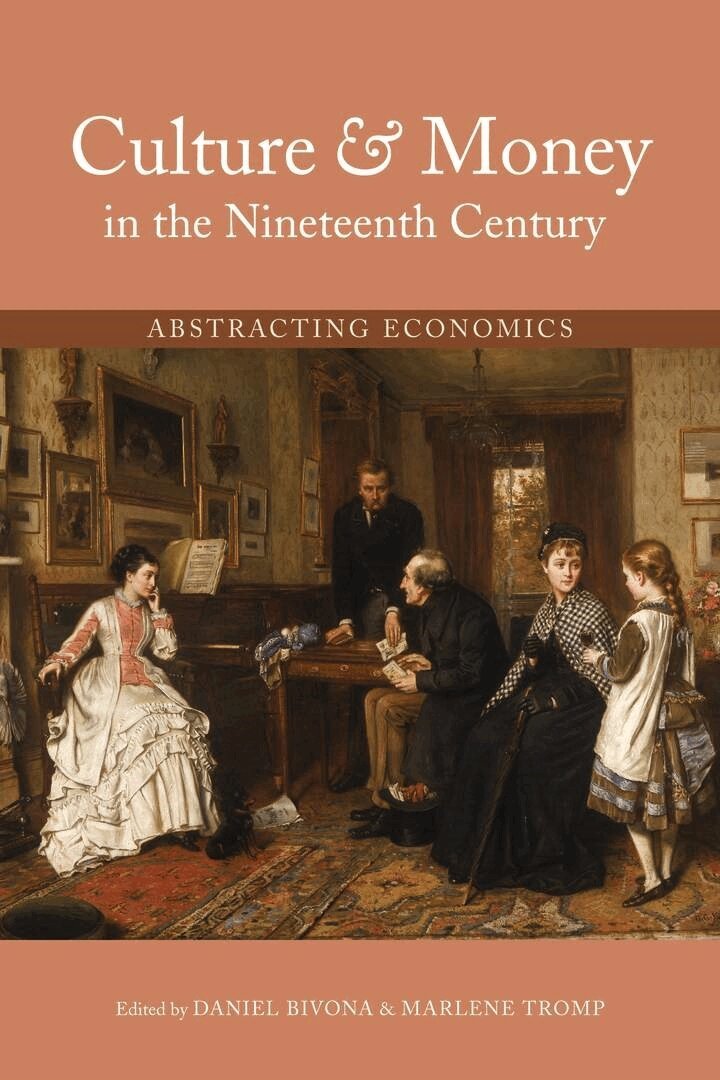
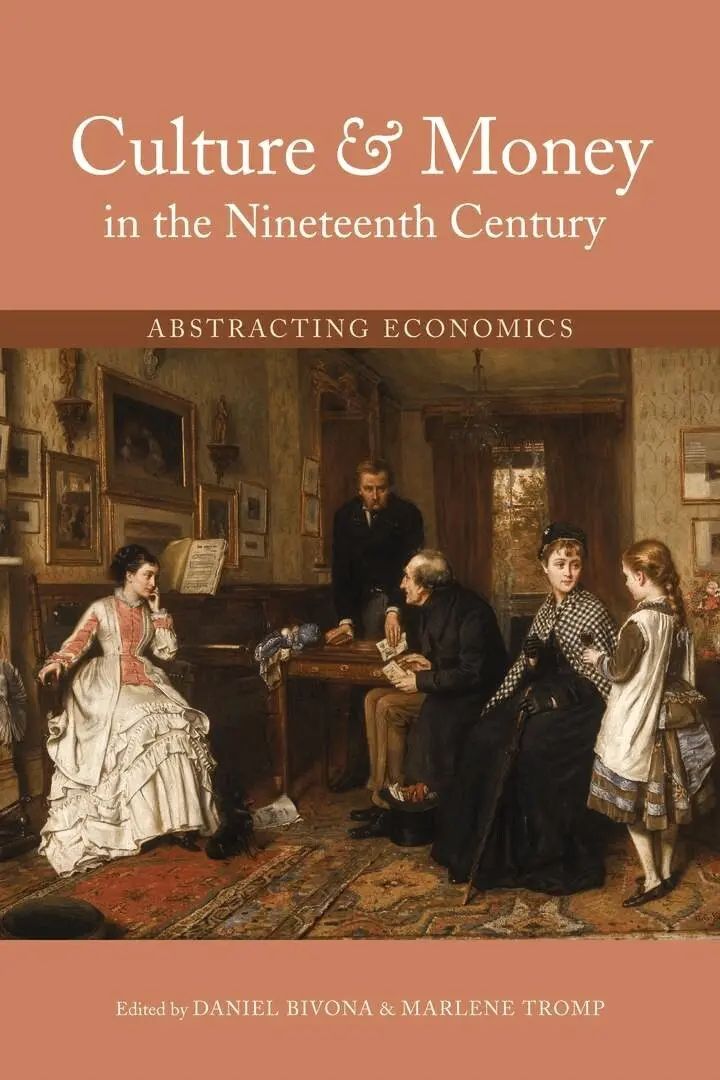
Since the 1980s, scholars have made the case for examining nineteenth-century culture—particularly literary output—through the lens of economics. In Culture and Money in the Nineteenth Century: Abstracting Economics, two luminaries in the field of Victorian studies, Daniel Bivona and Marlene Tromp, have collected contributions from leading thinkers that push New Economic Criticism in new and exciting directions.Spanning the Americas, India, England, and Scotland, this volume adopts an inclusive, global view of the cultural effects of economics and exchange. Contributors use the concept of abstraction to show how economic thought and concerns around money permeated all aspects of nineteenth-century culture, from the language of wills to arguments around the social purpose of art.The characteristics of investment and speculation; the fraught symbolic and practical meanings of paper money to the Victorians; the shifting value of goods, services, and ideas; the evolving legal conceptualizations of artistic ownership—all of these, contributors argue, are essential to understanding nineteenth-century culture in Britain and beyond.Contributors: Daniel Bivona, Suzanne Daly, Jennifer Hayward, Aeron Hunt, Roy Kreitner, Kathryn Pratt Russell, Cordelia Smith, and Marlene Tromp.
386 kr
Skickas inom 7-10 vardagar
Since the 1980s, scholars have made the case for examining nineteenth-century culture—particularly literary output—through the lens of economics. In Culture and Money in the Nineteenth Century: Abstracting Economics, two luminaries in the field of Victorian studies, Daniel Bivona and Marlene Tromp, have collected contributions from leading thinkers that push New Economic Criticism in new and exciting directions.Spanning the Americas, India, England, and Scotland, this volume adopts an inclusive, global view of the cultural effects of economics and exchange. Contributors use the concept of abstraction to show how economic thought and concerns around money permeated all aspects of nineteenth-century culture, from the language of wills to arguments around the social purpose of art.The characteristics of investment and speculation; the fraught symbolic and practical meanings of paper money to the Victorians; the shifting value of goods, services, and ideas; the evolving legal conceptualizations of artistic ownership—all of these, contributors argue, are essential to understanding nineteenth-century culture in Britain and beyond.Contributors: Daniel Bivona, Suzanne Daly, Jennifer Hayward, Aeron Hunt, Roy Kreitner, Kathryn Pratt Russell, Cordelia Smith, and Marlene Tromp.