Daniel Cardoso Llach - Böcker
Visar alla böcker från författaren Daniel Cardoso Llach. Handla med fri frakt och snabb leverans.
4 produkter
4 produkter
2 634 kr
Skickas inom 10-15 vardagar
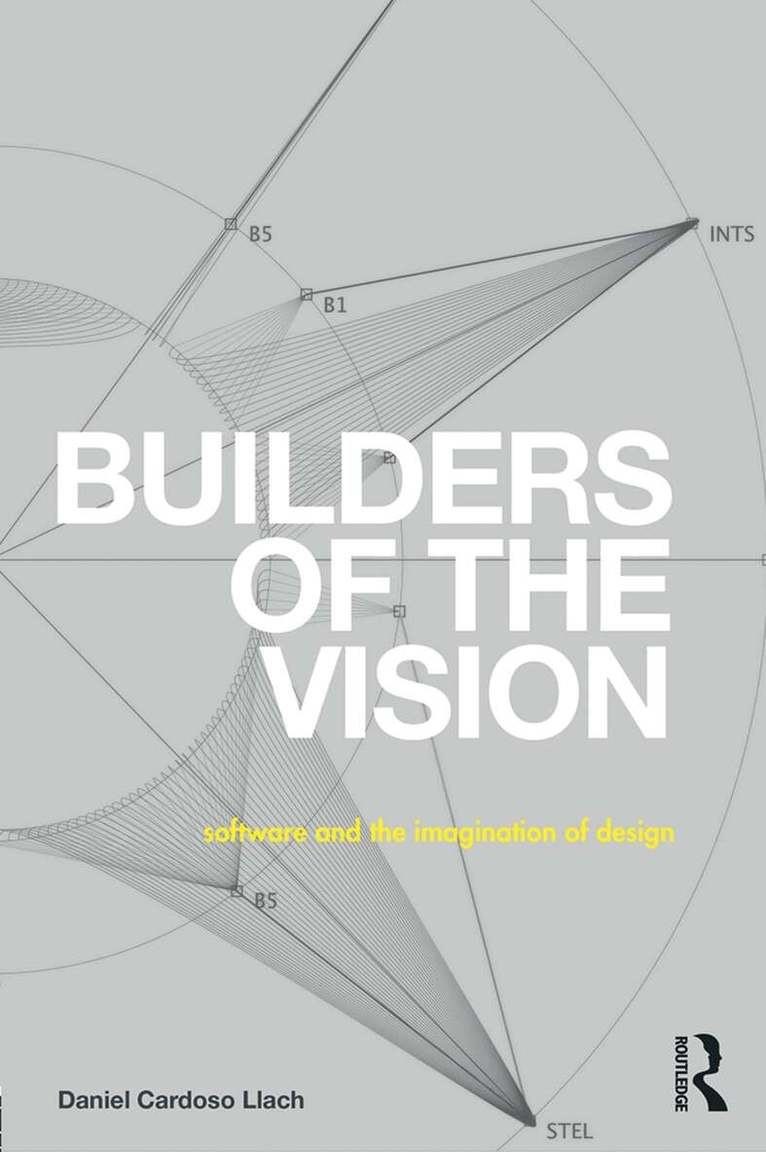
Builders of the Vision traces the intellectual history and contemporary practices of Computer-Aided Design (CAD) and Numerical Control since the years following World War II until today. Drawing from primary archival and ethnographic sources, it identifies and documents the crucial ideas shaping digital design technologies since the first numerical control and CAD systems were developed under US Air Force research contracts at MIT between 1949 and 1970: the cybernetic theorization of design as a human-machine endeavor; the vision of computers as "perfect slaves" taking care of the drudgery of physical labor; the techno-social utopias of computers as vehicles of democracy and social change; the entrepreneurial urge towards design and construction integration; and the managerial ideologies enabling today’s transnational geographies of practice.Examining the contrasting, and often conflicting, sensibilities that converge into CAD and BIM discourses - globalism, utopianism, entrepreneurialism, and architects’ desires for aesthetic liberation - Builders of the Vision shows that software systems and numerically controlled machines are not merely "instruments," or "tools," but rather versatile metaphors reconfiguring conceptions of design, materiality, work, and what it means to be creative. Crucially, by revealing software systems as socio-technical infrastructures that mediate the production of our built environments, author Daniel Cardoso Llach builds a strong case for the fields of architecture, media, and science and technology studies to critically engage with both the politics and the poetics of technology in design.Builders of the Vision will be essential reading for scholars and practitioners across disciplines interested in the increasingly complex socio-technical systems that go into imagining and building of our artifacts, buildings, and cities.
928 kr
Skickas inom 10-15 vardagar
Builders of the Vision traces the intellectual history and contemporary practices of Computer-Aided Design (CAD) and Numerical Control since the years following World War II until today. Drawing from primary archival and ethnographic sources, it identifies and documents the crucial ideas shaping digital design technologies since the first numerical control and CAD systems were developed under US Air Force research contracts at MIT between 1949 and 1970: the cybernetic theorization of design as a human-machine endeavor; the vision of computers as "perfect slaves" taking care of the drudgery of physical labor; the techno-social utopias of computers as vehicles of democracy and social change; the entrepreneurial urge towards design and construction integration; and the managerial ideologies enabling today’s transnational geographies of practice.Examining the contrasting, and often conflicting, sensibilities that converge into CAD and BIM discourses - globalism, utopianism, entrepreneurialism, and architects’ desires for aesthetic liberation - Builders of the Vision shows that software systems and numerically controlled machines are not merely "instruments," or "tools," but rather versatile metaphors reconfiguring conceptions of design, materiality, work, and what it means to be creative. Crucially, by revealing software systems as socio-technical infrastructures that mediate the production of our built environments, author Daniel Cardoso Llach builds a strong case for the fields of architecture, media, and science and technology studies to critically engage with both the politics and the poetics of technology in design.Builders of the Vision will be essential reading for scholars and practitioners across disciplines interested in the increasingly complex socio-technical systems that go into imagining and building of our artifacts, buildings, and cities.
486 kr
Skickas inom 7-10 vardagar
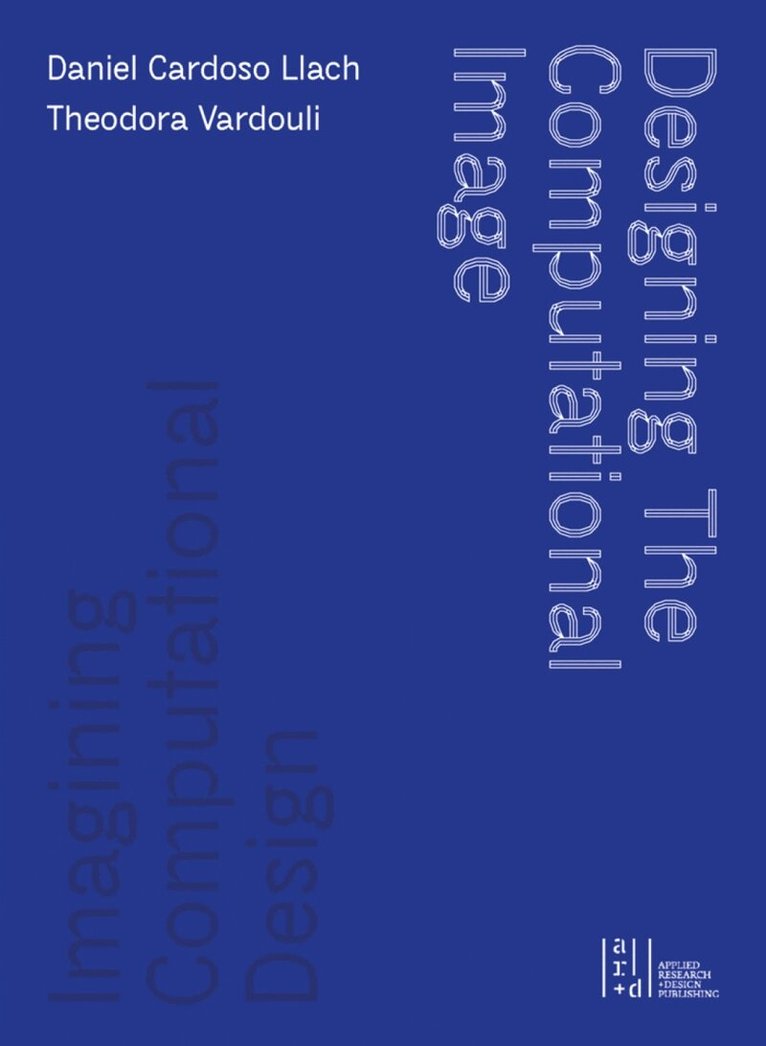
During the three decades following the Second World War, and before the advent of personal computers, government investment in university research in North America and the UK funded multidisciplinary projects to investigate the use of computers for manufacturing and design. Designing the Computational Image, Imagining Computational Design explores this period of remarkable inventiveness, and traces its repercussions on architecture and other creative fields through a selection of computational designers working today. Situating contemporary expressions of design in relation to broader historical, disciplinary, and technical frames, the book showcases the confluence, during the second half of the 20th century, of publicly funded technical innovations in software, geometry, and hardware with a cultural imaginary of design endowing computer-generated images with both geometric plasticity and a new type of agency as operative design artifacts.
103 kr
Skickas inom 5-8 vardagar
Reality Harvester is a monument erected for a research project conducted under a pandemic in a world with increasingly torn map territory relations. It takes form as both a book and a website. It is an extension of the reality collage we all make as we try to fill in the blanks and draw connections between memetic headlines, image macros and rotted hyperlinks, all semblances of context slowly fading. As more and more data is harvested it begins to occlude reality and a slow, roiling data fog settles in. Metrics and KPIs start to dictate reality rather than predict it, acting as fuel for neural networks reflecting the past into the future. Data as masking reality. Data as your boss. “We live in a world where there is more and more information, and less and less meaning”. --- This dual publication is the result of an investigation into the "data industrial complex", specifically the aesthetic and material lives of overlapping phenomena: big data and automation, labour, climate, finance and e-commerce, technological infrastructures, biometrics, behavioural science and surveillance. Over the two-year process, the group focused most specifically on the entangled representations and roles occupied by the natural world and networked digital communications in explanations of how the present is shaped. In a book-length collaboration with designers Persson Valijani, this pandemic-adjusted inquiry is modelled alongside contributions from fields including art, architecture, media theory, urbanism, activism, ethnography, environmental humanities, human ecology, poetry and curatorial practice. A parallel interactive website maps a 'data eco-system,' offering subjective navigations between the terrains of data flow, natural resource extraction, and financial and power relations. Contributors to the publication: Daniel Bodén, Michaela Casková, Sebastian Dahlqvist, Maryam Fanni, Carmen Lael Hines, Into the Black Box, Daniel Cardoso Llach, Jesse D. Peterson, Eugene S. von Rosen, Soni© Sagan, Aron Skoog, Nils Svensk, Slutty Urbanism, Sophie Vitelli, & Tess Takahashi. "Reality Harvester: Nature after Data after Nature" is published by Skogen, as well as the related digital site: https://reality.harvester.bargains Text in English. Works produced in the context of Kungliga Konsthögskolans konstnärliga forsknings- och utvecklingsprojekt (KFoU). Perfect bound softcover, 666 pages.