Daniel DiSalvo - Böcker
Visar alla böcker från författaren Daniel DiSalvo. Handla med fri frakt och snabb leverans.
5 produkter
5 produkter
720 kr
Skickas inom 5-8 vardagar
In Engines of Change, which is part the Oxford Studies in Postwar American Political Development series, Daniel DiSalvo provides the first full account of the role of these national intra-party "factions" in American politics. A faction, as defined here, is a party sub-unit that has enough ideological consistency, organizational capacity, and temporal durability to sustain intra-party conflict. Drawing from the last 150 years of American political history, DiSalvo explains how factions have shaped the parties' ideologies, impacted presidential nominations, structured patterns of presidential governance, and impacted the development of the American state. He demonstrates that factions can acquire the power to shape the parties' ideologies, impact presidential nominations, structure the patterns of presidential governance, and impact the development of the American state. Indeed, factions are often just as or more important than the parties themselves in driving political change. Sweeping in scope, Engines of Change promises to reshape our understanding of the forces most responsible for driving political change in modern American history.
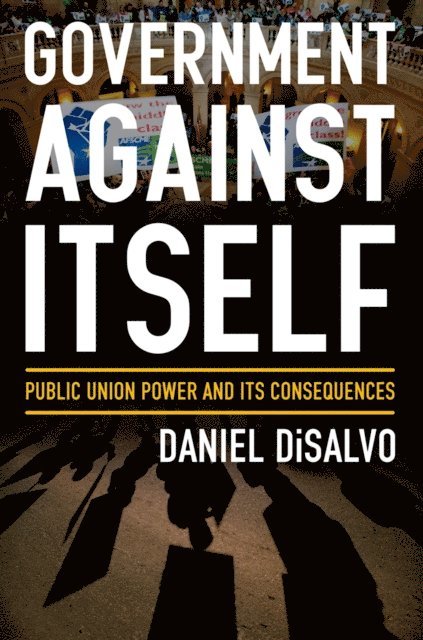
Government against Itself
How Public Employee Unions Weaken America's Government and Economy
Inbunden, Engelska, 2015
446 kr
Skickas inom 5-8 vardagar
As workers in the private sector struggle with stagnant wages, disappearing benefits, and retirement ages that are moving further and further out onto the horizon, unionized gym teachers and lifeguards employed by the public sector retire in their fifties with over $100,000 a year in pension and healthcare benefits. Some even supplement this generous income by taking other jobs in their "retirement." Attempts to rein in the unions, as in Wisconsin and New Jersey, have met with massive resistance. Yet as Daniel DiSalvo argues in Government against Itself, public sector unions threaten the integrity of our very democracy. DiSalvo, a third generation union member, recognizes the difference that collective bargaining made in the lives of his immigrant grandfather, a steelworker in Pittsburgh, and his father, a carpenter. He is not opposed to unions on ideological grounds. Rather, he opposes the form they have taken in the public sector, where they often face no real opposition in negotiations. Moreover, the public sector can't go out of business no matter how much union members manage to squeeze out of it. Union members have no incentive to ever settle for less, and this has a profound impact on the health of our society, as the costs get passed along to the taxpayer. States and municipalities break under the weight of their pension obligations, and the chasm between well-compensated public sector employees and their beleaguered private sector counterparts widens. Where private sector unions can provide a necessary counterweight to the power of capital, public employee unions are basically bargaining against themselves; it's no wonder they almost always win. The left is largely in thrall to the unions, both ideologically and financially; the right would simply take a hatchet to the state itself, eliminating important and valuable government services. Neither side offers a realistic vision of well-run, efficient government that serves the public. Moving beyond stale and unproductive partisan divisions, DiSalvo argues that we can build a better, more responsive government that is accountable to taxpayers. But we cannot do it until we challenge the dominance of public sector unions in government. This carefully reasoned analysis of the power of public sector unions is sure to be controversial, and will be an important contribution to the debates about public vs. private unions, increasing inequality, and the role of government in American life.
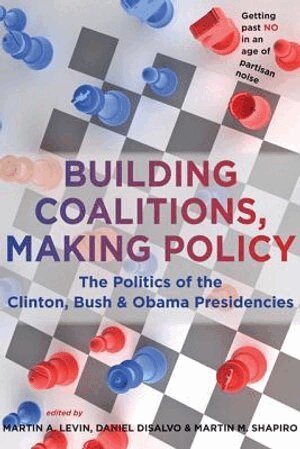
Building Coalitions, Making Policy
The Politics of the Clinton, Bush, and Obama Presidencies
Inbunden, Engelska, 2012
761 kr
Skickas inom 7-10 vardagar
In an age when partisan politics has reached a deafening-and arguably impotent-pitch, how does the real work of politics get done? This book opens the door on backroom politics and gives readers an insider's perspective on the efforts of policymakers from three presidential administrations to get past the naysayers and effect real and lasting policy changes. The editors take a comparative approach, offering a thorough overview of policymaking during the Clinton and George W. Bush administrations, with further discussion of President Obama's successful and failed attempts to build coalitions and get past no. The contributors, a national network of prominent political scientists, reveal the sausage-making of politics and policy. Readers can almost see the political players in the proverbial smoke-filled room, shirtsleeves rolled up and BlackBerrys in hand, developing the strategies and hammering out the compromises designed to hold the party base while winning over independent voters.Combining an insider's perspective with actual case studies, the volume examines the policymaking behind such programs as: No Child Left Behind; tax cuts; Social Security privatization; Medicare prescription drug reform; education and immigration reform; environmental policy; judicial politics; and, national security. Covering all major areas of policymaking, "Building Coalitions, Making Policy" gives instructors in political science, public administration and policy, American government, and American presidential studies plenty of provocative examples for classroom debate.
Building Coalitions, Making Policy
The Politics of the Clinton, Bush, and Obama Presidencies
Häftad, Engelska, 2012
326 kr
Tillfälligt slut
In an age when partisan politics has reached a deafening-and arguably impotent-pitch, how does the real work of politics get done? This book opens the door on backroom politics and gives readers an insider's perspective on the efforts of policymakers from three presidential administrations to get past the naysayers and effect real and lasting policy changes. The editors take a comparative approach, offering a thorough overview of policymaking during the Clinton and George W. Bush administrations, with further discussion of President Obama's successful and failed attempts to build coalitions and get past no. The contributors, a national network of prominent political scientists, reveal the sausage-making of politics and policy. Readers can almost see the political players in the proverbial smoke-filled room, shirtsleeves rolled up and BlackBerrys in hand, developing the strategies and hammering out the compromises designed to hold the party base while winning over independent voters.Combining an insider's perspective with actual case studies, the volume examines the policymaking behind such programs as: No Child Left Behind; tax cuts; Social Security privatization; Medicare prescription drug reform; education and immigration reform; environmental policy; judicial politics; and, national security. Covering all major areas of policymaking, "Building Coalitions, Making Policy" gives instructors in political science, public administration and policy, American government, and American presidential studies plenty of provocative examples for classroom debate.
68 kr
Tillfälligt slut
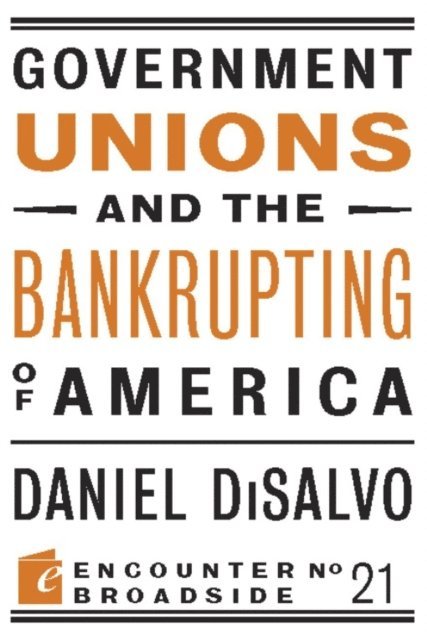
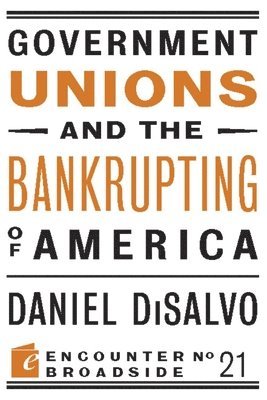
Government-workers unions have been political juggernauts in the U.S. since the unseen collective-bargaining-rights revolution of the 1960s and '70s. These unions are different and more powerful than those that battle owners and managers in the private sector. To advance their interests, unions in the public sector have created cartels with their political allies, mostly in the Democratic Party, to the exclusion of the taxpaying public. In this Broadside, Daniel DiSalvo shows us how this government takeover happened and tells us what can be done to protect the public interest. The fiscal consequences have already proven dire and threaten the long-term power and prestige of the United States on the world stage.