Daniel E. Flath – författare
Visar alla böcker från författaren Daniel E. Flath. Handla med fri frakt och snabb leverans.
6 produkter
Classical and Quantum 6j-symbols
Av J. Scott Carter, Daniel E. Flath m. fl.
Häftad, 1995
1096 kr
Lägg i varukorg
Addressing physicists and mathematicians alike, this book discusses the finite dimensional representation theory of sl(2), both classical and quantum. Covering representations of U(sl(2)), quantum sl(2), the quantum trace and color representations, and the Turaev-Viro invariant, this work is useful …
Classical and Quantum 6j-symbols
Av Masahico Saito, Daniel E. Flath m. fl.
E-bok, 2021
1089 kr
Lägg i varukorg
Addressing physicists and mathematicians alike, this book discusses the finite dimensional representation theory of sl(2), both classical and quantum. Covering representations of U(sl(2)), quantum sl(2), the quantum trace and color representations, and the Turaev-Viro invariant, this work is useful …
Applied Calculus, EMEA Edition
Av Deborah Hughes-Hallett, Andrew M. Gleason m. fl.
Häftad, 2019
804 kr
Lägg i varukorg
Interactive classrooms and well-crafted problems promote student learning. Since it's inception, the hallmark of Applied Calculus is its innovative and engaging problems. The Calculus Consortium pioneered and incorporates the approach called the "Rule of Four." The Rule of Four, presents ideas …
Applied Calculus
Av Daniel E. Flath, Patti Frazer Lock m. fl.
E-bok, 2022
782 kr
Lägg i varukorg
The 7th edition of Applied Calculus focuses on the "Rule of Four" (viewing problems graphically, numerically, symbolically, and verbally) to promote critical thinking to reveal solutions to mathematical problems. This approach reinforces the conceptual understanding necessary to reduce complicated …
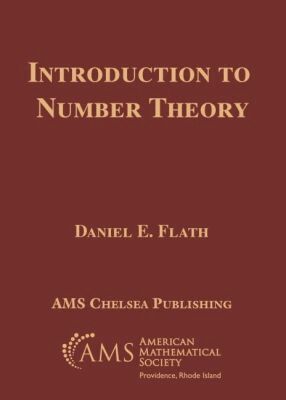
Introduction to Number Theory
Inbunden, 2018
831 kr
Lägg i varukorg
Growing out of a course designed to teach Gauss's Disquisitiones Arithmeticae to honors-level undergraduates, Flath's Introduction to Number Theory focuses on Gauss's theory of binary quadratic forms. It is suitable for use as a textbook in a course or self-study by advanced undergraduates or …