Daniel Foliard – författare
Visar alla böcker från författaren Daniel Foliard. Handla med fri frakt och snabb leverans.
3 produkter
3 produkter
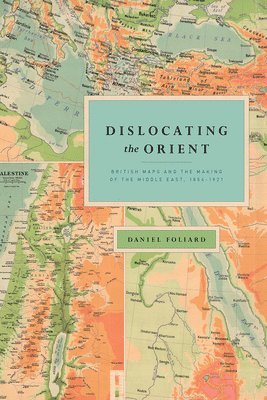
Dislocating the Orient
British Maps and the Making of the Middle East, 1854-1921
Inbunden, Engelska, 2017
528 kr
Skickas inom 7-10 vardagar
While the twentieth century's conflicting visions and exploitation of the Middle East are well documented, the origins of the concept of the Middle East itself have been largely ignored. With Dislocating the Orient, Daniel Foliard tells the story of how the land was brought into being, exploring how maps, knowledge, and blind ignorance all participated in the construction of this imagined region. Foliard vividly illustrates how the British first defined the Middle East as a geopolitical and cartographic region in the nineteenth and early twentieth centuries through their imperial maps. Until then, the region had never been clearly distinguished from "the East" or "the Orient." In the course of their colonial activities, however, the British began to conceive of the Middle East as a separate and distinct part of the world, with consequences that continue to be felt today. As they reimagined boundaries, the British produced, disputed, and finally dramatically transformed the geography of the area both culturally and physically over the course of their colonial era.Using a wide variety of primary texts and historical maps to show how the idea of the Middle East came into being, Dislocating the Orient will interest historians of the Middle East, the British empire, cultural geography, and cartography.
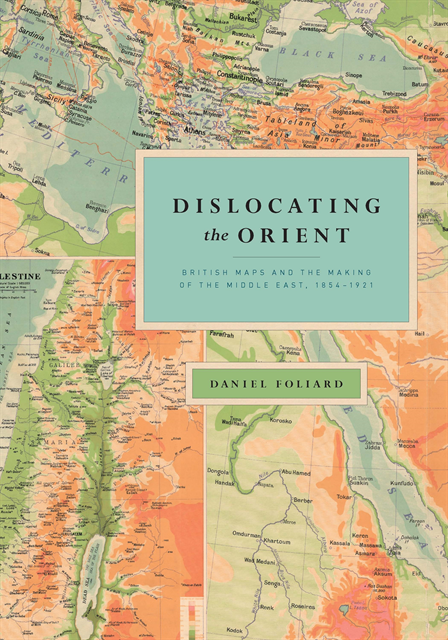
Dislocating the Orient
British Maps and the Making of the Middle East, 1854-1921
Häftad, Engelska, 2020
333 kr
Skickas inom 7-10 vardagar
While the twentieth century’s conflicting visions and exploitation of the Middle East are well documented, the origins of the concept of the Middle East itself have been largely ignored. With Dislocating the Orient, Daniel Foliard tells the story of how the land was brought into being, exploring how maps, knowledge, and blind ignorance all participated in the construction of this imagined region. Foliard vividly illustrates how the British first defined the Middle East as a geopolitical and cartographic region in the nineteenth and early twentieth centuries through their imperial maps. Until then, the region had never been clearly distinguished from “the East” or “the Orient.” In the course of their colonial activities, however, the British began to conceive of the Middle East as a separate and distinct part of the world, with consequences that continue to be felt today. As they reimagined boundaries, the British produced, disputed, and finally dramatically transformed the geography of the area—both culturally and physically—over the course of their colonial era. Using a wide variety of primary texts and historical maps to show how the idea of the Middle East came into being, Dislocating the Orient will interest historians of the Middle East, the British empire, cultural geography, and cartography.
241 kr
Tillfälligt slut
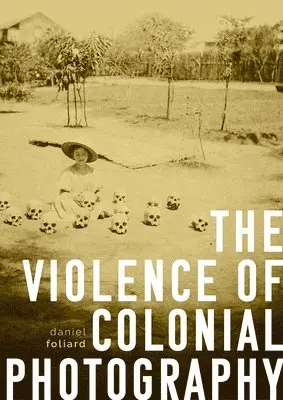
SHORTLISTED FOR THE BRITISH ACADEMY BOOK PRIZE FOR GLOBAL CULTURAL UNDERSTANDING 2023The late nineteenth century witnessed a rapid increase in colonial conflicts throughout the French and British empires. It was also the period in which the first mass-produced cameras became available. Colonial authorities were quick to recognise the power of this new technology, which they used to humiliate defeated opponents and project an image of supremacy across the world.Drawing on a wealth of visual materials, from soldiers’ personal albums to the collections of press agencies and government archives, The violence of colonial photography offers a new account of how conflict photography developed in the decades before the First World War. It explores the ways the camera was used to impose order on subject populations in Africa and Asia and to generate propaganda for the public in Europe, where a visual economy of violence was rapidly taking shape.At the same time, the book reveals how photographs could escape the intentions of their creators, offering a means for colonial subjects to push back against oppression.