Daniel H. Deudney - Böcker
Visar alla böcker från författaren Daniel H. Deudney. Handla med fri frakt och snabb leverans.
3 produkter
3 produkter
733 kr
Skickas inom 3-6 vardagar
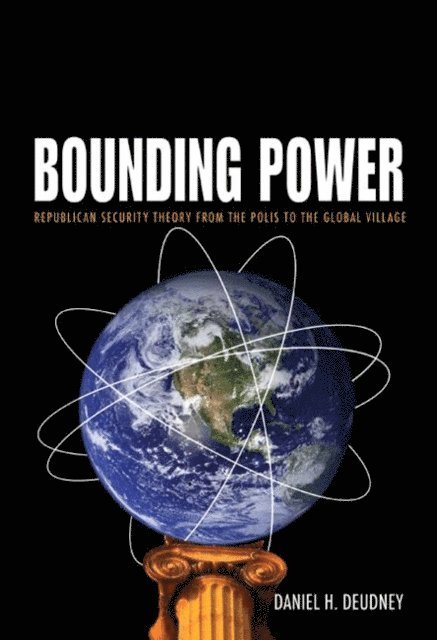
Realism, the dominant theory of international relations, particularly regarding security, seems compelling in part because of its claim to embody so much of Western political thought from the ancient Greeks to the present. Its main challenger, liberalism, looks to Kant and nineteenth-century economists. Despite their many insights, neither realism nor liberalism gives us adequate tools to grapple with security globalization, the liberal ascent, and the American role in their development. In reality, both realism and liberalism and their main insights were largely invented by republicans writing about republics. The main ideas of realism and liberalism are but fragments of republican security theory, whose primary claim is that security entails the simultaneous avoidance of the extremes of anarchy and hierarchy, and that the size of the space within which this is necessary has expanded due to technological change. In Daniel Deudney's reading, there is one main security tradition and its fragmentary descendants. This theory began in classical antiquity, and its pivotal early modern and Enlightenment culmination was the founding of the United States.Moving into the industrial and nuclear eras, this line of thinking becomes the basis for the claim that mutually restraining world government is now necessary for security and that political liberty cannot survive without new types of global unions. Unique in scope, depth, and timeliness, Bounding Power offers an international political theory for our fractious and perilous global village.
1 057 kr
Tillfälligt slut
Presents diverse views on the relationship between environmental politics and international security.Since the end of the Cold War, the relationship between international security and the environment has been subject to intensive policy concern, scholarly debate and research. Contested Grounds brings together many of the best known researchers on this emerging topic as they present sharply conflicting views on the relationship between the environment and security and conflict.The book puts the contemporary debate in historical and theoretical perspective by demonstrating the important, but overlooked, role that environmental factors have placed in historical developments and in earlier geopolitical theories. The contributors present diverse and often conflicting answers to three questions: What are the relationships between environmental change, degradation and protection and traditional natural security concepts and organizations? How useful are security concepts and organizations in mobilizing political responses to environmental problems? What role do environmental factors play in stimulating international conflict and cooperation?In-depth case studies on transboundary resource issues are explored as well as the implications of Chinese environmental decay for political conflict, and the use of military satellites for environmental monitoring.[Contributors include Ken Butts, Simon Dalby, Daniel Deudney, Ronald J. Deibert, Michel Frederick, Jack Goldstone, Thomas Homer-Dixon, Miriam Lowi, Richard Matthew, and Eric Stern.]
594 kr
Skickas inom 3-6 vardagar
Presents diverse views on the relationship between environmental politics and international security.Since the end of the Cold War, the relationship between international security and the environment has been subject to intensive policy concern, scholarly debate and research. Contested Grounds brings together many of the best known researchers on this emerging topic as they present sharply conflicting views on the relationship between the environment and security and conflict.The book puts the contemporary debate in historical and theoretical perspective by demonstrating the important, but overlooked, role that environmental factors have placed in historical developments and in earlier geopolitical theories. The contributors present diverse and often conflicting answers to three questions: What are the relationships between environmental change, degradation and protection and traditional natural security concepts and organizations? How useful are security concepts and organizations in mobilizing political responses to environmental problems? What role do environmental factors play in stimulating international conflict and cooperation?In-depth case studies on transboundary resource issues are explored as well as the implications of Chinese environmental decay for political conflict, and the use of military satellites for environmental monitoring.[Contributors include Ken Butts, Simon Dalby, Daniel Deudney, Ronald J. Deibert, Michel Frederick, Jack Goldstone, Thomas Homer-Dixon, Miriam Lowi, Richard Matthew, and Eric Stern.]