Daniel I. O’Neill - Böcker
Visar alla böcker från författaren Daniel I. O’Neill. Handla med fri frakt och snabb leverans.
8 produkter
8 produkter
721 kr
Skickas inom 7-10 vardagar
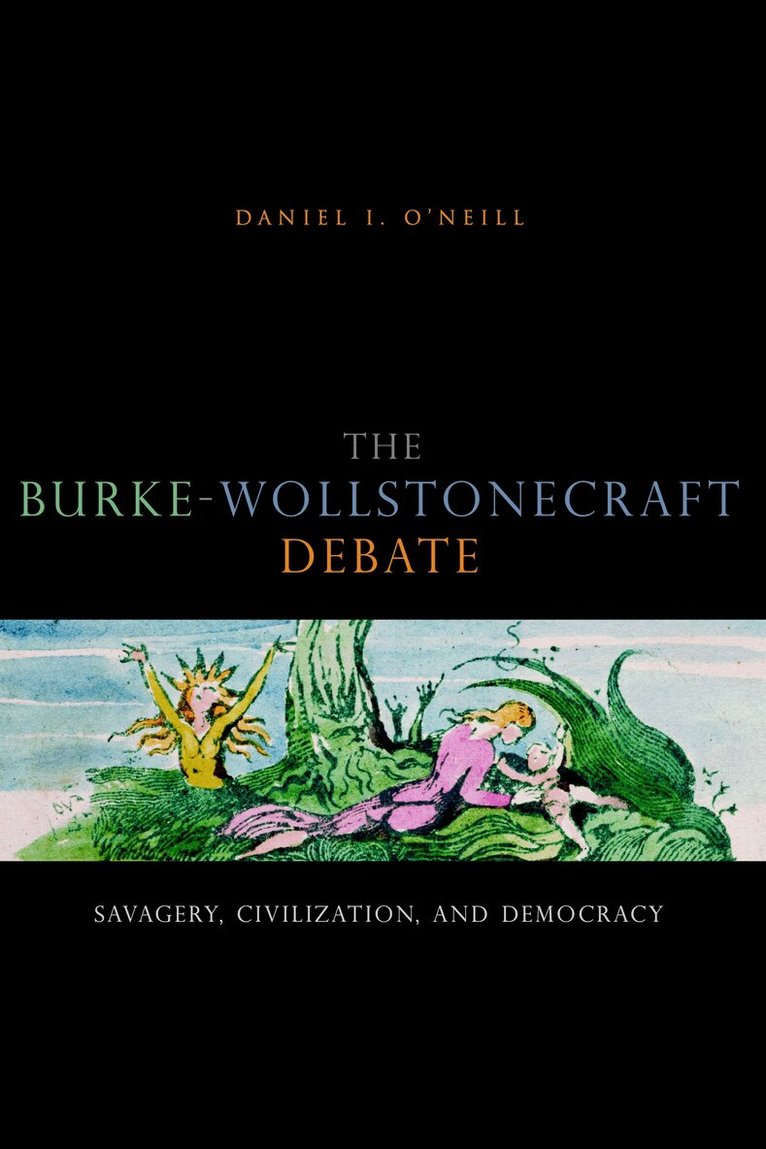
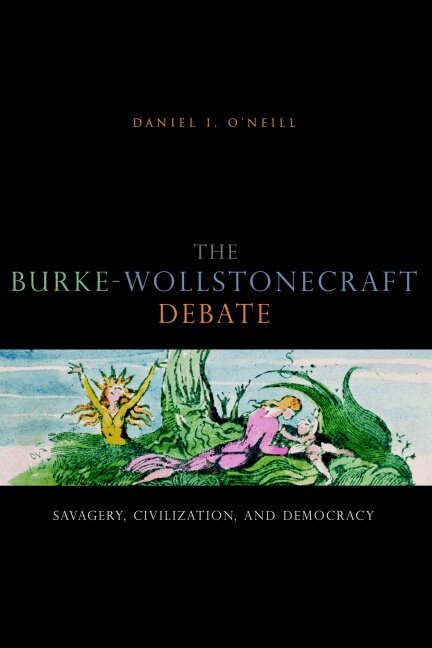
Many modern conservatives and feminists trace the roots of their ideologies, respectively, to Edmund Burke (1729–1797) and Mary Wollstonecraft (1759–1797), and a proper understanding of these two thinkers is therefore important as a framework for political debates today.According to Daniel O’Neill, Burke is misconstrued if viewed as mainly providing a warning about the dangers of attempting to turn utopian visions into political reality, while Wollstonecraft is far more than just a proponent of extending the public sphere rights of man to include women. Rather, at the heart of their differences lies a dispute over democracy as a force tending toward savagery (Burke) or toward civilization (Wollstonecraft). Their debate over the meaning of the French Revolution is the place where these differences are elucidated, but the real key to understanding what this debate is about is its relation to the intellectual tradition of the Scottish Enlightenment, whose language of politics provided the discursive framework within and against which Burke and Wollstonecraft developed their own unique ideas about what was involved in the civilizing process.
502 kr
Skickas inom 5-8 vardagar
Many modern conservatives and feminists trace the roots of their ideologies, respectively, to Edmund Burke (1729–1797) and Mary Wollstonecraft (1759–1797), and a proper understanding of these two thinkers is therefore important as a framework for political debates today.According to Daniel O’Neill, Burke is misconstrued if viewed as mainly providing a warning about the dangers of attempting to turn utopian visions into political reality, while Wollstonecraft is far more than just a proponent of extending the public sphere rights of man to include women. Rather, at the heart of their differences lies a dispute over democracy as a force tending toward savagery (Burke) or toward civilization (Wollstonecraft). Their debate over the meaning of the French Revolution is the place where these differences are elucidated, but the real key to understanding what this debate is about is its relation to the intellectual tradition of the Scottish Enlightenment, whose language of politics provided the discursive framework within and against which Burke and Wollstonecraft developed their own unique ideas about what was involved in the civilizing process.
721 kr
Skickas inom 7-10 vardagar
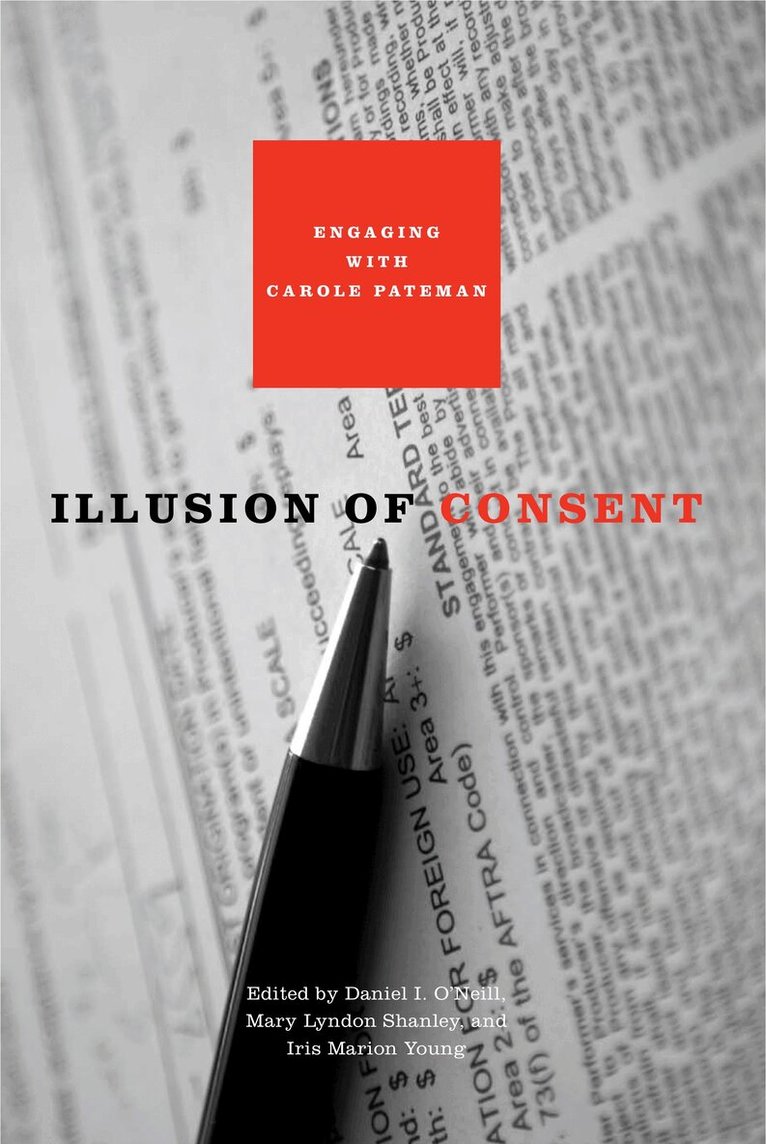
For nearly four decades, the writings of Carole Pateman have been regarded as major contributions to debates within political philosophy and feminist theory. She is the recipient of the 2012 Johan Skytte Prize in political science for “in a thought-provoking way challenging established ideas about participation, sex and equality.” By critiquing conventional notions of consent at the heart of much modern political thought—hence the title for this volume—Pateman has been a central voice in discussions of such important topics as political participation and democracy, contract theory and sexual equality, liberalism and the problem of political obligation, and most recently social citizenship, welfare, and basic income. These essays, all prepared especially for this volume, deal with issues that have been central to Pateman’s work. The authors critically engage with her work while making their own original contributions and advancing ongoing debates.
502 kr
Skickas inom 5-8 vardagar
For nearly four decades, the writings of Carole Pateman have been regarded as major contributions to debates within political philosophy and feminist theory. She is the recipient of the 2012 Johan Skytte Prize in political science for “in a thought-provoking way challenging established ideas about participation, sex and equality.” By critiquing conventional notions of consent at the heart of much modern political thought—hence the title for this volume—Pateman has been a central voice in discussions of such important topics as political participation and democracy, contract theory and sexual equality, liberalism and the problem of political obligation, and most recently social citizenship, welfare, and basic income. These essays, all prepared especially for this volume, deal with issues that have been central to Pateman’s work. The authors critically engage with her work while making their own original contributions and advancing ongoing debates.
867 kr
Skickas inom 10-15 vardagar
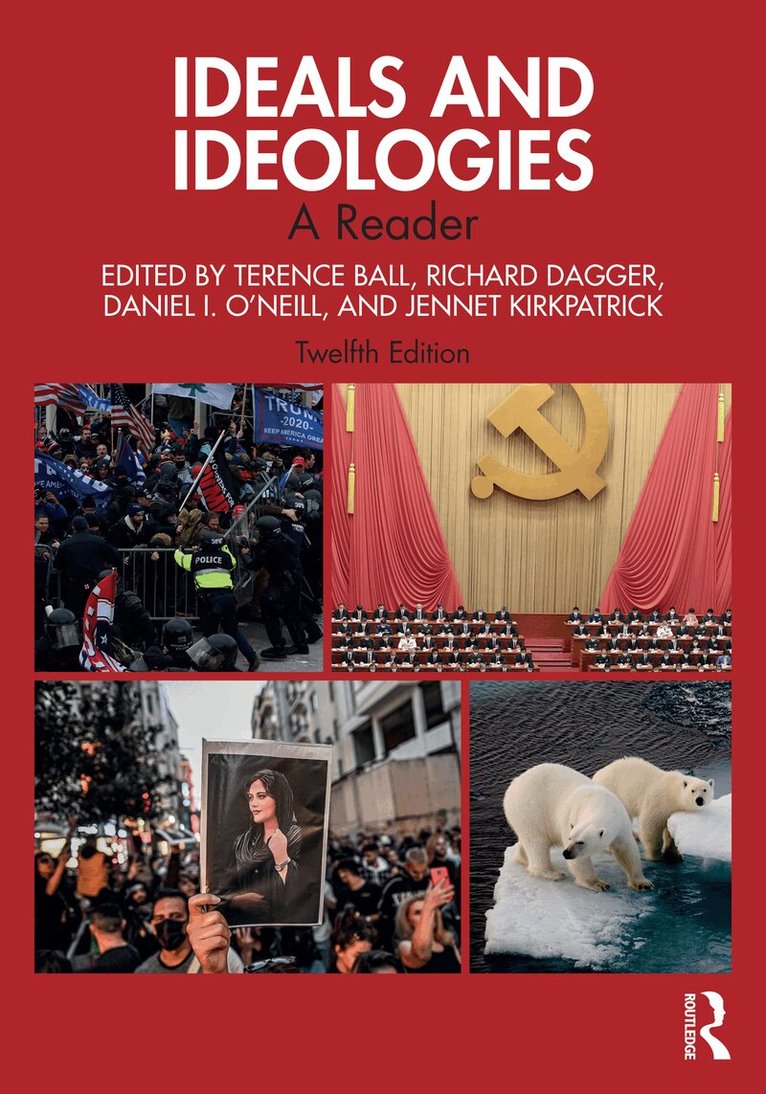
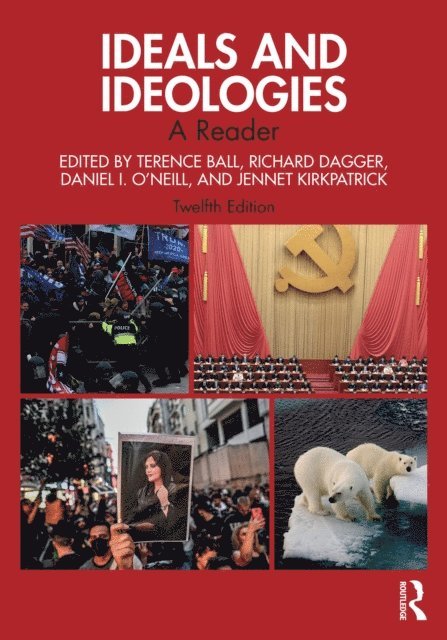
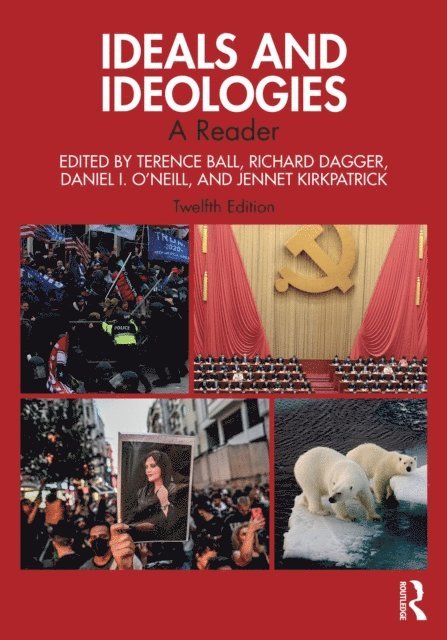
Ideals and Ideologies: A Reader is a comprehensive compilation of classic and contemporary readings representing all major “isms.” It offers students a generous sampling of key thinkers in different ideological traditions and places them in their historical and political contexts. Used on its own or with Political Ideologies and the Democratic Ideal, the anthology accounts for the different ways people use ideology and conveys the continuing importance of ideas to politics.New to this editionThe twelfth edition includes the following additions:Steven Levitsky and Daniel Ziblatt, “How Democracies Die” (two distinguished political scientists delineate the sources of democratic demise).Ayn Rand, “Collectivized Ethics” (a well-known libertarian thinker argues that it is illegitimate for governments to legally mandate behavior that benefits other people).Patrick Deneen, “Aristopopulism” (an influential conservative professor makes the case for a new kind of governing alliance between masses and elites).Herbert Marcuse, “One-Dimensional Man” (a renowned twentieth-century Marxist argues that capitalism creates a set of false needs and beliefs that prevent workers from resisting it)“Patriot Front Manifesto” (an Alt-Right white nationalist group attempts to link their ideology to American history and values)Ta-Nehisi Coates, “The Case for Reparations” (a prominent author argues that Americans should seriously consider what it would take to make amends to Black people for the ongoing effects of slavery, Jim Crow, and other forms of discrimination)Kate Manne, “Ameliorating Misogyny” (a contemporary feminist philosopher redefines misogyny as the central mechanism for governing women’s behavior and upholding patriarchy)Lorna Bracewell, “A Story of Queer Survival” (a lesbian feminist scholar links her personal coming-of-age experiences to the central beliefs of the gay liberation movement)Karla Cornejo Villavicencio, “Waking up from the American Dream” (a Harvard graduate and author who came to the United States as an undocumented immigrant describes the challenges faced by people who do not have the rights and privileges of full citizenship)Pope Francis, “Laudate Deum” (the leader of 1.3 billion Catholics worldwide describes how he believes they, and other people of goodwill, should respond to the increasingly urgent climate crisis)Dave Foreman, “In Defense of Monkeywrenching” (a leading radical environmentalist defends non-violent ecological sabotage as morally and politically legitimate)Sayyid Abu’l-A‘la Mawdudi, “The Islamic Law” (a highly influential South Asian Islamist thinker defines and defends the necessity of shari-‘a for Muslim societies)Hamas, “Charter of the Islamic Resistance Movement of Palestine” (a leading radical Islamist group spells out its core tenets and basic aims at its founding)
3 185 kr
Skickas inom 10-15 vardagar
Ideals and Ideologies: A Reader is a comprehensive compilation of classic and contemporary readings representing all major “isms.” It offers students a generous sampling of key thinkers in different ideological traditions and places them in their historical and political contexts. Used on its own or with Political Ideologies and the Democratic Ideal, the anthology accounts for the different ways people use ideology and conveys the continuing importance of ideas to politics.New to this editionThe twelfth edition includes the following additions:Steven Levitsky and Daniel Ziblatt, “How Democracies Die” (two distinguished political scientists delineate the sources of democratic demise).Ayn Rand, “Collectivized Ethics” (a well-known libertarian thinker argues that it is illegitimate for governments to legally mandate behavior that benefits other people).Patrick Deneen, “Aristopopulism” (an influential conservative professor makes the case for a new kind of governing alliance between masses and elites).Herbert Marcuse, “One-Dimensional Man” (a renowned twentieth-century Marxist argues that capitalism creates a set of false needs and beliefs that prevent workers from resisting it)“Patriot Front Manifesto” (an Alt-Right white nationalist group attempts to link their ideology to American history and values)Ta-Nehisi Coates, “The Case for Reparations” (a prominent author argues that Americans should seriously consider what it would take to make amends to Black people for the ongoing effects of slavery, Jim Crow, and other forms of discrimination)Kate Manne, “Ameliorating Misogyny” (a contemporary feminist philosopher redefines misogyny as the central mechanism for governing women’s behavior and upholding patriarchy)Lorna Bracewell, “A Story of Queer Survival” (a lesbian feminist scholar links her personal coming-of-age experiences to the central beliefs of the gay liberation movement)Karla Cornejo Villavicencio, “Waking up from the American Dream” (a Harvard graduate and author who came to the United States as an undocumented immigrant describes the challenges faced by people who do not have the rights and privileges of full citizenship)Pope Francis, “Laudate Deum” (the leader of 1.3 billion Catholics worldwide describes how he believes they, and other people of goodwill, should respond to the increasingly urgent climate crisis)Dave Foreman, “In Defense of Monkeywrenching” (a leading radical environmentalist defends non-violent ecological sabotage as morally and politically legitimate)Sayyid Abu’l-A‘la Mawdudi, “The Islamic Law” (a highly influential South Asian Islamist thinker defines and defends the necessity of shari-‘a for Muslim societies)Hamas, “Charter of the Islamic Resistance Movement of Palestine” (a leading radical Islamist group spells out its core tenets and basic aims at its founding)
1 082 kr
Skickas inom 10-15 vardagar
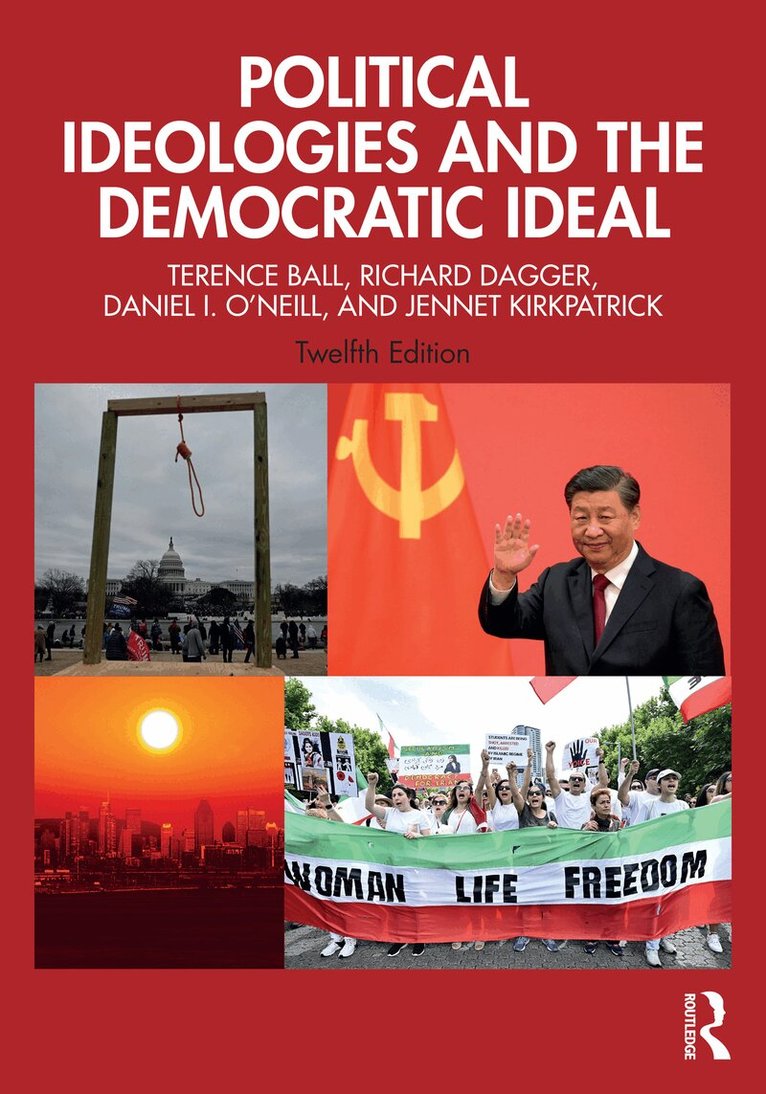
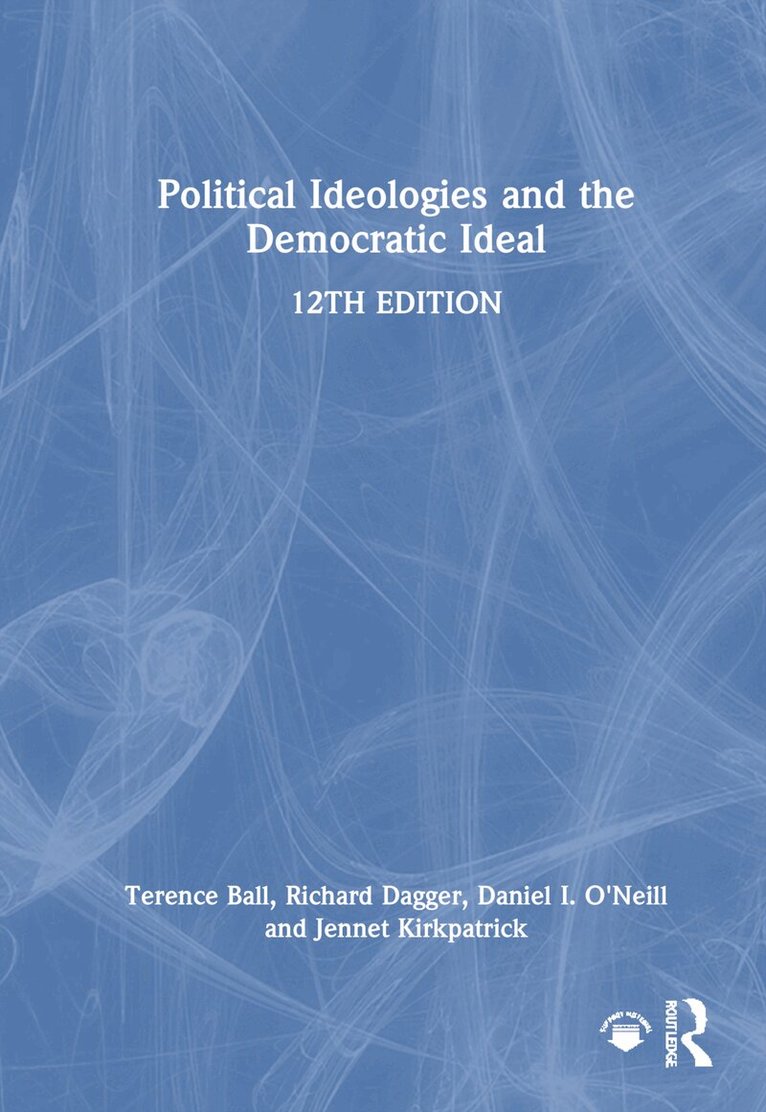
Now in its twelfth edition, Political Ideologies and the Democratic Ideal continues the book's tradition of offering a clear, concise, and comprehensive introduction to the ideas and ideals that shake and shape our political world. The text outlines a framework defining each ideology in terms of the four functions ideologies performs — explanation, evaluation, orientation, and political program — allowing students to compare, contrast, and analyze the various ideologies, developing their own unique views and critical thinking skills.New to this EditionA new co-author, Jennet Kirkpatrick, recognized for her teaching and scholarship in political theory, feminist theory, and resistance.Chapter 2; updated material on voter suppression and populism.Chapter 3; expanded discussion of the relationship between Adam Smith’s moral and economic theories; how John Stuart Mill’s views on free speech might apply to contemporary controversies; differences between John Rawls and Robert Nozick, and between neoclassical and welfare liberals more generally. Updated; discussion of the “Great Recession” and broader issues of economic inequality.Chapter 4; extended discussion of Edmund Burke’s place within the conservative tradition. Updated; assessment of contemporary conservatism in light of Donald Trump’s presidency; new section on Christian Nationalism.Chapter 5; extended discussion of Marx’s theory of history.Chapter 6; updated the status of the socialist and communist traditions in China, Russia, and the United States.Chapter 7; charted the resurgence of far right and neo-fascist politics in Europe. Discussion of the “Alt-Right” in the United States has been expanded, including new sections on QAnon and the “Great Replacement” theory. Also expanded upon; discussion of whether fascism could gain serious traction in the United States, and a new section on the reasons why some critics say Donald Trump is either a fascist, or dangerously close to becoming one.Chapter 8; updated sections on Black liberation and feminism, including reference to George Floyd’s murder and the Dobbs decision that overturned Roe v. Wade. Also, new material on settler colonialism and on the issues for all liberation ideologies raised by the case of undocumented immigrants, and extended discussion of liberation theology.Chapter 9; updated material on the severity of the climate crisis, and the variety of responses that have emerged to address it.Chapter 10; a new section on Hamas, and extended discussion of protests against Islamist rule in Iran focusing on the responses to Mahsa Amini’s death in police custody. Also updated; sections on ISIS and the Taliban in light of the former’s erosion and the latter’s return to power, in addition to references to internecine conflicts among radical Islamists.Chapter 11; updated reasons for the conclusion that there will be no end of ideological conflicts soon, especially with the continued power of religious worldviews, globalization, and---perhaps most especially---the return of fascism worldwide.
3 185 kr
Skickas inom 10-15 vardagar
Now in its twelfth edition, Political Ideologies and the Democratic Ideal continues the book's tradition of offering a clear, concise, and comprehensive introduction to the ideas and ideals that shake and shape our political world. The text outlines a framework defining each ideology in terms of the four functions ideologies performs — explanation, evaluation, orientation, and political program — allowing students to compare, contrast, and analyze the various ideologies, developing their own unique views and critical thinking skills.New to this EditionA new co-author, Jennet Kirkpatrick, recognized for her teaching and scholarship in political theory, feminist theory, and resistance.Chapter 2; updated material on voter suppression and populism.Chapter 3; expanded discussion of the relationship between Adam Smith’s moral and economic theories; how John Stuart Mill’s views on free speech might apply to contemporary controversies; differences between John Rawls and Robert Nozick, and between neoclassical and welfare liberals more generally. Updated; discussion of the “Great Recession” and broader issues of economic inequality.Chapter 4; extended discussion of Edmund Burke’s place within the conservative tradition. Updated; assessment of contemporary conservatism in light of Donald Trump’s presidency; new section on Christian Nationalism.Chapter 5; extended discussion of Marx’s theory of history.Chapter 6; updated the status of the socialist and communist traditions in China, Russia, and the United States.Chapter 7; charted the resurgence of far right and neo-fascist politics in Europe. Discussion of the “Alt-Right” in the United States has been expanded, including new sections on QAnon and the “Great Replacement” theory. Also expanded upon; discussion of whether fascism could gain serious traction in the United States, and a new section on the reasons why some critics say Donald Trump is either a fascist, or dangerously close to becoming one.Chapter 8; updated sections on Black liberation and feminism, including reference to George Floyd’s murder and the Dobbs decision that overturned Roe v. Wade. Also, new material on settler colonialism and on the issues for all liberation ideologies raised by the case of undocumented immigrants, and extended discussion of liberation theology.Chapter 9; updated material on the severity of the climate crisis, and the variety of responses that have emerged to address it.Chapter 10; a new section on Hamas, and extended discussion of protests against Islamist rule in Iran focusing on the responses to Mahsa Amini’s death in police custody. Also updated; sections on ISIS and the Taliban in light of the former’s erosion and the latter’s return to power, in addition to references to internecine conflicts among radical Islamists.Chapter 11; updated reasons for the conclusion that there will be no end of ideological conflicts soon, especially with the continued power of religious worldviews, globalization, and---perhaps most especially---the return of fascism worldwide.