Daniel J. Gargola - Böcker
Visar alla böcker från författaren Daniel J. Gargola. Handla med fri frakt och snabb leverans.
3 produkter
3 produkter
Lands, Laws, and Gods
Magistrates and Ceremony in the Regulation of Public Lands in Republican Rome
Häftad, Engelska, 2009
530 kr
Skickas inom 10-15 vardagar
In Lands, Laws, and Gods, Daniel Gargola examines the formulation and implementation of laws regulating the use of public lands, including the establishment of colonies, in Republican Rome (509-27 B.C.). During this period of territorial expansion, the Romans developed the basic legal forms by which they governed captured land, and they constructed the processes and ceremonies by which those forms were translated into practice. Using agrarian law as a case study and focusing especially on rituals that both validated and gave structure to the administrative process, Gargola demonstrates the fundamental connections between religion, law, and government. Essential acts in the administration of agrarian legislation, such as the transfer of land from one party to another and the granting of contracts for public works, depended upon ritual formulas and gestures, often within the context of religious ceremonies. By recovering these formulas and their larger significance, Gargola reconstructs an important dimension of Roman life.A UNC Press Enduring Edition -- UNC Press Enduring Editions use the latest in digital technology to make available again books from our distinguished backlist that were previously out of print. These editions are published unaltered from the original, and are presented in affordable paperback formats, bringing readers both historical and cultural value.
1 258 kr
Skickas inom 7-10 vardagar
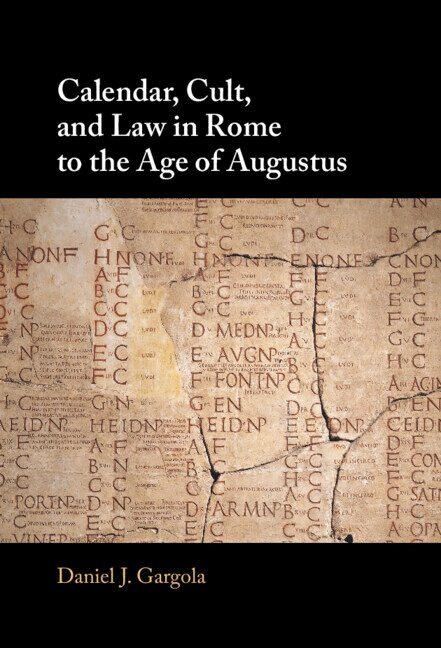
Rome's calendar often falls into the background in studies of republican political, legal, and religious practices. Its relationship to celestial phenomena is usually unexamined and modernizing assumptions are made about its regularity of operations and the advantages of Caesar's reform. In this book, Daniel Gargola clarifies its relationship to celestial phenomena and reveals the extent to which celestial references permeated public cult; he also demonstrates that the competent authorities often intervened in its operations in order to accommodate other concerns. The calendar also provided the temporal framework for the regulation of public and cultic activities and thus had a central role in Roman law. Roman writers attempted to bring clarity to the norms involving the calendar, and their efforts have often influenced modern attempts to study it. Nevertheless, the complexity of public and cultic life undermined these attempts and Romans always had to navigate between competing norms.
434 kr
Skickas inom 10-15 vardagar
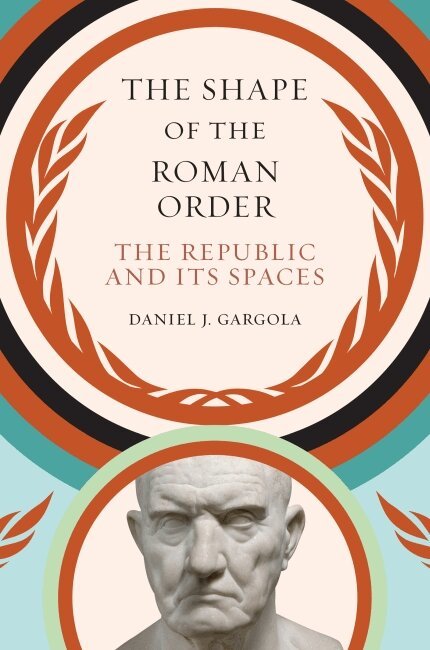
In recent years, a long-established view of the Roman Empire during its great age of expansion has been called into question by scholars who contend that this model has made Rome appear too much like a modern state. This is especially true in terms of understanding how the Roman government ordered the city--and the world around it--geographically. In this innovative, systematic approach, Daniel J. Gargola demonstrates how important the concept of space was to the governance of Rome. He explains how Roman rulers, without the means for making detailed maps, conceptualized the territories under Rome's power as a set of concentric zones surrounding the city. In exploring these geographic zones and analyzing how their magistrates performed their duties, Gargola examines the idiosyncratic way the elite made sense of the world around them and how it fundamentally informed the way they ruled over their dominion. From what geometrical patterns Roman elites preferred to how they constructed their hierarchies in space, Gargola considers a wide body of disparate materials to demonstrate how spatial orientation dictated action, shedding new light on the complex peculiarities of Roman political organization.