Daniel J. Hulsebosch – författare
Visar alla böcker från författaren Daniel J. Hulsebosch. Handla med fri frakt och snabb leverans.
4 produkter
Constituting Empire
New York and the Transformation of Constitutionalism in the Atlantic World, 1664-1830
Häftad, 2008
437 kr
Lägg i varukorg
In his paradigm-shifting analysis, Daniel J. Hulsebosch captures the essential paradox at the heart of American constitutional history: the Revolution, which brought political independence and substituted the people for the British crown as the source of legitimate authority, also led to the …
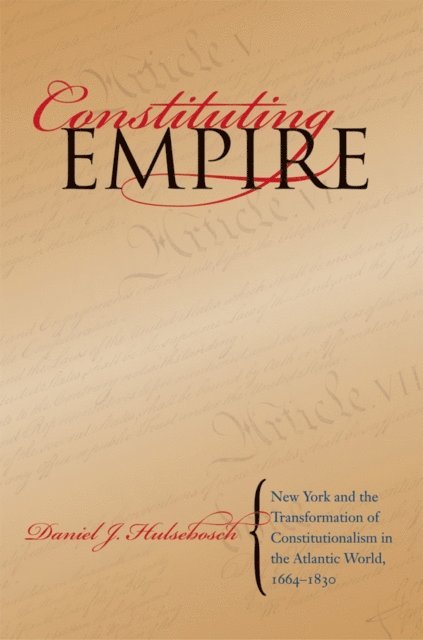
Constituting Empire
New York and the Transformation of Constitutionalism in the Atlantic World, 1664-1830
E-bok, 2006
410 kr
Lägg i varukorg
According to the traditional understanding of American constitutional law, the Revolution produced a new conception of the constitution as a set of restrictions on the power of the state rather than a mere description of governmental roles. Daniel J. Hulsebosch complicates this viewpoint by arguing …
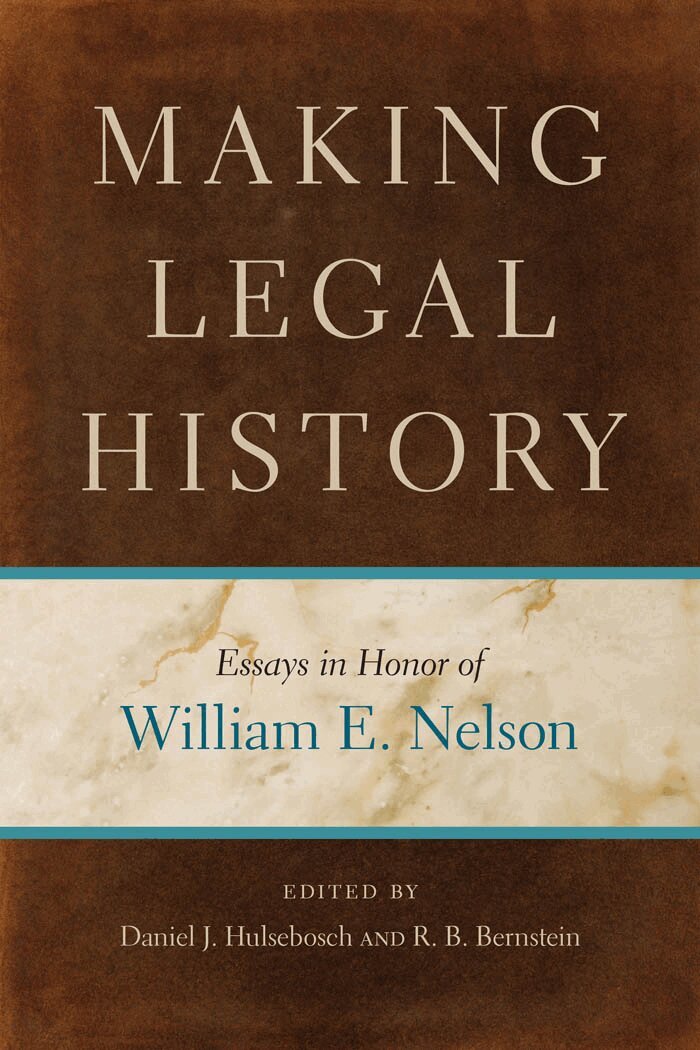
Making Legal History
Essays in Honor of William E. Nelson
Av Daniel J. Hulsebosch, R. B. Bernstein
Inbunden, 2013
701 kr
Lägg i varukorg
One of the academy's leading legal historians, William E. Nelson is the Edward Weinfeld Professor of Law at New York University School of Law. For more than four decades, Nelson has produced some of the most original and creative work on American constitutional and legal history. His prize-winning …
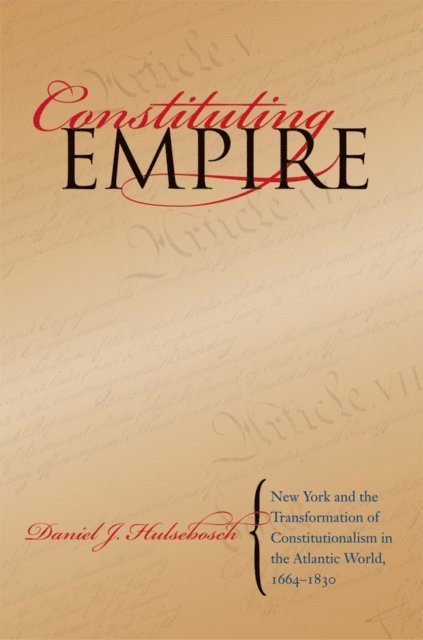
Constituting Empire
New York and the Transformation of Constitutionalism in the Atlantic World, 1664-1830
E-bok, 2006
410 kr
Lägg i varukorg
According to the traditional understanding of American constitutional law, the Revolution produced a new conception of the constitution as a set of restrictions on the power of the state rather than a mere description of governmental roles. Daniel J. Hulsebosch complicates this viewpoint by arguing …