Daniel J. Kevles – författare
Visar alla böcker från författaren Daniel J. Kevles. Handla med fri frakt och snabb leverans.
6 produkter
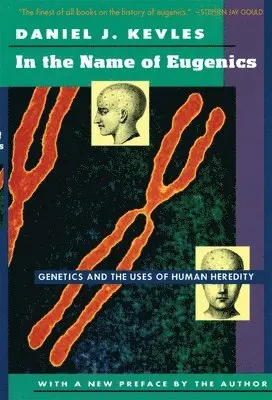
In the Name of Eugenics
Genetics and the Uses of Human Heredity
Häftad, 1998
395 kr
Lägg i varukorg
Daniel Kevles traces the study and practice of eugenics--the science of "improving" the human species by exploiting theories of heredity--from its inception in the late nineteenth century to its most recent manifestation within the field of genetic engineering. It is rich in narrative, anecdote, …
THE PHYSICISTS
E-bok, 2013
252 kr
Lägg i varukorg
This magnificent account of the coming of age of physics in America has been heralded as the best introduction to the history of science in the United States. Unsurpassed in its breadth and literary style, Kevles''s account portrays the brilliant scientists who became a powerful force in bringing …
In the Name of Eugenics
Genetics and the Uses of Human Heredity
E-bok, 2013
284 kr
Lägg i varukorg
Daniel Kevles traces the study and practice of eugenics--the science of "improving" the human species by exploiting theories of heredity--from its inception in the late nineteenth century to its most recent manifestation within the field of genetic engineering. It is rich in narrative, anecdote, …
Baltimore Case
A Trial of Politics, Science, and Character
Häftad, 2000
371 kr
Lägg i varukorg
David Baltimore won the Nobel Prize in medicine in 1975. Known as a wunderkind in the field of immunology, he rose quickly through the ranks of the scientific community to become the president of the distinguished Rockefeller University. Less than a year and a half later, Baltimore resigned from …
Code of Codes
Scientific and Social Issues in the Human Genome Project
Av Daniel J. Kevles, Leroy Hood
Häftad, 1993
395 kr
Lägg i varukorg
The human genome is the key to what makes us human. Composed of the many different genes found in our cells, it defines our possibilities and limitations as members of the species. The ultimate goal of the pioneering project outlined in this book is to map our genome in detail—an achievement that …
Physicists
The History of a Scientific Community in Modern America, With a New Preface by the Author
Häftad, 1995
361 kr
Lägg i varukorg
This magnificent account of the coming of age of physics in America has been heralded as the best introduction to the history of science in the United States. Unsurpassed in its breadth and literary style, Daniel J. Kevles’s account portrays the brilliant scientists who became a powerful force in …