Daniel J. Sherman - Böcker
Visar alla böcker från författaren Daniel J. Sherman. Handla med fri frakt och snabb leverans.
12 produkter
12 produkter
732 kr
Tillfälligt slut
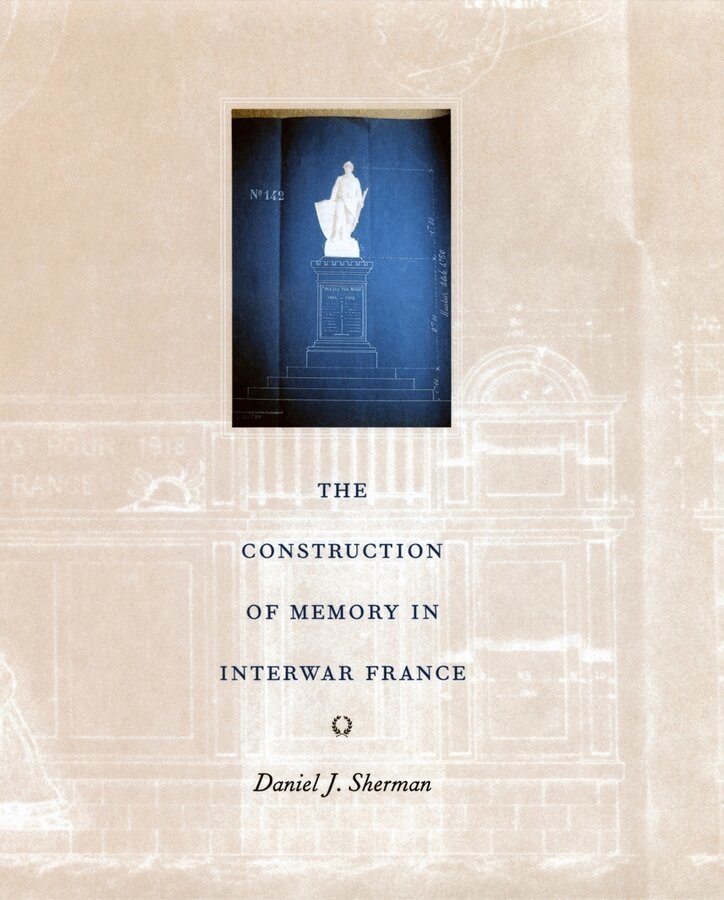
This work takes a look at the human impact of World War I by examining the ways in which the French remembered their veterans and war dead after the armistice. Arguing that memory is more than just a record of experience, this cultural history offers a perspective on how commemoration of World War I helped to shape post-war French society and politics. Daniel Sherman shows how a wartime visual culture saturated with images of ordinary foot soldiers, together with contemporary novels, memoirs and tourist literature, promoted a distinctive notion of combat experience. The contrast between battlefield and home front, soldier and civilian was the basis for memory and collective gratitude. Post-war commemoration, however, also grew directly out of the search for the remains of hundreds of thousands of missing soldiers, and the sometimes contentious debates over where to bury them. For this reason, the local monument, with its inscribed list of names and its functional resemblance to tombstobes, emerged as the focal point of commemorative practice.Sherman traces every step in the process of monument building as he analyzes commemoration's competing goals - to pay tribute to the dead, to console the bereaved and to incorporate mourner's individual memories into a larger political discourse.
461 kr
Skickas inom 7-10 vardagar
This work takes a look at the human impact of World War I by examining the ways in which the French remembered their veterans and war dead after the armistice. Arguing that memory is more than just a record of experience, this cultural history offers a perspective on how commemoration of World War I helped to shape post-war French society and politics. Daniel Sherman shows how a wartime visual culture saturated with images of ordinary foot soldiers, together with contemporary novels, memoirs and tourist literature, promoted a distinctive notion of combat experience. The contrast between battlefield and home front, soldier and civilian was the basis for memory and collective gratitude. Post-war commemoration, however, also grew directly out of the search for the remains of hundreds of thousands of missing soldiers, and the sometimes contentious debates over where to bury them. For this reason, the local monument, with its inscribed list of names and its functional resemblance to tombstobes, emerged as the focal point of commemorative practice.Sherman traces every step in the process of monument building as he analyzes commemoration's competing goals - to pay tribute to the dead, to console the bereaved and to incorporate mourner's individual memories into a larger political discourse.
392 kr
Skickas inom 7-10 vardagar
Delves into two controversies from the French archaeological world to illuminate the tension between the discipline’s scientific ambitions and its hunger for media attention. For well over a century, from Heinrich Schliemann’s sensational discoveries at Troy in the 1880s, through the Tutankhamun excavations of the 1920s, to the recent LIDAR-aided uncovering of lost Maya cities, archaeology has made headlines. In this new history of archaeology and its archival traces, Daniel J. Sherman treats the friction between science and spectacle as constitutive of the field. By exploring two long-running controversies that roiled the French archaeological world and its wider public in the first third of the twentieth century, he gives the science/media relationship a unique place in the history of archaeology—and its present. The first controversy involves a dispute over the conduct of excavations at Carthage in Tunisia, then under French colonial rule. In the second, accusations of forgery clouded what seemed to be a stunning Neolithic find at a hamlet called Glozel, in the Auvergne region in central France. The affair divided the scholarly community and attracted enormous media attention across Europe and North America. Both controversies occurred at a transitional moment between what has been called the heroic age of archaeology, dominated by explorers and adventurers with little specialized training, and the beginnings of its professionalization. As Sherman shows, the two affairs put the methods, procedures, and networks of archaeology in the spotlight and profoundly shaped its history.
941 kr
Skickas inom 10-15 vardagar
From the mid-1960s to the early 1970s, revolutions in theory, politics, and cultural experimentation swept around the world. These changes had as great a transformative impact on the right as on the left. A touchstone for activists, artists, and theorists of all stripes, the year 1968 has taken on new significance for the present moment, which bears certain uncanny resemblances to that time. The Long 1968 explores the wide-ranging impact of the year and its aftermath in politics, theory, the arts, and international relations—and its uses today.
332 kr
Skickas inom 7-10 vardagar
From the mid-1960s to the early 1970s, revolutions in theory, politics, and cultural experimentation swept around the world. These changes had as great a transformative impact on the right as on the left. A touchstone for activists, artists, and theorists of all stripes, the year 1968 has taken on new significance for the present moment, which bears certain uncanny resemblances to that time. The Long 1968 explores the wide-ranging impact of the year and its aftermath in politics, theory, the arts, and international relations—and its uses today.
305 kr
Skickas inom 7-10 vardagar
Museums, modern concepts of culture, and ideas about difference arose together and are inextricably entwined. Relationships of difference—notably, of gender, ethnicity, nationality, and race—have become equally important concerns of scholarship in humanities and contemporary museum practice. Museums and Difference offers the perspectives of scholars and museum professionals in tandem, using the concept of difference to reexamine how museums construct themselves, their collections, and their publics. Essays explore a wide range of examples from around the world and from the 19th century to the present, including case studies of special exhibitions as well as broad surveys of institutions in Europe, the United States, and Japan.
715 kr
Skickas inom 10-15 vardagar
Museums display much more than artifacts; Museum Culture makes us on a tour through the complex of ideas, values and symbols that pervade and shape the practice of exhibiting today. Bringing together a broad range of perspectives from history, art history, critical theory and sociology, the contributors to this new collection argue that museums have become a central institution and metaphor in contemporary society.Discussing exhibition histories and practice in Western Europe, the former Soviet Union, Israel and the United States, the authors explore the ways in which museums assign meaning to art through various kinds of exhibitions and display strategies, examining the political implications of these strategies and the forms of knowledge they invoke and construct. The collection also discusses alternative exhibition forms, the involvement of some museums with the more spectacular practices of mass media culture, and looks at how museums construct their public.
2 653 kr
Skickas inom 10-15 vardagar
Museums display much more than artifacts; Museum Culture makes us on a tour through the complex of ideas, values and symbols that pervade and shape the practice of exhibiting today. Bringing together a broad range of perspectives from history, art history, critical theory and sociology, the contributors to this new collection argue that museums have become a central institution and metaphor in contemporary society.Discussing exhibition histories and practice in Western Europe, the former Soviet Union, Israel and the United States, the authors explore the ways in which museums assign meaning to art through various kinds of exhibitions and display strategies, examining the political implications of these strategies and the forms of knowledge they invoke and construct. The collection also discusses alternative exhibition forms, the involvement of some museums with the more spectacular practices of mass media culture, and looks at how museums construct their public.
1 906 kr
Skickas inom 7-10 vardagar
More than ever, students are thinking about their choices in a changing environment. Environmental Science and Sustainability gives students a scientific understanding of the environment while helping them practice decision-making. The Second Edition now integrates the role environmental justice plays in decisions, and new insights gained from the pandemic and IPCC Sixth Assessment. The Norton Illumine Ebook, InQuizitive, and What Would You Do? decision-making activities build a learning pathway of interactive reading and practice at one low price.
156 kr
Skickas inom 7-10 vardagar
This issue presents new directions in the study of the civil unrest in France during May 1968 on its fiftieth anniversary. Authors from France and the United States emphasize the nature and experience of the political upheaval in May 1968, the long-term cultural impacts of events in Paris, and the ways in which these events figures into a global context. Contributors offer new ways of understanding and interpreting the discord by focusing on the emotional and cultural resonance of the events of May 1968 in activism and popular culture. Other essays explore the relation of student activism in former French colonies to events in France, place the events of May 1968 in a global context by considering diplomatic and radical networks between Europe and the United States, and examine the cultural relationship between France and Germany. Contributors: Ludivine Bantigny, FranÇoise Blum, Tony CÔme, Boris Gobille, Bethany Keenan, Salar Mohandesi, Donald Reid, Sandrine Sanos, Daniel Sherman
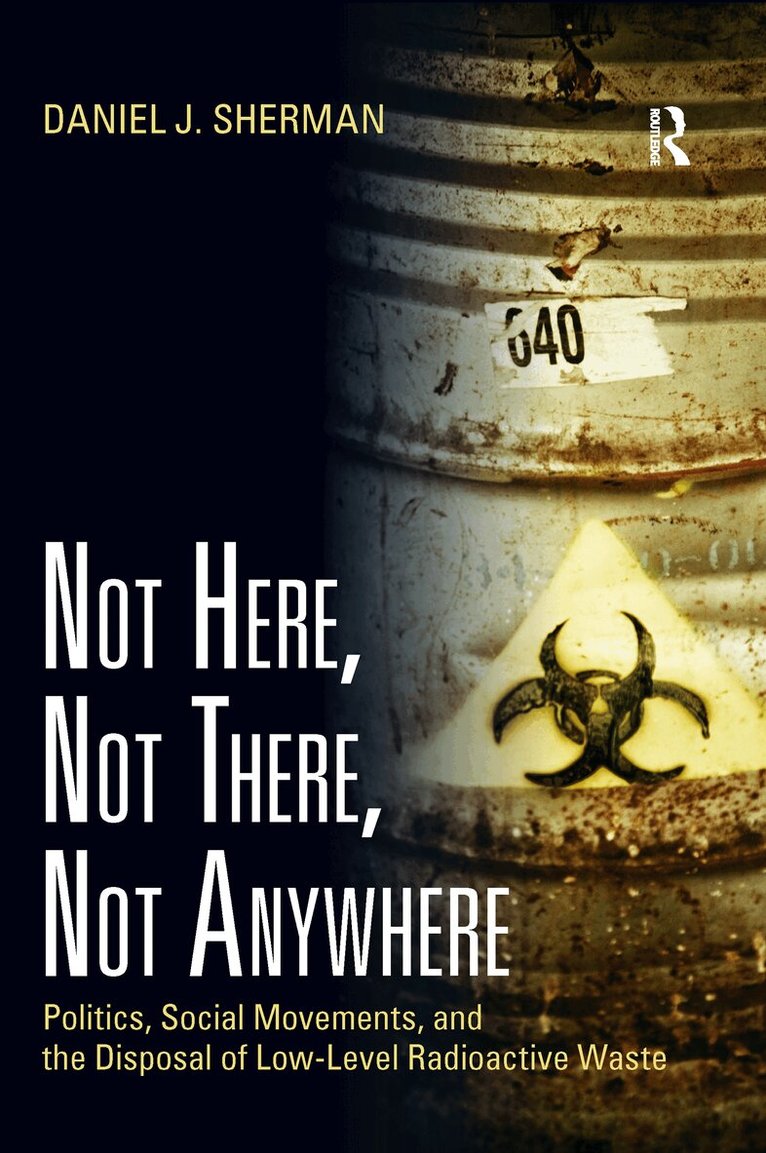
Not Here, Not There, Not Anywhere
Politics, Social Movements, and the Disposal of Low-Level Radioactive Waste
Inbunden, Engelska, 2011
522 kr
Skickas inom 10-15 vardagar
In 1979, provoked by the Three Mile Island nuclear accident, governors of states hosting disposal facilities for low-level radioactive waste (LLRW) refused to accept additional shipments. The resulting shortage of disposal sites for wastes spurred Congress to devolve responsibility for establishing new, geographically diffuse LLRW disposal sites to states and regional compacts, with siting authorities often employing socio-economic and political data to target communities that would give little resistance to their plans. The communities, however, were far from compliant, organizing nearly 1000 opposition events that ended up blocking the implementation of any new disposal sites. Sherman provides comprehensive coverage of this opposition, testing hypotheses regarding movement mobilization and opposition strategy by analyzing the frequency and disruptive qualities of activism. In the process, he bridges applied policy questions about hazardous waste disposal with broader questions about the dynamics of social movements and the intergovernmental politics of policy implementation. The issues raised in this book are sure to be renewed as interest grows in nuclear power and the disposal of the resulting waste remains uncertain.
Not Here, Not There, Not Anywhere
Politics, Social Movements, and the Disposal of Low-Level Radioactive Waste
Häftad, Engelska, 2011
346 kr
Skickas inom 10-15 vardagar
In 1979, provoked by the Three Mile Island nuclear accident, governors of states hosting disposal facilities for low-level radioactive waste (LLRW) refused to accept additional shipments. The resulting shortage of disposal sites for wastes spurred Congress to devolve responsibility for establishing new, geographically diffuse LLRW disposal sites to states and regional compacts, with siting authorities often employing socio-economic and political data to target communities that would give little resistance to their plans. The communities, however, were far from compliant, organizing nearly 1000 opposition events that ended up blocking the implementation of any new disposal sites. Sherman provides comprehensive coverage of this opposition, testing hypotheses regarding movement mobilization and opposition strategy by analyzing the frequency and disruptive qualities of activism. In the process, he bridges applied policy questions about hazardous waste disposal with broader questions about the dynamics of social movements and the intergovernmental politics of policy implementation. The issues raised in this book are sure to be renewed as interest grows in nuclear power and the disposal of the resulting waste remains uncertain.