Daniel Jordan Smith - Böcker
Visar alla böcker från författaren Daniel Jordan Smith. Handla med fri frakt och snabb leverans.
8 produkter
8 produkter
258 kr
Skickas inom 7-10 vardagar
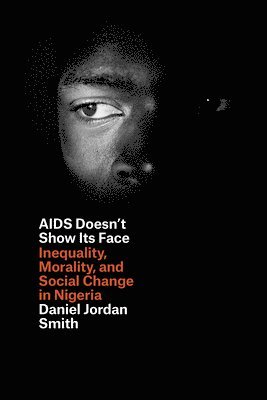
AIDS and Africa are indelibly linked in popular consciousness, but despite widespread awareness of the epidemic, much of the story remains hidden beneath a superficial focus on condoms, sex workers, and antiretrovirals. Africa gets lost in this equation, Daniel Jordan Smith argues, transformed into a mere vehicle to explain AIDS, and in AIDS Doesn't Show Its Face, he offers a powerful reversal, using AIDS as a lens through which to view Africa. Drawing on twenty years of fieldwork in Nigeria, Smith tells a story of dramatic social changes, ones implicated in the same inequalities that also factor into local perceptions about AIDS-inequalities of gender, generation, and social class. Nigerians, he shows, view both social inequality and the presence of AIDS in moral terms, as kinds of ethical failure. Mixing ethnographies that describe everyday life with pointed analyses of public health interventions, he demonstrates just how powerful these paired anxieties-medical and social-are, and how the world might better alleviate them through a more sensitive understanding of their relationship.
786 kr
Skickas inom 7-10 vardagar
Refrains about monetary hardships are ubiquitous in contemporary Nigeria, frequently expressed with the idiom "to be a man is not a one-day job." But while men talk constantly about money, underlying their economic worries are broader concerns about the shifting meanings of masculinity, marked by changing expectations and practices of intimacy. Drawing on his twenty-five years of experience in southeastern Nigeria, Daniel Jordan Smith takes readers through the principal phases and arenas of men's lives: the transition to adulthood; searching for work and making a living; courtship, marriage and fatherhood; fraternal and political relationships among men; and finally, the attainment of elder status and death. He relates men's struggles to fulfill both their own aspirations and society's expectations. He also considers men who behave badly, mistreat their wives and children, or resort to crime and violence. All of these men face similar challenges as they navigate the complex geometry of money and intimacy. Unraveling these connections, Smith argues, provides us with a deeper understanding of both masculinity and society in Nigeria.
243 kr
Skickas inom 7-10 vardagar
Refrains about monetary hardships are ubiquitous in contemporary Nigeria, frequently expressed with the idiom "to be a man is not a one-day job." But while men talk constantly about money, underlying their economic worries are broader concerns about the shifting meanings of masculinity, marked by changing expectations and practices of intimacy. Drawing on his twenty-five years of experience in southeastern Nigeria, Daniel Jordan Smith takes readers through the principal phases and arenas of men's lives: the transition to adulthood; searching for work and making a living; courtship, marriage and fatherhood; fraternal and political relationships among men; and finally, the attainment of elder status and death. He relates men's struggles to fulfill both their own aspirations and society's expectations. He also considers men who behave badly, mistreat their wives and children, or resort to crime and violence. All of these men face similar challenges as they navigate the complex geometry of money and intimacy. Unraveling these connections, Smith argues, provides us with a deeper understanding of both masculinity and society in Nigeria.
330 kr
Skickas inom 7-10 vardagar
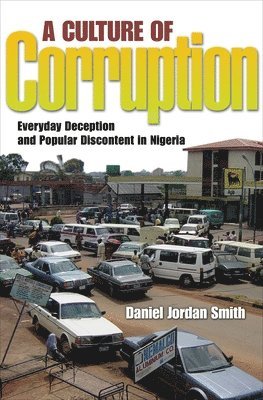
E-mails proposing an "urgent business relationship" help make fraud Nigeria's largest source of foreign revenue after oil. But scams are also a central part of Nigeria's domestic cultural landscape. Corruption is so widespread in Nigeria that its citizens call it simply "the Nigerian factor." Willing or unwilling participants in corruption at every turn, Nigerians are deeply ambivalent about it--resigning themselves to it, justifying it, or complaining about it. They are painfully aware of the damage corruption does to their country and see themselves as their own worst enemies, but they have been unable to stop it. A Culture of Corruption is a profound and sympathetic attempt to understand the dilemmas average Nigerians face every day as they try to get ahead--or just survive--in a society riddled with corruption.Drawing on firsthand experience, Daniel Jordan Smith paints a vivid portrait of Nigerian corruption--of nationwide fuel shortages in Africa's oil-producing giant, Internet cafes where the young launch their e-mail scams, checkpoints where drivers must bribe police, bogus organizations that siphon development aid, and houses painted with the fraud-preventive words "not for sale." This is a country where "419"--the number of an antifraud statute--has become an inescapable part of the culture, and so universal as a metaphor for deception that even a betrayed lover can say, "He played me 419." It is impossible to comprehend Nigeria today--from vigilantism and resurgent ethnic nationalism to rising Pentecostalism and accusations of witchcraft and cannibalism--without understanding the role played by corruption and popular reactions to it.
Every Household Its Own Government
Improvised Infrastructure, Entrepreneurial Citizens, and the State in Nigeria
Häftad, Engelska, 2022
250 kr
Skickas inom 7-10 vardagar
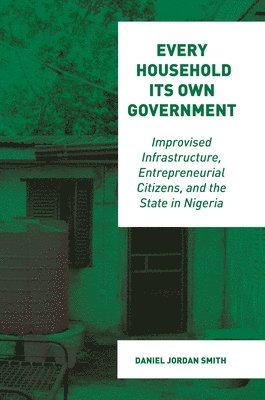
An up-close account of how Nigerians’ self-reliance in the absence of reliable government services enables official dysfunction to strengthen state powerWhen Nigerians say that every household is its own local government, what they mean is that the politicians and state institutions of Africa’s richest, most populous country cannot be trusted to ensure even the most basic infrastructure needs of their people. Daniel Jordan Smith traces how innovative entrepreneurs and ordinary citizens in Nigeria have forged their own systems in response to these deficiencies, devising creative solutions in the daily struggle to survive.Drawing on his three decades of experience in Nigeria, Smith examines the many ways Nigerians across multiple social strata develop technologies, businesses, social networks, political strategies, cultural repertoires, and everyday routines to cope with the constant failure of government infrastructure. He describes how Nigerians provide for basic needs like water, electricity, transportation, security, communication, and education—and how their inventiveness comes with consequences. On the surface, it may appear that their self-reliance and sheer hustle render the state irrelevant. In reality, the state is not so much absent as complicit. Smith shows how private efforts to address infrastructural shortcomings require regular engagement with government officials, shaping the experience of citizenship and strengthening state power.Every Household Its Own Government reveals how these dealings have contributed to forms and practices of governance that thrive on official dysfunction and perpetuate the very inequalities and injustices that afflict struggling Nigerians.
Every Household Its Own Government
Improvised Infrastructure, Entrepreneurial Citizens, and the State in Nigeria
Inbunden, Engelska, 2022
712 kr
Skickas inom 7-10 vardagar
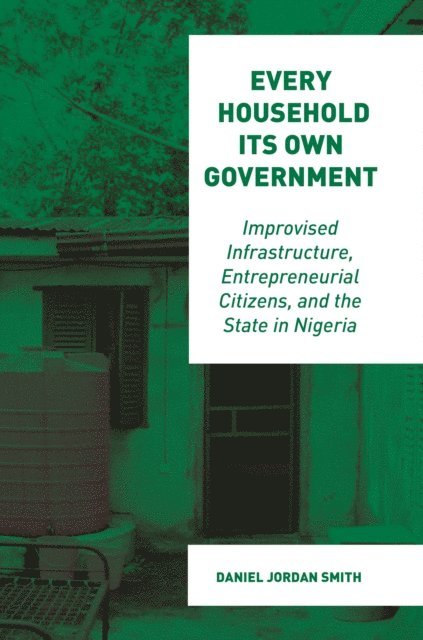
An up-close account of how Nigerians’ self-reliance in the absence of reliable government services enables official dysfunction to strengthen state powerWhen Nigerians say that every household is its own local government, what they mean is that the politicians and state institutions of Africa’s richest, most populous country cannot be trusted to ensure even the most basic infrastructure needs of their people. Daniel Jordan Smith traces how innovative entrepreneurs and ordinary citizens in Nigeria have forged their own systems in response to these deficiencies, devising creative solutions in the daily struggle to survive.Drawing on his three decades of experience in Nigeria, Smith examines the many ways Nigerians across multiple social strata develop technologies, businesses, social networks, political strategies, cultural repertoires, and everyday routines to cope with the constant failure of government infrastructure. He describes how Nigerians provide for basic needs like water, electricity, transportation, security, communication, and education—and how their inventiveness comes with consequences. On the surface, it may appear that their self-reliance and sheer hustle render the state irrelevant. In reality, the state is not so much absent as complicit. Smith shows how private efforts to address infrastructural shortcomings require regular engagement with government officials, shaping the experience of citizenship and strengthening state power.Every Household Its Own Government reveals how these dealings have contributed to forms and practices of governance that thrive on official dysfunction and perpetuate the very inequalities and injustices that afflict struggling Nigerians.
1 369 kr
Skickas inom 5-8 vardagar
For many women around the world, their greatest risk of HIV infection comes from having sex with the very person with whom they are supposed to have sex: their spouse. ""The Secret"" situates marital HIV risk within a broader exploration of marital and extramarital sexuality in five diverse settings: Mexico, Nigeria, Uganda, Vietnam, and Papua New Guinea. In these settings, the authors write, extramarital sex is an officially secret but actually widespread (and widely acknowledged) social practice, rather than something men do because their bodies demand it and women can't stop them. Drawing on research conducted as part of an innovative comparative ethnographic study, and modeling a novel approach to collaborative anthropological scholarship, the authors show extramarital sex to be a fundamental aspect of gendered social organization. Through theoretically sophisticated yet lucid writing and vivid ethnographic description, drawing on rich data from the marital case studies conducted by research teams in each country, they trace how extramarital opportunity structures, sexual geographies, and concerns about social risk facilitate men's participation in extramarital sex. Also documented throughout is the collision between traditional ways and the new practices of romantic companionate marriage.
556 kr
Skickas inom 5-8 vardagar
For many women around the world, their greatest risk of HIV infection comes from having sex with the very person with whom they are supposed to have sex: their spouse. ""The Secret"" situates marital HIV risk within a broader exploration of marital and extramarital sexuality in five diverse settings: Mexico, Nigeria, Uganda, Vietnam, and Papua New Guinea. In these settings, the authors write, extramarital sex is an officially secret but actually widespread (and widely acknowledged) social practice, rather than something men do because their bodies demand it and women can't stop them. Drawing on research conducted as part of an innovative comparative ethnographic study, and modeling a novel approach to collaborative anthropological scholarship, the authors show extramarital sex to be a fundamental aspect of gendered social organization. Through theoretically sophisticated yet lucid writing and vivid ethnographic description, drawing on rich data from the marital case studies conducted by research teams in each country, they trace how extramarital opportunity structures, sexual geographies, and concerns about social risk facilitate men's participation in extramarital sex. Also documented throughout is the collision between traditional ways and the new practices of romantic companionate marriage.