Daniel Kanstroom - Böcker
Visar alla böcker från författaren Daniel Kanstroom. Handla med fri frakt och snabb leverans.
5 produkter
5 produkter
350 kr
Skickas inom 5-8 vardagar
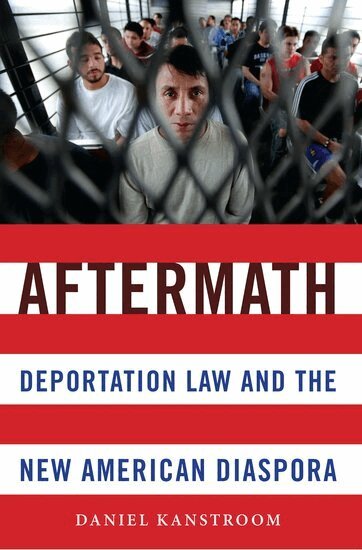
Since 1996, when new, harsher deportation laws went into effect, the United States has deported millions of noncitizens back to their countries of origin. While the rights of immigrants-with or without legal status--as well as the appropriate pathway to legal status are the subject of much debate, hardly any attention has been paid to what actually happens to deportees once they "pass beyond our aid." In fact, we have fostered a new diaspora of deportees, many of whom are alone and isolated, with strong ties to their former communities in the United States. Daniel Kanstroom, author of the authoritative history of deportation, Deportation Nation, turns his attention here to the current deportation system of the United States and especially deportation's aftermath: the actual effects on individuals, families, U.S. communities, and the countries that must process and repatriate ever-increasing numbers of U.S. deportees. Few know that once deportees have been expelled to places like Guatemala, Cambodia, Haiti, and El Salvador, many face severe hardship, persecution and, in extreme instances, even death.Addressing a wide range of political, social, and legal issues, Kanstroom considers whether our deportation system "works" in any meaningful sense. He also asks a number of under-examined legal and philosophical questions: What is the relationship between the "rule of law" and the border? Where do rights begin and end? Do (or should) deportees ever have a "right to return"? After demonstrating that deportation in the U.S. remains an anachronistic, ad hoc, legally questionable affair, the book concludes with specific reform proposals for a more humane and rational deportation system.
264 kr
Skickas inom 10-15 vardagar
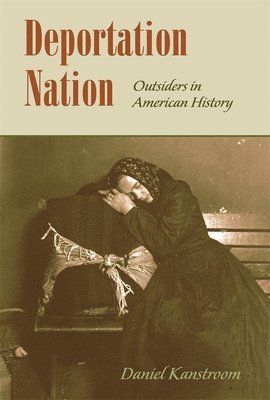
The danger of deportation hangs over the head of virtually every noncitizen in the United States. In the complexities and inconsistencies of immigration law, one can find a reason to deport almost any noncitizen at almost any time. In recent years, the system has been used with unprecedented vigor against millions of deportees.We are a nation of immigrants--but which ones do we want, and what do we do with those that we don't? These questions have troubled American law and politics since colonial times. Deportation Nation is a chilling history of communal self-idealization and self-protection. The post-Revolutionary Alien and Sedition Laws, the Fugitive Slave laws, the Indian "removals," the Chinese Exclusion Act, the Palmer Raids, the internment of the Japanese Americans--all sought to remove those whose origins suggested they could never become "true" Americans. And for more than a century, millions of Mexicans have conveniently served as cheap labor, crossing a border that was not official until the early twentieth century and being sent back across it when they became a burden. By illuminating the shadowy corners of American history, Daniel Kanstroom shows that deportation has long been a legal tool to control immigrants' lives and is used with increasing crudeness in a globalized but xenophobic world.
1 390 kr
Skickas inom 7-10 vardagar
The topic of 'illegal' immigration has been a major aspect of public discourse in the United States and many other immigrant-receiving countries. From the beginning of its modern invocation in the early twentieth century, the often ill-defined epithet of human 'illegality' has figured prominently in the media; in vigorous public debates at the national, state, and local levels; and in presidential campaigns. In this collection of essays, contributors from a variety of disciplines - anthropology, law, political science, religious studies, and sociology - examine how immigration law shapes immigrant illegality, how the concept of immigrant illegality is deployed and lived, and how its power is wielded and resisted. The authors conclude that the current concept of immigrant illegality is in need of sustained critique, as careful analysis will aid policy discussions and lead to more just solutions.
347 kr
Skickas inom 7-10 vardagar
The topic of 'illegal' immigration has been a major aspect of public discourse in the United States and many other immigrant-receiving countries. From the beginning of its modern invocation in the early twentieth century, the often ill-defined epithet of human 'illegality' has figured prominently in the media; in vigorous public debates at the national, state, and local levels; and in presidential campaigns. In this collection of essays, contributors from a variety of disciplines - anthropology, law, political science, religious studies, and sociology - examine how immigration law shapes immigrant illegality, how the concept of immigrant illegality is deployed and lived, and how its power is wielded and resisted. The authors conclude that the current concept of immigrant illegality is in need of sustained critique, as careful analysis will aid policy discussions and lead to more just solutions.
595 kr
Skickas inom 10-15 vardagar
Since 1996, when the deportation laws were hardened, millions of migrants to the U.S., including many long-term legal permanent residents with "green cards," have experienced summary arrest, incarceration without bail, transfer to remote detention facilities, and deportation without counsel—a life-time banishment from what is, in many cases, the only country they have ever known. U.S.-based families and communities face the loss of a worker, neighbor, spouse, parent, or child. Many of the deported are "sentenced home" to a country which they only knew as an infant, whose language they do not speak, or where a family lives in extreme poverty or indebtedness for not yet being able to pay the costs of their previous migration. But what does this actually look like and what are the systems and processes and who are the people who are enforcing deportation policies and practices? The New Deportations Delirium responds to these questions.Taken as a whole, the volume raises consciousness about the complexities of the issues and argues for the interdisciplinary dialogue and response. Over the course of the book, deportation policy is debated by lawyers, judges, social workers, researchers, and clinical and community psychologists as well as educators, researchers, and community activists. The New Deportations Delirium presents a fresh conversation and urges a holistic response to the complex realities facing not only migrants but also the wider U.S. society in which they have sought a better life.