Daniel Peat - Böcker
Visar alla böcker från författaren Daniel Peat. Handla med fri frakt och snabb leverans.
5 produkter
5 produkter
2 138 kr
Skickas inom 5-8 vardagar
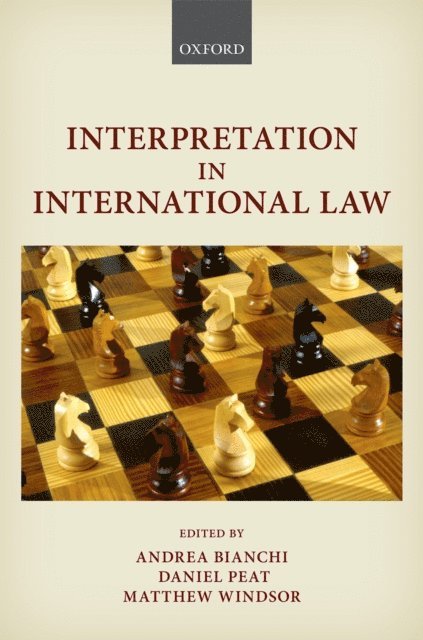
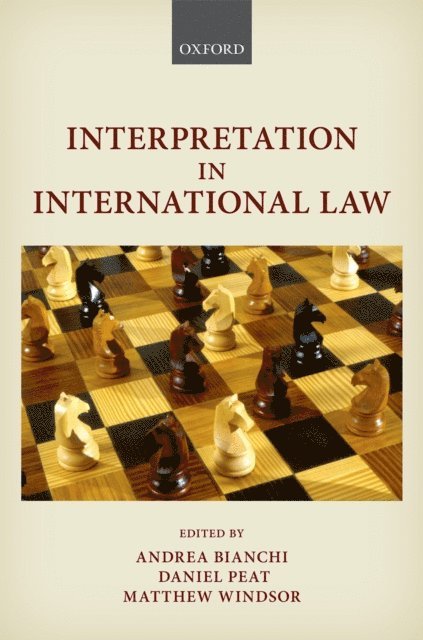
International lawyers have long recognised the importance of interpretation to their academic discipline and professional practice. As new insights on interpretation abound in other fields, international law and international lawyers have largely remained wedded to a rule-based approach, focusing almost exclusively on the Vienna Convention on the Law of Treaties. Such an approach neglects interpretation as a distinct and broader field of theoretical inquiry. Interpretation in International Law brings international legal scholars together to engage in sustained reflection on the theme of interpretation. The book is creatively structured around the metaphor of the game, which captures and illuminates the constituent elements of an act of interpretation. The object of the game of interpretation is to persuade the audience that one's interpretation of the law is correct. The rules of play are known and complied with by the players, even though much is left to their skills and strategies. There is also a meta-discourse about the game of interpretation - 'playing the game of game-playing' - which involves consideration of the nature of the game, its underlying stakes, and who gets to decide by what rules one should play.Through a series of diverse contributions, Interpretation in International Law reveals interpretation as an inescapable feature of all areas of international law. It will be of interest and utility to all international lawyers whose work touches upon theoretical or practical aspects of interpretation.
597 kr
Skickas
International lawyers have long recognised the importance of interpretation to their academic discipline and professional practice. As new insights on interpretation abound in other fields, international law and international lawyers have largely remained wedded to a rule-based approach, focusing almost exclusively on the Vienna Convention on the Law of Treaties. Such an approach neglects interpretation as a distinct and broader field of theoretical inquiry. Interpretation in International Law brings international legal scholars together to engage in sustained reflection on the theme of interpretation. The book is creatively structured around the metaphor of the game, which captures and illuminates the constituent elements of an act of interpretation. The object of the game of interpretation is to persuade the audience that one's interpretation of the law is correct. The rules of play are known and complied with by the players, even though much is left to their skills and strategies. There is also a meta-discourse about the game of interpretation - 'playing the game of game-playing' - which involves consideration of the nature of the game, its underlying stakes, and who gets to decide by what rules one should play.Through a series of diverse contributions, Interpretation in International Law reveals interpretation as an inescapable feature of all areas of international law. It will be of interest and utility to all international lawyers whose work touches upon theoretical or practical aspects of interpretation.
Del 145 - Cambridge Studies in International and Comparative Law
Comparative Reasoning in International Courts and Tribunals
Häftad, Engelska, 2020
394 kr
Skickas inom 7-10 vardagar
Domestic law has long been recognised as a source of international law, an inspiration for legal developments, or the benchmark against which a legal system is to be assessed. Academic commentary normally re-traces these well-trodden paths, leaving one with the impression that the interaction between domestic and international law is unworthy of further enquiry. However, a different - and surprisingly pervasive - nexus between the two spheres has been largely overlooked: the use of domestic law in the interpretation of international law. This book examines the practice of five international courts and tribunals to demonstrate that domestic law is invoked to interpret international law, often outside the framework of Articles 31 to 33 of the Vienna Convention on the Law of Treaties. It assesses the appropriateness of such recourse to domestic law as well as situating the practice within broader debates regarding interpretation and the interaction between domestic and international legal systems.
Del 145 - Cambridge Studies in International and Comparative Law
Comparative Reasoning in International Courts and Tribunals
Inbunden, Engelska, 2019
1 400 kr
Skickas inom 7-10 vardagar
Domestic law has long been recognised as a source of international law, an inspiration for legal developments, or the benchmark against which a legal system is to be assessed. Academic commentary normally re-traces these well-trodden paths, leaving one with the impression that the interaction between domestic and international law is unworthy of further enquiry. However, a different - and surprisingly pervasive - nexus between the two spheres has been largely overlooked: the use of domestic law in the interpretation of international law. This book examines the practice of five international courts and tribunals to demonstrate that domestic law is invoked to interpret international law, often outside the framework of Articles 31 to 33 of the Vienna Convention on the Law of Treaties. It assesses the appropriateness of such recourse to domestic law as well as situating the practice within broader debates regarding interpretation and the interaction between domestic and international legal systems.
2 500 kr
Skickas inom 7-10 vardagar
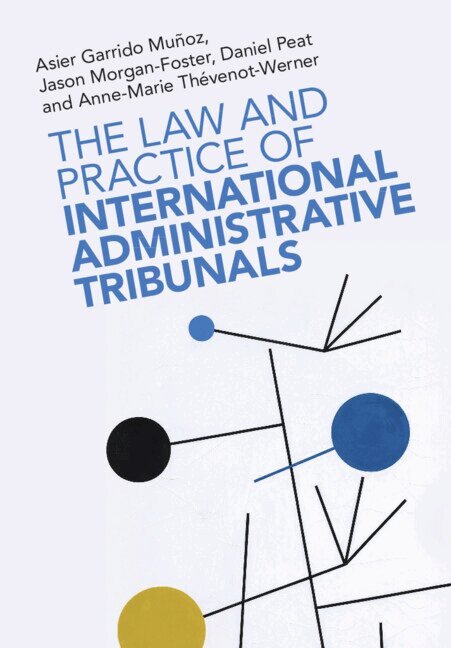
The jurisprudence of international administrative tribunals holds great relevance for international organisations, as seen in the proliferation of these tribunals, the complexity of their jurisprudence, and their practical impact. This book provides a comprehensive and accessible analysis of essential topics in this field, including applicable sources, jurisdiction and admissibility, grounds for review, equality and non-discrimination, and remedies. It also covers key emerging issues, such as the rights of non-staff personnel, the growing application of international human rights law by tribunals, and the protection of acquired rights. Drawing on thousands of decisions, this book is an invaluable resource for both practitioners and scholars. For practitioners, it offers a practical guide to navigating complex cases. For scholars, it highlights common principles and key divergences across the jurisprudence of some thirty tribunals, at the same time illuminating the increasingly sophisticated interplay between international administrative law and public international law.