Daniel R. Ahern - Böcker
Visar alla böcker från författaren Daniel R. Ahern. Handla med fri frakt och snabb leverans.
3 produkter
3 produkter
657 kr
Skickas inom 5-8 vardagar
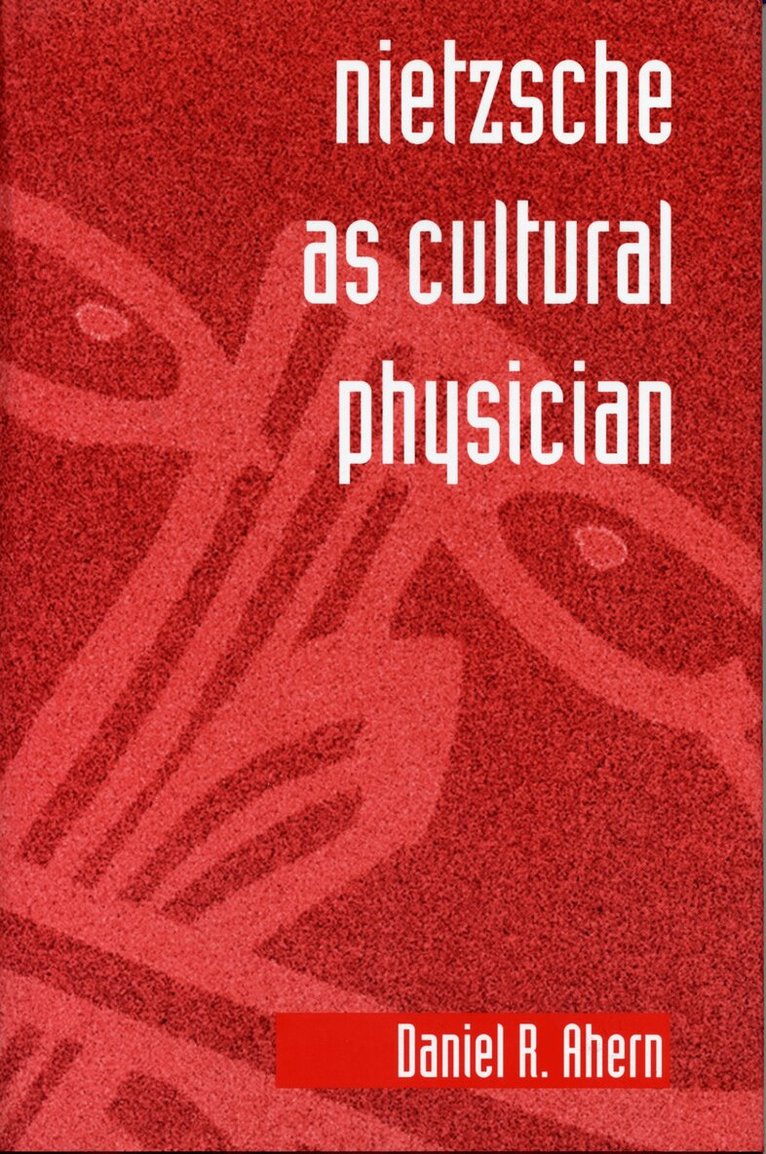
In this new interpretation of Nietzsche's thought, Daniel Ahern examines Nietzsche's understanding of physiology and argues that Nietzsche saw himself in the role of a ''physician'' of culture. Through what he calls Nietzsche's ''clinical standpoint,'' Ahern describes Nietzsche's views on the history of Western culture in terms of the ''physiological dynamics'' of exhaustion, decadence, sickness, and health. This physiology is a simultaneous interpretation of the will to power and constitutes both Nietzsche's ''diagnoses'' of the ''spiritual'' sickness of modern nihilism and its possible cure. To describe how ''spirit'' can be both a force of degeneration and vitality, Ahern studies Nietzsche's perception of the history and culture of both the ancient Greeks and Jews. In doing so, he provides a sound textual basis for confronting the potentially inflammatory aspects of Nietzsche's little discussed cultural criticism.This book marks the first serious exploration of Nietzsche's diagnosis and prognosis for modernity and of the centrality to Nietzsche's thought of his conception of himself as a physician of culture.
Del 32 - Literature and Philosophy
Smile of Tragedy
Nietzsche and the Art of Virtue
Inbunden, Engelska, 2012
771 kr
Skickas inom 7-10 vardagar
In The Smile of Tragedy, Daniel Ahern examines Nietzsche’s attitude toward what he called “the tragic age of the Greeks,” showing it to be the foundation not only for his attack upon the birth of philosophy during the Socratic era but also for his overall critique of Western culture. Through an interpretation of “Dionysian pessimism,” Ahern clarifies the ways in which Nietzsche sees ethics and aesthetics as inseparable and how their theoretical separation is at the root of Western nihilism. Ahern explains why Nietzsche, in creating this precursor to a new aesthetics, rejects Aristotle’s medicinal interpretation of tragic art and concentrates on Apollinian cruelty as a form of intoxication without which there can be no art. Ahern shows that Nietzsche saw the human body as the vessel through which virtue and art are possible, as the path to an interpretation of “selflessness,” as the means to determining an order of rank among human beings, and as the site where ethics and aesthetics coincide.
Del 32 - Literature and Philosophy
Smile of Tragedy
Nietzsche and the Art of Virtue
Häftad, Engelska, 2012
577 kr
Skickas inom 5-8 vardagar
In The Smile of Tragedy, Daniel Ahern examines Nietzsche’s attitude toward what he called “the tragic age of the Greeks,” showing it to be the foundation not only for his attack upon the birth of philosophy during the Socratic era but also for his overall critique of Western culture. Through an interpretation of “Dionysian pessimism,” Ahern clarifies the ways in which Nietzsche sees ethics and aesthetics as inseparable and how their theoretical separation is at the root of Western nihilism. Ahern explains why Nietzsche, in creating this precursor to a new aesthetics, rejects Aristotle’s medicinal interpretation of tragic art and concentrates on Apollinian cruelty as a form of intoxication without which there can be no art. Ahern shows that Nietzsche saw the human body as the vessel through which virtue and art are possible, as the path to an interpretation of “selflessness,” as the means to determining an order of rank among human beings, and as the site where ethics and aesthetics coincide.