Daniel R. Brower - Böcker
Visar alla böcker från författaren Daniel R. Brower. Handla med fri frakt och snabb leverans.
3 produkter
3 produkter
294 kr
Skickas inom 10-15 vardagar
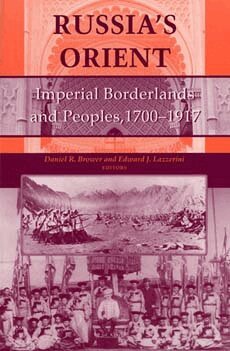
" . . . the first study of the Russian Empire in English which attempts in a sophisticated way, using the latest developments in colonial studies, to deal not only with imperial rule but with the mutual encounter with the non-Russian peoples. . . . a new paradigm for looking at the imperial history of tsarist Russia." —Ronald Grigor Suny" . . . ambitious, wide-ranging, and ultimately provocative . . . " —Slavic Review"This excellent volume draws on the expertise of both young and established specialists . . . the volume is a pleasure to read." —American Historical Review" . . . a major step toward 'discovering Russian Asia' . . . a job well done." —The Russian ReviewRussia's Orient investigates the relationship between the Russian Empire and the non-Russian peoples of its southern and eastern borderlands from the 18th to the early 20th centuries.
684 kr
Skickas inom 3-6 vardagar
The Russian City Between Tradition and Modernity, 1850-1900 by Daniel R. Brower explores how Russia’s urban centers became key arenas of reform, contestation, and cultural imagination in the late tsarist era. Between the Great Reforms and the Revolution of 1905, provincial towns joined Moscow and St. Petersburg as sites of demographic growth, manufacturing, trade, education, and print culture. Cities embodied both the promises and perils of reform: they symbolized progress toward enlightenment, prosperity, and order, but also revealed tensions between servility and freedom, backwardness and civilization. Brower examines not only population movements, economic activity, and municipal regulations but also the ideals, debates, and practices through which urban dwellers sought to make the city their own.Blending quantitative analysis with cultural and anthropological perspectives, Brower introduces the concept of “urbanism” to capture how Russians perceived and shaped their towns in dialogue with Western models and fears. Merchants, migrants, doctors, educators, and officials all created “multiple urban images,” whether celebrating industriousness, condemning disorder, or advocating sanitation, schooling, and civic order. Drawing on census data, archival sources, and the print culture of nearly sixty centers, Brower develops a model of the “migrant city” while situating Russian urbanism in broader European contexts. His synthesis highlights the city’s central role in Russia’s social transformation, placing urban history alongside rural experience as essential to understanding the tensions between tradition and modernity in late imperial Russia.This title is part of UC Press's Voices Revived program, which commemorates University of California Press’s mission to seek out and cultivate the brightest minds and give them voice, reach, and impact. Drawing on a backlist dating to 1893, Voices Revived makes high-quality, peer-reviewed scholarship accessible once again using print-on-demand technology. This title was originally published in 1990.
774 kr
Skickas inom 7-10 vardagar
The Russian City Between Tradition and Modernity, 1850-1900 by Daniel R. Brower explores how Russia’s urban centers became key arenas of reform, contestation, and cultural imagination in the late tsarist era. Between the Great Reforms and the Revolution of 1905, provincial towns joined Moscow and St. Petersburg as sites of demographic growth, manufacturing, trade, education, and print culture. Cities embodied both the promises and perils of reform: they symbolized progress toward enlightenment, prosperity, and order, but also revealed tensions between servility and freedom, backwardness and civilization. Brower examines not only population movements, economic activity, and municipal regulations but also the ideals, debates, and practices through which urban dwellers sought to make the city their own.Blending quantitative analysis with cultural and anthropological perspectives, Brower introduces the concept of “urbanism” to capture how Russians perceived and shaped their towns in dialogue with Western models and fears. Merchants, migrants, doctors, educators, and officials all created “multiple urban images,” whether celebrating industriousness, condemning disorder, or advocating sanitation, schooling, and civic order. Drawing on census data, archival sources, and the print culture of nearly sixty centers, Brower develops a model of the “migrant city” while situating Russian urbanism in broader European contexts. His synthesis highlights the city’s central role in Russia’s social transformation, placing urban history alongside rural experience as essential to understanding the tensions between tradition and modernity in late imperial Russia.This title is part of UC Press's Voices Revived program, which commemorates University of California Press’s mission to seek out and cultivate the brightest minds and give them voice, reach, and impact. Drawing on a backlist dating to 1893, Voices Revived makes high-quality, peer-reviewed scholarship accessible once again using print-on-demand technology. This title was originally published in 1990.