Daniel T. Rodgers - Böcker
Visar alla böcker från författaren Daniel T. Rodgers. Handla med fri frakt och snabb leverans.
8 produkter
8 produkter
242 kr
Skickas inom 7-10 vardagar
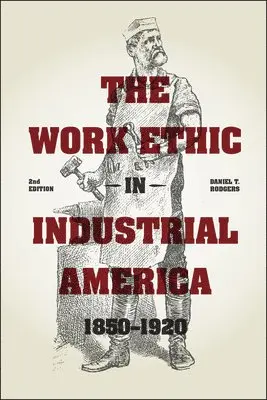
The phrase "a strong work ethic" conjures images of hard-driving employees working diligently for long hours. But where did this ideal come from, and how has it been buffeted by changes in work itself? While seemingly rooted in America's Puritan heritage, perceptions of work ethic have actually undergone multiple transformations over the centuries. And few eras saw a more radical shift in labor ideology than the American industrial age. Daniel T. Rodgers masterfully explores the ways in which the eclipse of small-scale workshops by mechanized production and mass consumption triggered far-reaching shifts in perceptions of labor, leisure, and personal success. He also shows how the new work culture permeated society, including literature, politics, the emerging feminist movement, and the labor movement. A staple of courses in the history of American labor and industrial society, Rodgers' sharp analysis is sure to find a new audience, as twenty-first-century workers face another shift brought about by technology. The Work Ethic in Industrial America 1850-1920 is a classic with critical relevance in today's volatile economic times.
380 kr
Skickas inom 7-10 vardagar
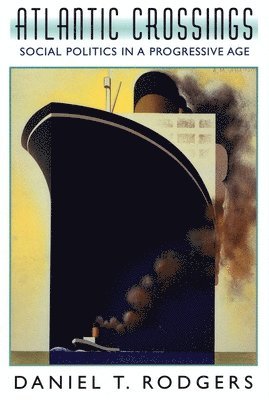
"The most belated of nations," Theodore Roosevelt called his country during the workmen's compensation fight in 1907. Earlier reformers, progressives of his day, and later New Dealers lamented the nation's resistance to models abroad for correctives to the backwardness of American social politics. Atlantic Crossings is the first major account of the vibrant international network that they constructed--so often obscured by notions of American exceptionalism--and of its profound impact on the United States from the 1870s through 1945.On a narrative canvas that sweeps across Europe and the United States, Daniel Rodgers retells the story of the classic era of efforts to repair the damages of unbridled capitalism. He reveals the forgotten international roots of such innovations as city planning, rural cooperatives, modernist architecture for public housing, and social insurance, among other reforms. From small beginnings to reconstructions of the new great cities and rural life, and to the wide-ranging mechanics of social security for working people, Rodgers finds the interconnections, adaptations, exchanges, and even rivalries in the Atlantic region's social planning. He uncovers the immense diffusion of talent, ideas, and action that were breathtaking in their range and impact.The scope of Atlantic Crossings is vast and peopled with the reformers, university men and women, new experts, bureaucrats, politicians, and gifted amateurs. This long durée of contemporary social policy encompassed fierce debate, new conceptions of the role of the state, an acceptance of the importance of expertise in making government policy, and a recognition of a shared destiny in a newly created world.
210 kr
Skickas inom 7-10 vardagar
In the last quarter of the twentieth century, the ideas that most Americans lived by started to fragment. Mid-century concepts of national consensus, managed markets, gender and racial identities, citizen obligation, and historical memory became more fluid. Flexible markets pushed aside Keynesian macroeconomic structures. Racial and gender solidarity divided into multiple identities; community responsibility shrank to smaller circles. In this wide-ranging narrative, Daniel T. Rodgers shows how the collective purposes and meanings that had framed social debate became unhinged and uncertain.Age of Fracture offers a powerful reinterpretation of the ways in which the decades surrounding the 1980s changed America. Through a contagion of visions and metaphors, on both the intellectual right and the intellectual left, earlier notions of history and society that stressed solidity, collective institutions, and social circumstances gave way to a more individualized human nature that emphasized choice, agency, performance, and desire. On a broad canvas that includes Michel Foucault, Ronald Reagan, Judith Butler, Charles Murray, Jeffrey Sachs, and many more, Rodgers explains how structures of power came to seem less important than market choice and fluid selves.Cutting across the social and political arenas of late-twentieth-century life and thought, from economic theory and the culture wars to disputes over poverty, color-blindness, and sisterhood, Rodgers reveals how our categories of social reality have been fractured and destabilized. As we survey the intellectual wreckage of this war of ideas, we better understand the emergence of our present age of uncertainty.
373 kr
Skickas inom 10-15 vardagar
Contention, argument, and power have always been the tradition in American political talk. Any country that began in a revolution was bound to have this history. But the language of argument uses particular words with particular, sometimes shifting, meanings and to know what they are and what they meant over time is a critical contribution to political history. It is true that politicians may act as though they are part of no particular ideological tradition, but history shows that, more often than not, they use an understood meaning to enhance their actions. As Daniel T. Rodgers shows in this book, rhetoric has consequences.
477 kr
Skickas inom 7-10 vardagar
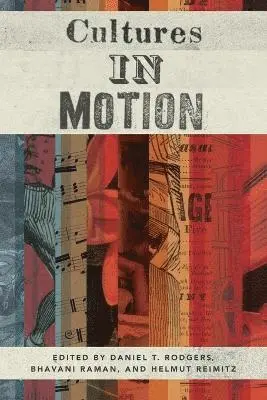
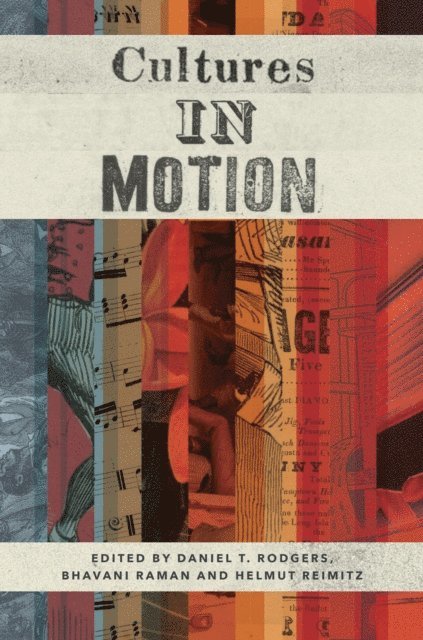
In the wide-ranging and innovative essays of Cultures in Motion, a dozen distinguished historians offer new conceptual vocabularies for understanding how cultures have trespassed across geography and social space. From the transformations of the meanings and practices of charity during late antiquity and the transit of medical knowledge between early modern China and Europe, to the fusion of Irish and African dance forms in early nineteenth-century New York, these essays follow a wide array of cultural practices through the lens of motion, translation, itinerancy, and exchange, extending the insights of transnational and translocal history. Cultures in Motion challenges the premise of fixed, stable cultural systems by showing that cultural practices have always been moving, crossing borders and locations with often surprising effect. The essays offer striking examples from early to modern times of intrusion, translation, resistance, and adaptation. These are histories where nothing--dance rhythms, alchemical formulas, musical practices, feminist aspirations, sewing machines, streamlined metals, or labor networks--remains stationary.In addition to the editors, the contributors are Celia Applegate, Peter Brown, Harold Cook, April Masten, Mae Ngai, Jocelyn Olcott, Mimi Sheller, Pamela Smith, and Nira Wickramasinghe.
291 kr
Skickas inom 7-10 vardagar
In the wide-ranging and innovative essays of Cultures in Motion, a dozen distinguished historians offer new conceptual vocabularies for understanding how cultures have trespassed across geography and social space. From the transformations of the meanings and practices of charity during late antiquity and the transit of medical knowledge between early modern China and Europe, to the fusion of Irish and African dance forms in early nineteenth-century New York, these essays follow a wide array of cultural practices through the lens of motion, translation, itinerancy, and exchange, extending the insights of transnational and translocal history. Cultures in Motion challenges the premise of fixed, stable cultural systems by showing that cultural practices have always been moving, crossing borders and locations with often surprising effect. The essays offer striking examples from early to modern times of intrusion, translation, resistance, and adaptation. These are histories where nothing--dance rhythms, alchemical formulas, musical practices, feminist aspirations, sewing machines, streamlined metals, or labor networks--remains stationary.In addition to the editors, the contributors are Celia Applegate, Peter Brown, Harold Cook, April Masten, Mae Ngai, Jocelyn Olcott, Mimi Sheller, Pamela Smith, and Nira Wickramasinghe.
250 kr
Skickas inom 7-10 vardagar
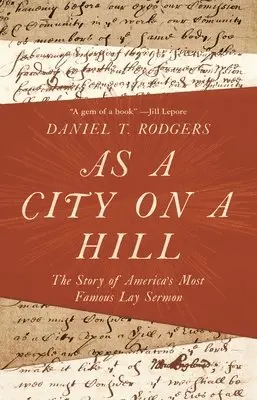
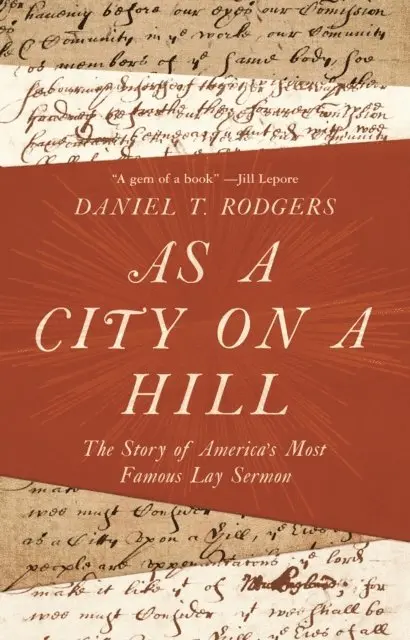
How an obscure Puritan sermon came to be seen as a founding document of American identity and exceptionalism“For we must consider that we shall be as a city upon a hill,” John Winthrop warned his fellow Puritans at New England’s founding in 1630. More than three centuries later, Ronald Reagan remade that passage into a timeless celebration of American promise. How were Winthrop’s long-forgotten words reinvented as a central statement of American identity and exceptionalism? In As a City on a Hill, leading American intellectual historian Daniel Rodgers tells the surprising story of one of the most celebrated documents in the canon of the American idea. In doing so, he brings to life the ideas Winthrop’s text carried in its own time and the sharply different yearnings that have been attributed to it since.As a City on a Hill shows how much more malleable, more saturated with vulnerability, and less distinctly American Winthrop’s “Model of Christian Charity” was than the document that twentieth-century Americans invented. Across almost four centuries, Rodgers traces striking shifts in the meaning of Winthrop’s words—from Winthrop’s own anxious reckoning with the scrutiny of the world, through Abraham Lincoln’s haunting reference to this “almost chosen people,” to the “city on a hill” that African Americans hoped to construct in Liberia, to the era of Donald Trump.As a City on a Hill reveals the circuitous, unexpected ways Winthrop’s words came to lodge in American consciousness. At the same time, the book offers a probing reflection on how nationalism encourages the invention of “timeless” texts to straighten out the crooked realities of the past.
383 kr
Skickas inom 3-6 vardagar
From a Bancroft Prize–winning historian, the fascinating story of how an obscure Puritan sermon was remade into a founding document of American identity“For we must consider that we shall be as a city upon a hill,” John Winthrop warned his fellow Puritans at New England’s founding in 1630. More than three centuries later, Ronald Reagan remade that passage into a timeless celebration of American promise. How were Winthrop’s long-forgotten words reinvented as a central statement of American identity and exceptionalism? In As a City on a Hill, Daniel Rodgers tells the surprising story of one of the most celebrated documents in the canon of the American idea, revealing how nationalism encourages the invention of “timeless” texts to straighten out the crooked realities of the past.