Daniel Tiffany - Böcker
Visar alla böcker från författaren Daniel Tiffany. Handla med fri frakt och snabb leverans.
7 produkter
7 produkter
315 kr
Skickas inom 7-10 vardagar
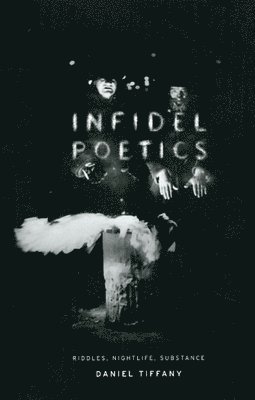
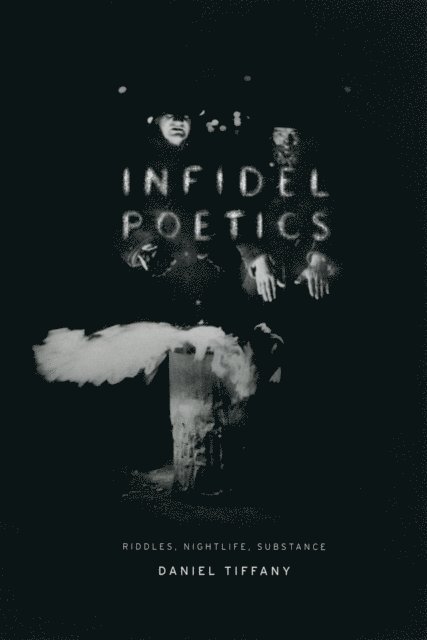
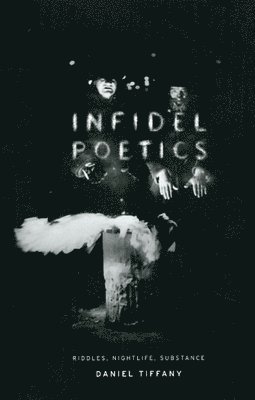
Poetry has long been regarded as the least accessible of literary genres. But how much does the obscurity that confounds the reader of a poem differ from, say, the slang or patois that captivates listeners of hip-hop? "Infidel Poetics" examines not only the shared incomprehensibilities of poetry and slang but also poetry's genetic relation to the spectacle of underground culture. Charting connections between lyric obscurity, vernacular speech, and types of social relations - networks of darkened streets in preindustrial cities, the historical underworld of taverns and clubs, and the subcultures of the avant-garde - Daniel Tiffany shows that poetic obscurity has functioned for hundreds of years as a medium of alternative societies. For example, he discovers in the submerged tradition of canting poetry and its eccentric genres - thieves' carols, drinking songs, beggars' chants - a genealogy of modern nightlife, but also a visible underworld of social and verbal substance, a demimonde for sale.Ranging from Anglo-Saxon riddles to Emily Dickinson, from the icy logos of Parmenides to the monadology of Leibniz, from Mother Goose to modernism, "Infidel Poetics" offers an exhilarating account of the subversive power of obscurity in word, substance, and deed.
443 kr
Skickas
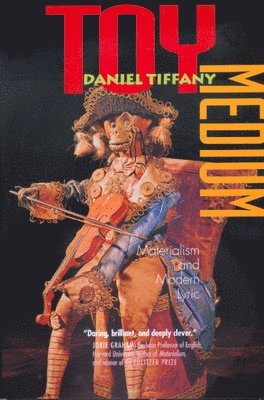
What begins with an unlikely collection of unrelated phenomena--mechanical dolls, weather, atoms, lyric poetry--blossoms in the course of Toy Medium into a subtle and persuasive meditation on one of Western philosophy's biggest puzzles: the relation of mind and matter. What is the role of the imagination in defining material substance? In a dazzling study of the poetics of materialist philosophy and of the materialism of lyric poetry, Daniel Tiffany traces the historical conjunction of matter and metaphor through a remarkable range of topics: automata in classical antiquity and the eighteenth century; Kepler's treatise on snowflakes; animal magnetism; fireworks and cloud-chamber photographs; the origins of the microscope as a philosophical toy and its bearing on the figure of the virtuoso. At critical junctures in modern Western culture, Tiffany finds uncanny parallels between the metaphorics of science and visions of material substance rooted in popular culture and lyric poetry. Los Angeles Times Best Nonfiction Book of 2000
1 069 kr
Skickas inom 10-15 vardagar
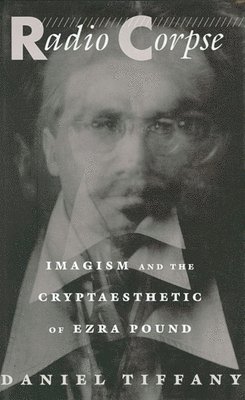
About the origins of Anglo-American poetic modernism, one thing is certain: it started with a notion of the image, described variously by Ezra Pound as an ideogram and a vortex. We have reason to be less confident, however, about the relation between these puzzling conceptions of the image and the doctrine of literary positivism that is generally held to be the most important legacy of Imagism. No satisfactory account exists, moreover, of what bearing these foundational principles may have on Pound's later engagement with fascism. Nor is it clear how figures such as the vortex and the ideogram might contribute generally to our understanding of modern visual culture and its compulsive appeal.Radio Corpse addresses these issues and offers a fundamental revision of one of the most powerful and persistent aesthetic ideologies of modernism. Focusing on the necrophilic dimension of Pound's earliest poetry and on the inflections of materiality authorized by the modernist image, Daniel Tiffany establishes a continuum between Decadent practice and the incipient avant-garde, between the prehistory of the image and its political afterlife, between what Pound calls the "corpse language" of late Victorian poetry and a conception of the image that borrows certain "radioactive" qualities from the historical discovery of radium and the development of radiography. Emphasizing the phantasmic effects of translation (and exchange) in Pound's poetry, Tiffany argues that the cadaverous--and radiological--properties of the image culminate, formally and ideologically, in Pound's fascist radio broadcasts during World War II. Ultimately, the invisibility of these "radiant" images places in question basic assumptions regarding the optical character of images--assumptions currently being challenged by imageric technologies such as magnetic resonance imaging and positron emission tomography.
616 kr
Skickas
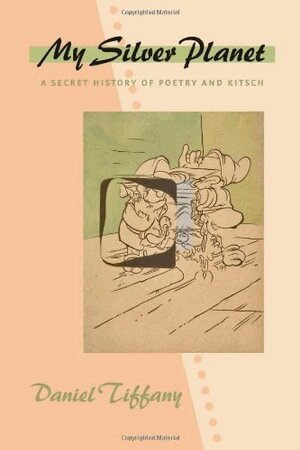
Taking its title from John Keats, My Silver Planet contends that the problem of elite poetry's relation to popular culture bears the indelible mark of its turbulent incorporation of vernacular poetry - a legacy shaped by nostalgia, contempt, and fraudulence. Daniel Tiffany reactivates and fundamentally redefines the concept of kitsch, freeing it from modernist misapprehension and ridicule, by tracing its origin to poetry's alienation from the emergent category of literature. Tiffany excavates the forgotten history of poetry's relation to kitsch, beginning with the exuberant revival of archaic (and often spurious) ballads in Britain in the early eighteenth century. In these controversial events of poetic imposture, Tiffany identifies a submerged pact-in opposition to the bourgeois values of literature-between elite and vernacular poetries. Tiffany argues that the ballad revival-the earliest explicit formation of what we now call popular culture-sparked a perilous but seemingly irresistible flirtation (among elite audiences) with poetic forgery that endures today in the ambiguity of the kitsch artifact: Is it real or fake, art or kitsch?He goes on to trace the genealogy of kitsch in texts ranging from nursery rhymes and poetic melodrama to the lyric commodities of Baudelaire. He scrutinizes the fascist "paradise" inscribed in Ezra Pound's Cantos as well as the avant-garde poetry of the New York School and its debt to pop and "plastic" art. By exposing and elaborating the historical poetics of kitsch, My Silver Planet transforms our sense of kitsch as a category of material culture.
405 kr
Skickas inom 7-10 vardagar
Taking its title from John Keats, My Silver Planet contends that the problem of elite poetry's relation to popular culture bears the indelible mark of its turbulent incorporation of vernacular poetry-a legacy shaped by nostalgia, contempt, and fraudulence. Daniel Tiffany reactivates and fundamentally redefines the concept of kitsch, freeing it from modernist misapprehension and ridicule, by tracing its origin to poetry's alienation from the emergent category of literature. Tiffany excavates the forgotten history of poetry's relation to kitsch, beginning with the exuberant revival of archaic (and often spurious) ballads in Britain in the early eighteenth century. In these controversial events of poetic imposture, Tiffany identifies a submerged pact-in opposition to the bourgeois values of literature-between elite and vernacular poetries. Tiffany argues that the ballad revival-the earliest explicit formation of what we now call popular culture-sparked a perilous but seemingly irresistible flirtation (among elite audiences) with poetic forgery that endures today in the ambiguity of the kitsch artifact: Is it real or fake, art or kitsch?He goes on to trace the genealogy of kitsch in texts ranging from nursery rhymes and poetic melodrama to the lyric commodities of Baudelaire. He scrutinizes the fascist "paradise" inscribed in Ezra Pound's Cantos as well as the avant-garde poetry of the New York School and its debt to pop and "plastic" art. By exposing and elaborating the historical poetics of kitsch, My Silver Planet transforms our sense of kitsch as a category of material culture.
211 kr
Skickas
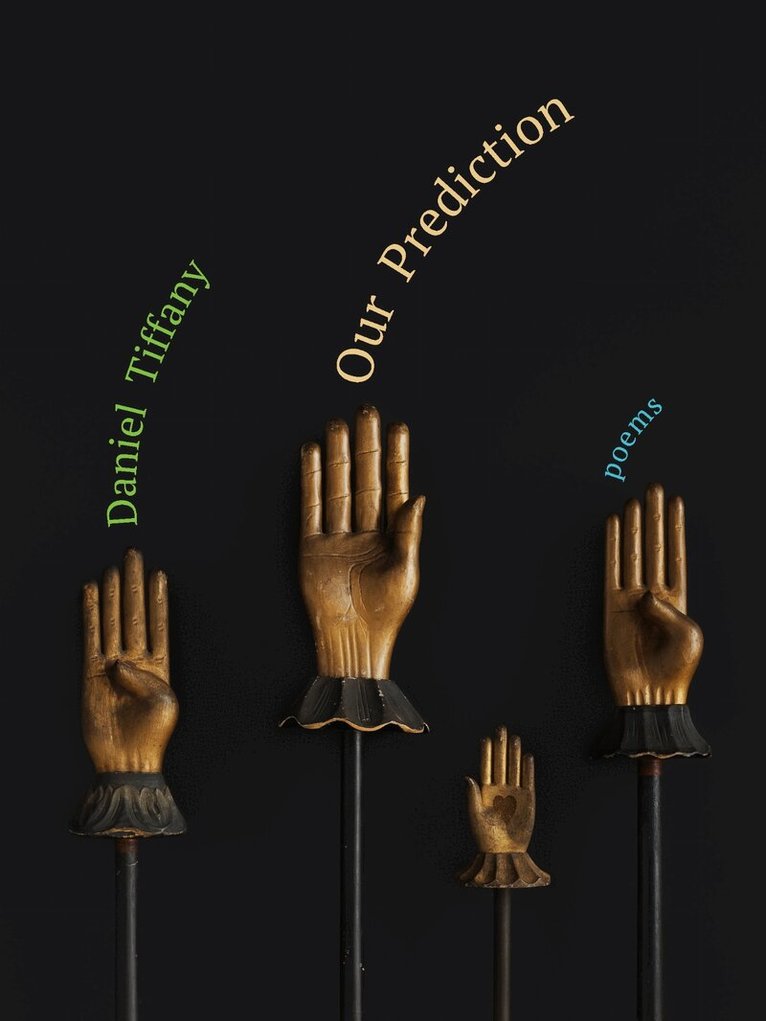
An intimate archive emptied and overwritten by a fear of words, a book of mingled fatesThe poems of Our Prediction are lifted from a folder of sketchy reports recalling the strange neutrality of the ancient chorus. And this intimate archive exposes a fear of language concealed at the root of poetry, delivering a book in which doubt, shame, and dread overtake poetry’s stereotypical love affair with words, a book that crosses over into the exclusion zone of stupidity and never returns.Breeding and scavenging without scruple or restraint, the "bare life" of these unauthorized poems invariably confuses reading and writing. Listening becomes the business of speaking, of saying we but not asking who. And in its crooked way, the crooked text may begin to sound like a campfire oath of senseless plots and garbled refrains. For the listener soon will be surrounded by an accident of voices – a cassandrian short cut – exposing the particulars of not-yet-being.
231 kr
Skickas inom 5-8 vardagar