Daniel Worden - Böcker
Visar alla böcker från författaren Daniel Worden. Handla med fri frakt och snabb leverans.
10 produkter
10 produkter
865 kr
Skickas inom 11-20 vardagar
With the ascendancy of neoliberalism in American culture beginning in the 1960s, the political structures governing private lives became more opaque and obscure. Neoliberal Nonfictions argues that a new style of documentary art emerged to articulate the fissures between individual experience and reality in the era of finance capitalism. In this wide-ranging study, Daniel Worden touches on issues ranging from urban poverty and criminal justice to environmental collapse and international politics. He examines the impact of local struggles and global markets on music, from D. A. Pennebaker's infamous Dylan documentary Dont Look Back to Kendrick Lamar's breakthrough album Good Kid, M.A.A.D. City. He details the emergence of the hustler as an icon of neoliberal individualism in Jay-Z's autobiography Decoded, Alex Haley's Autobiography of Malcom X, and Hunter S. Thompson's "gonzo" journalism. He looks at how contemporary works such as Maggie Nelson's memoir The Red Parts and Taryn Simon's photography series The Innocents challenge the moral simplifications of traditional true crime writing. In his conclusion, he explores the dominance of memoir as a literary mode in the neoliberal era, particularly focusing on works by Joan Didion and Dave Eggers.Documentary has become the aesthetic of our age, harnessing the irreconcilable distance between individual and society as a site for aesthetic experimentation across media, from journalism and photography to memoir, music, and film. Both a symptom of and a response to the emergence of economic neoliberalism, the documentary aesthetic is central to how we understand ourselves and our world today.
371 kr
Skickas inom 11-20 vardagar
With the ascendancy of neoliberalism in American culture beginning in the 1960s, the political structures governing private lives became more opaque and obscure. Neoliberal Nonfictions argues that a new style of documentary art emerged to articulate the fissures between individual experience and reality in the era of finance capitalism. In this wide-ranging study, Daniel Worden touches on issues ranging from urban poverty and criminal justice to environmental collapse and international politics. He examines the impact of local struggles and global markets on music, from D. A. Pennebaker's infamous Dylan documentary Dont Look Back to Kendrick Lamar's breakthrough album Good Kid, M.A.A.D. City. He details the emergence of the hustler as an icon of neoliberal individualism in Jay-Z's autobiography Decoded, Alex Haley's Autobiography of Malcom X, and Hunter S. Thompson's "gonzo" journalism. He looks at how contemporary works such as Maggie Nelson's memoir The Red Parts and Taryn Simon's photography series The Innocents challenge the moral simplifications of traditional true crime writing. In his conclusion, he explores the dominance of memoir as a literary mode in the neoliberal era, particularly focusing on works by Joan Didion and Dave Eggers.Documentary has become the aesthetic of our age, harnessing the irreconcilable distance between individual and society as a site for aesthetic experimentation across media, from journalism and photography to memoir, music, and film. Both a symptom of and a response to the emergence of economic neoliberalism, the documentary aesthetic is central to how we understand ourselves and our world today.
305 kr
Skickas inom 11-20 vardagar
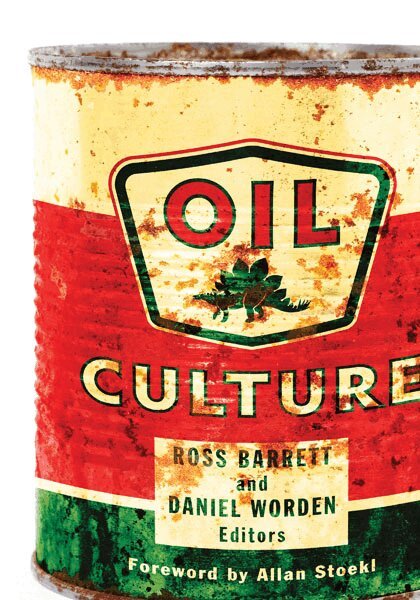
In the 150 years since the birth of the petroleum industry oil has saturated our culture, fueling our cars and wars, our economy and policies. But just as thoroughly, culture saturates oil. So what exactly is “oil culture”? This book pursues an answer through petrocapitalism’s history in literature, film, fine art, wartime propaganda, and museum displays. Investigating cultural discourses that have taken shape around oil, these essays compose the first sustained attempt to understand how petroleum has suffused the Western imagination.The contributors to this volume examine the oil culture nexus, beginning with the whale oil culture it replaced and analyzing literature and films such as Giant, Sundown, Bernardo Bertolucci’s La Via del Petrolio, and Ben Okri’s “What the Tapster Saw”; corporate art, museum installations, and contemporary photography; and in apocalyptic visions of environmental disaster and science fiction. By considering oil as both a natural resource and a trope, the authors show how oil’s dominance is part of culture rather than an economic or physical necessity. Oil Culture sees beyond oil capitalism to alternative modes of energy production and consumption.Contributors: Georgiana Banita, U of Bamberg; Frederick Buell, Queens College; Gerry Canavan, Marquette U; Melanie Doherty, Wesleyan College; Sarah Frohardt-Lane, Ripon College, Matthew T. Huber, Syracuse U; Dolly JØrgensen, UmeÅ U; Stephanie LeMenager, U of Oregon; Hanna Musiol, Northeastern U; Chad H. Parker, U of Louisiana at Lafayette; Ruth Salvaggio, U of North Carolina, Chapel Hill; Heidi Scott, Florida International U; Imre Szeman, U of Alberta; Michael Watts, U of California, Berkeley; Jennifer Wenzel, Columbia University; Sheena Wilson, U of Alberta; Rochelle Raineri Zuck, U of Minnesota Duluth; Catherine Zuromskis, U of New Mexico.
1 293 kr
Skickas inom 10-15 vardagar
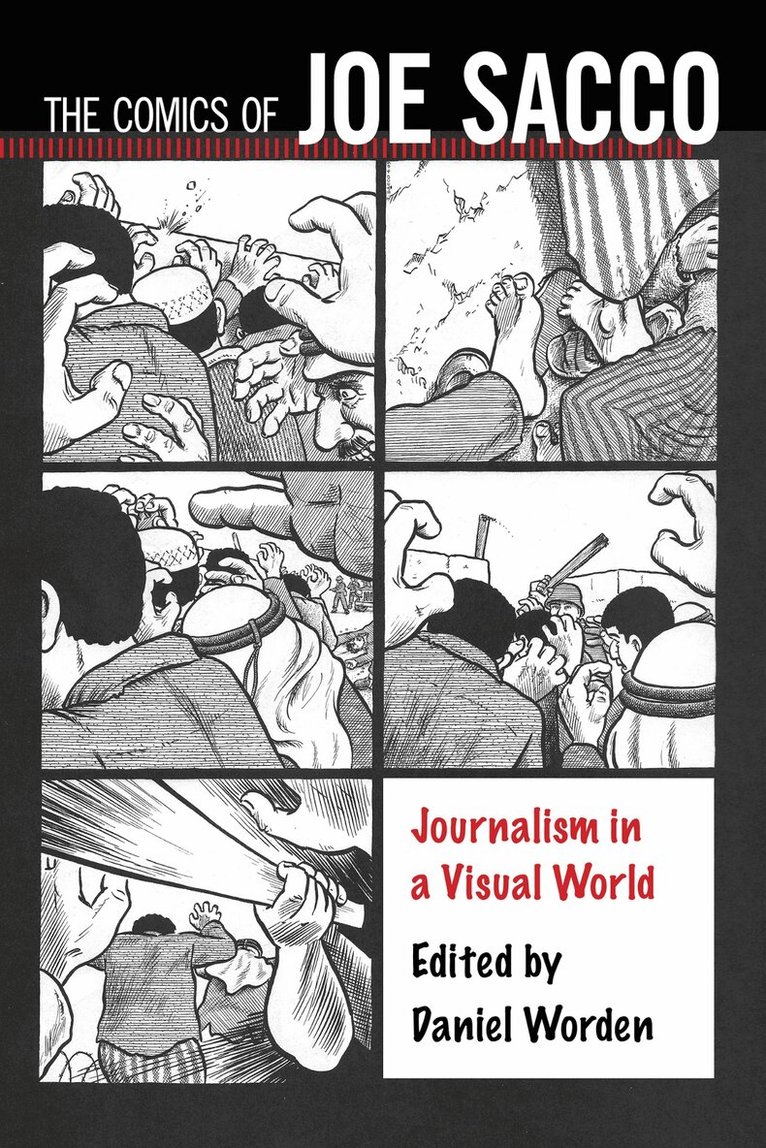
The Comics of Joe Sacco addresses the range of his award-winning work, from his early comics stories as well as his groundbreaking journalism Palestine (1993) and Safe Area to Goražde (2000), to Footnotes in Gaza (2009) and his most recent book The Great War (2013), a graphic history of World War I.First in the new series, Critical Approaches to Comics Artists, this edited volume explores Sacco's comics journalism, and features established and emerging scholars from comics studies, cultural studies, geography, literary studies, political science, and communication studies. Sacco's work has already found a place in some of the foundational scholarship in comics studies, and this book solidifies his role as one of the most important comics artists today.Sections focus on how Sacco's comics journalism critiques and employs the ""standard of objectivity"" in mainstream reporting, what aesthetic principles and approaches to lived experience can be found in his comics, how Sacco employs the space of the comics page to map history and war, and the ways that his comics function in the classroom and as human rights activism. The Comics of Joe Sacco offers definitive, exciting approaches to some of the most important--and necessary--comics today, by one of the most acclaimed journalist-artists of our time.
402 kr
Skickas inom 10-15 vardagar
Contributions by Georgiana Banita, Lan Dong, Ann D’Orazio, Kevin C. Dunn, Alexander Dunst, Jared Gardner, Edward C. Holland, Isabel Macdonald, Brigid Maher, Ben Owen, Rebecca Scherr, Maureen Shay, Marc Singer, Richard Todd Stafford, and Øyvind VågnesThe Comics of Joe Sacco addresses the range of his award-winning work, from his early comics stories as well as his groundbreaking journalism Palestine (1993) and Safe Area to Goražde (2000), to Footnotes in Gaza (2009) and his most recent book The Great War (2013), a graphic history of World War I.First in the series, Critical Approaches to Comics Artists, this edited volume explores Sacco’s comics journalism, and features established and emerging scholars from comics studies, cultural studies, geography, literary studies, political science, and communication studies. Sacco’s work has already found a place in some of the foundational scholarship in comics studies, and this book solidifies his role as one of the most important comics artists today.Sections focus on how Sacco’s comics journalism critiques and employs the “standard of objectivity” in mainstream reporting, what aesthetic principles and approaches to lived experience can be found in his comics, how Sacco employs the space of the comics page to map history and war, and the ways that his comics function in the classroom and as human rights activism. The Comics of Joe Sacco offers definitive, exciting approaches to some of the most important—and necessary—comics today, by one of the most acclaimed journalist-artists of our time.
1 358 kr
Skickas inom 10-15 vardagar
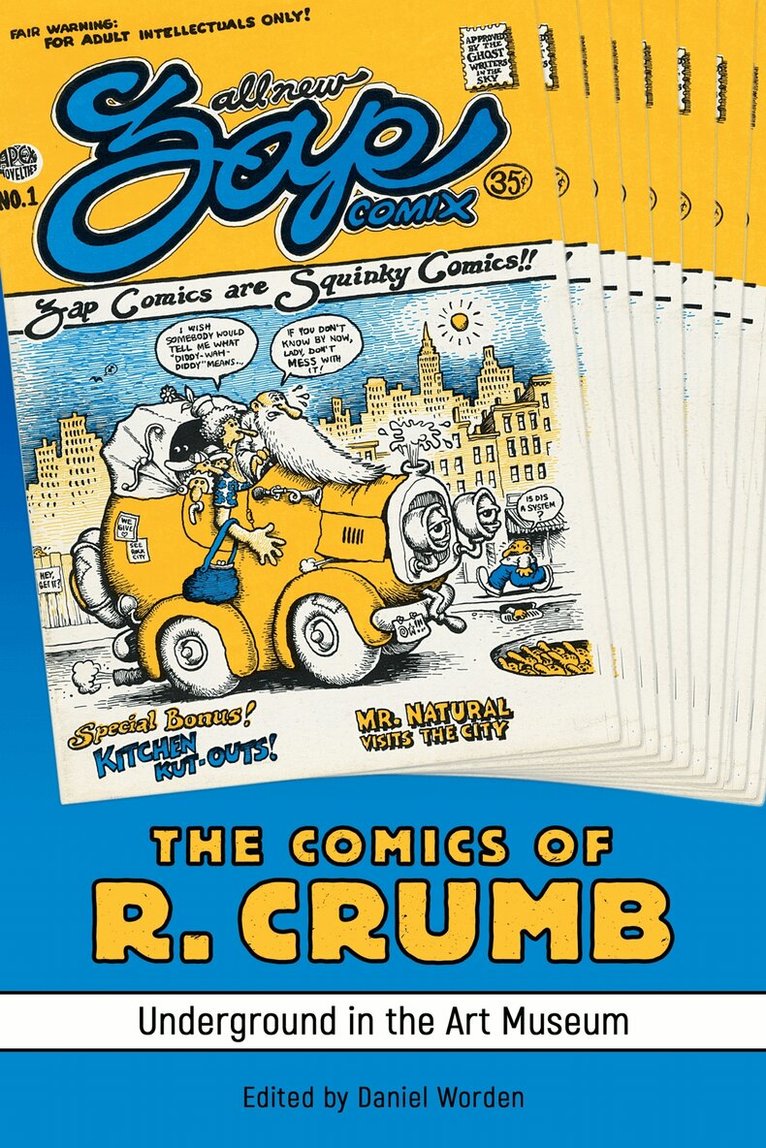
Contributions by José Alaniz, Ian Blechschmidt, Paul Fisher Davies, Zanne Domoney-Lyttle, David Huxley, Lynn Marie Kutch, Julian Lawrence, Liliana Milkova, Stiliana Milkova, Kim A. Munson, Jason S. Polley, Paul Sheehan, Clarence Burton Sheffield Jr., and Daniel WordenFrom his work on underground comix like Zap and Weirdo, to his cultural prominence, R. Crumb is one of the most renowned comics artists in the medium's history. His work, beginning in the 1960s, ranges provocatively and controversially over major moments, tensions, and ideas in the late twentieth and early twenty-first centuries, from the counterculture and the emergence of the modern environmentalist movement, to racial politics and sexual liberation. While Crumb's early work refined the parodic, over-the-top, and sexually explicit styles we associate with underground comix, he also pioneered the comics memoir, through his own autobiographical and confessional comics, as well as in his collaborations. More recently, Crumb has turned to long-form, book-length works, such as his acclaimed Book of Genesis and Kafka. Over the long arc of his career, Crumb has shaped the conventions of underground and alternative comics, autobiographical comics, and the ""graphic novel."" And, through his involvement in music, animation, and documentary film projects, Crumb is a widely recognized persona, an artist who has defined the vocation of the cartoonist in a widely influential way. The Comics of R. Crumb: Underground in the Art Museum is a groundbreaking collection on the work of a pioneer of underground comix and a fixture of comics culture. Ranging from art history and literary studies, to environmental studies and religious history, the essays included in this volume cast Crumb's work as formally sophisticated and complex in its representations of gender, sexuality, race, politics, and history, while also charting Crumb's role in underground comix and the ways in which his work has circulated in the art museum.
416 kr
Skickas inom 7-10 vardagar
Contributions by José Alaniz, Ian Blechschmidt, Paul Fisher Davies, Zanne Domoney-Lyttle, David Huxley, Lynn Marie Kutch, Julian Lawrence, Liliana Milkova, Stiliana Milkova, Kim A. Munson, Jason S. Polley, Paul Sheehan, Clarence Burton Sheffield Jr., and Daniel WordenFrom his work on underground comix like Zap and Weirdo, to his cultural prominence, R. Crumb is one of the most renowned comics artists in the medium's history. His work, beginning in the 1960s, ranges provocatively and controversially over major moments, tensions, and ideas in the late twentieth and early twenty-first centuries, from the counterculture and the emergence of the modern environmentalist movement, to racial politics and sexual liberation. While Crumb's early work refined the parodic, over-the-top, and sexually explicit styles we associate with underground comix, he also pioneered the comics memoir, through his own autobiographical and confessional comics, as well as in his collaborations. More recently, Crumb has turned to long-form, book-length works, such as his acclaimed Book of Genesis and Kafka. Over the long arc of his career, Crumb has shaped the conventions of underground and alternative comics, autobiographical comics, and the ""graphic novel."" And, through his involvement in music, animation, and documentary film projects, Crumb is a widely recognized persona, an artist who has defined the vocation of the cartoonist in a widely influential way. The Comics of R. Crumb: Underground in the Art Museum is a groundbreaking collection on the work of a pioneer of underground comix and a fixture of comics culture. Ranging from art history and literary studies, to environmental studies and religious history, the essays included in this volume cast Crumb's work as formally sophisticated and complex in its representations of gender, sexuality, race, politics, and history, while also charting Crumb's role in underground comix and the ways in which his work has circulated in the art museum.
New Directions in Print Culture Studies
Archives, Materiality, and Modern American Culture
Inbunden, Engelska, 2022
1 544 kr
Skickas inom 10-15 vardagar
New Directions in Print Culture Studies features new methods and approaches to cultural and literary history that draw on periodicals, print culture, and material culture, thus revising and rewriting what we think we know about the aesthetic, cultural, and social history of transnational America. The unifying questions posed and answered in this book are methodological: How can we make material, archival objects meaningful? How can we engage and contest dominant conceptions of aesthetic, historical, and literary periods? How can we present archival material in ways that make it accessible to other scholars and students? What theoretical commitments does a focus on material objects entail? New Directions in Print Culture Studies brings together leading scholars to address the methodological, historical, and theoretical commitments that emerge from studying how periodicals, books, images, and ideas circulated from the 19th century to the present. Reaching beyond national boundaries, the essays in this book focus on the different materials and archives we can use to rewrite literary history in ways that highlight not a canon of “major” literary works, but instead the networks, dialogues, and tensions that define print cultures in various moments and movements.
New Directions in Print Culture Studies
Archives, Materiality, and Modern American Culture
Häftad, Engelska, 2024
469 kr
Skickas inom 10-15 vardagar
New Directions in Print Culture Studies features new methods and approaches to cultural and literary history that draw on periodicals, print culture, and material culture, thus revising and rewriting what we think we know about the aesthetic, cultural, and social history of transnational America. The unifying questions posed and answered in this book are methodological: How can we make material, archival objects meaningful? How can we engage and contest dominant conceptions of aesthetic, historical, and literary periods? How can we present archival material in ways that make it accessible to other scholars and students? What theoretical commitments does a focus on material objects entail? New Directions in Print Culture Studies brings together leading scholars to address the methodological, historical, and theoretical commitments that emerge from studying how periodicals, books, images, and ideas circulated from the 19th century to the present. Reaching beyond national boundaries, the essays in this book focus on the different materials and archives we can use to rewrite literary history in ways that highlight not a canon of “major” literary works, but instead the networks, dialogues, and tensions that define print cultures in various moments and movements.
596 kr
Skickas inom 7-10 vardagar