Danielle M. Peters - Böcker
Visar alla böcker från författaren Danielle M. Peters. Handla med fri frakt och snabb leverans.
3 produkter
3 produkter
Suspicious Moderate
The Life and Writings of Francis à Sancta Clara (1598–1680)
Inbunden, Engelska, 2017
806 kr
Skickas inom 10-15 vardagar
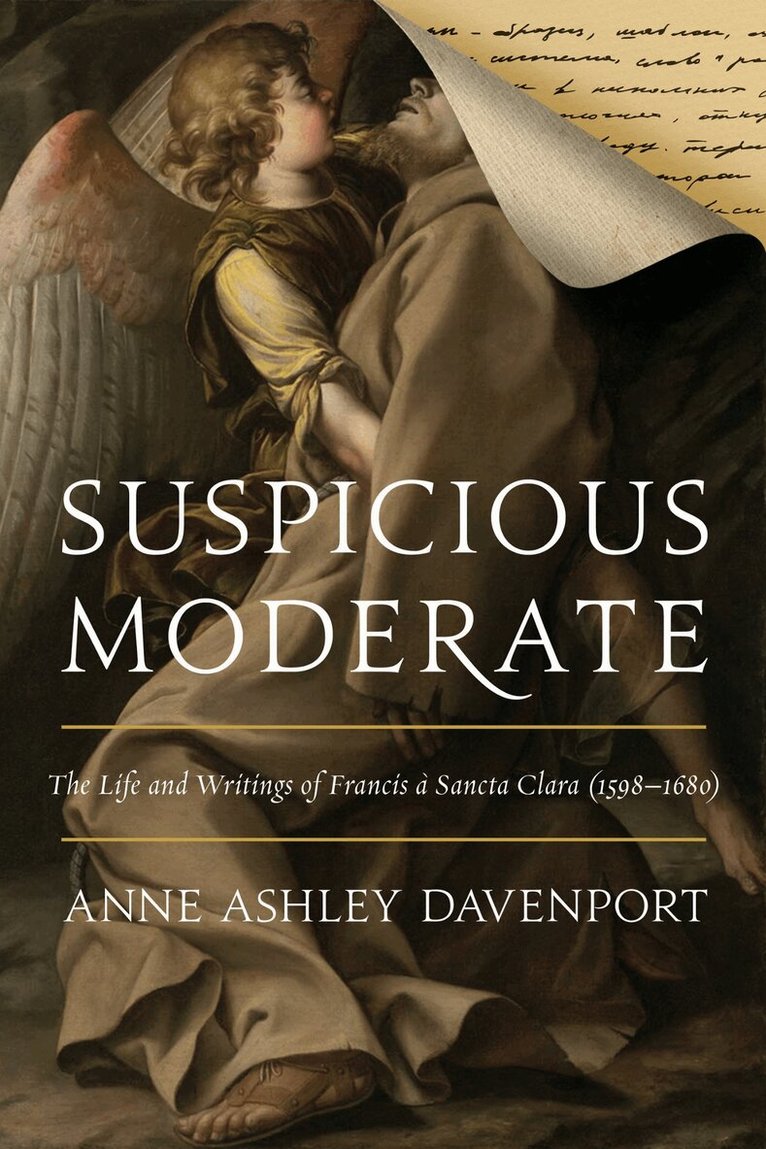
The historiography of English Catholicism has grown enormously in the last generation, led by scholars such as Peter Lake, Michael Questier, Stefania Tutino, and others. In Suspicious Moderate, Anne Ashley Davenport makes a significant contribution to that literature by presenting a long overdue intellectual biography of the influential English Catholic theologian Francis à Sancta Clara (1598–1680). Born into a Protestant family in Coventry at the end of the sixteenth century, Sancta Clara joined the Franciscan order in 1617. He played key roles in reviving the English Franciscan province and in the efforts that were sponsored by Charles I to reunite the Church of England with Rome. In his voluminous Latin writings, he defended moderate Anglican doctrines, championed the separation of church and state, and called for state protection of freedom of conscience.Suspicious Moderate offers the first detailed analysis of Sancta Clara's works. In addition to his notorious Deus, natura, gratia (1634), Sancta Clara wrote a comprehensive defense of episcopacy (1640), a monumental treatise on ecumenical councils (1649), and a treatise on natural philosophy and miracles (1662). By carefully examining the context of Sancta Clara's ideas, Davenport argues that he aimed at educating English Roman Catholics into a depoliticized and capacious Catholicism suited to personal moral reasoning in a pluralistic world. In the course of her research, Davenport also discovered that "Philip Scot," the author of the earliest English discussions of Hobbes (a treatise published in 1650), was none other than Sancta Clara. Davenport demonstrates how Sancta Clara joined the effort to fight Hobbes's Erastianism by carefully reflecting on Hobbes's pioneering ideas and by attempting to find common ground with him, no matter how slight.
539 kr
Skickas inom 10-15 vardagar
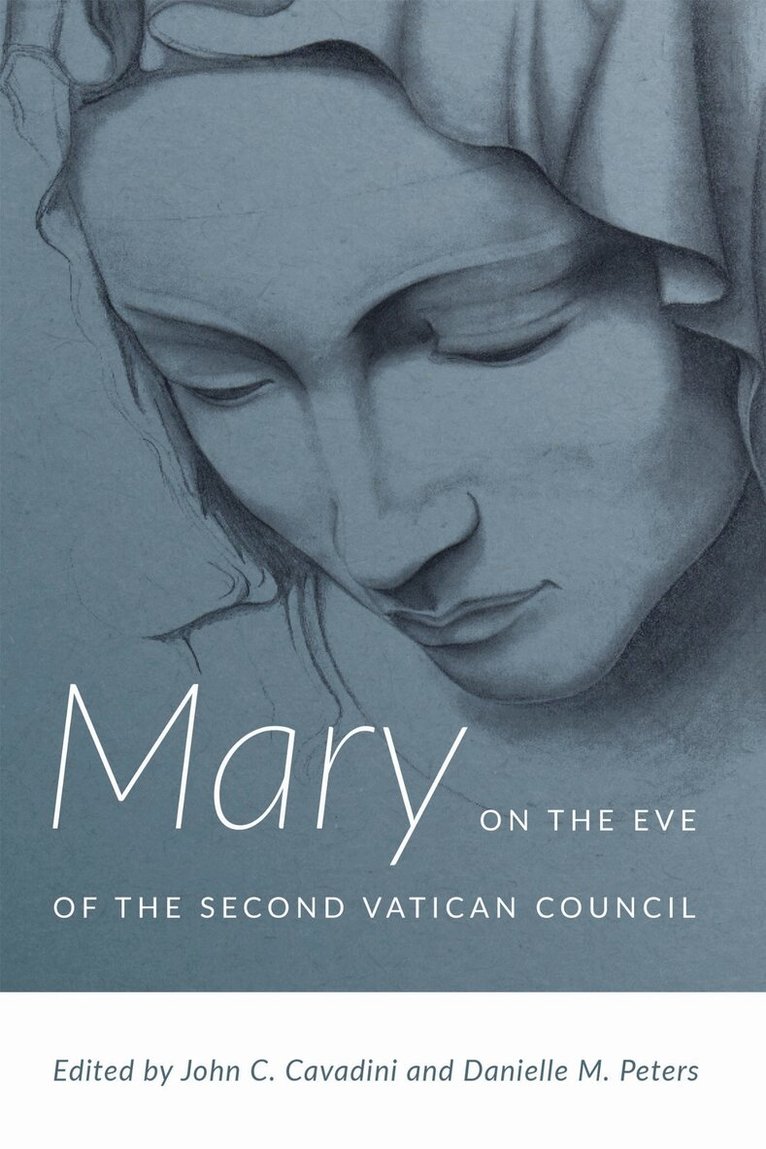
The Blessed Virgin Mary is uniquely associated with Catholicism, and the century preceding the Second Vatican Council was arguably the most fertile era for Catholic Marian studies. In 1964, Pope John Paul VI published the Dogmatic Constitution on the Church, or Lumen Gentium (LG), the eighth chapter of which presents the most comprehensive magisterial teaching on the Blessed Virgin Mary. As part of its Marian Initiative, the Institute for Church Life at the University of Notre Dame invited scholars to a conference held at Notre Dame in October 2013 to reflect the rich Marian legacy on the eve of the Second Vatican Council.The essays unanimously stress that the Blessed Virgin Mary is not merely a peripheral figure in Christian faith and in the panorama of theology. More than fifty years after Lumen Gentium, students of theology as well as Marian devotees take their bearings from this document in order to promote the person of Mary and the study of Mariology, as well as grow in authentic Marian piety. This book will have great appeal to students and scholars of Catholic theology and history, particularly those interested in Mariology.Contributors: Ann W. Astell, Peter Casarella, John C. Cavadini, Lawrence S. Cunningham, Brian Daley, S.J., Peter J. Fritz, Kevin Grove, CSC, Msgr. Michael Heintz, Matthew Levering, Danielle M. Peters, James H. Phalan, CSC, Johann G. Roten, S.M., Christopher Ruddy, Troy Stefano, and Thomas A. Thompson, S.M.
Ecce Educatrix Tua
The Role of the Blessed Virgin Mary for a Pedagogy of Holiness in the Thought of John Paul II and Father Joseph Kentenich
Häftad, Engelska, 2009
1 209 kr
Skickas inom 10-15 vardagar
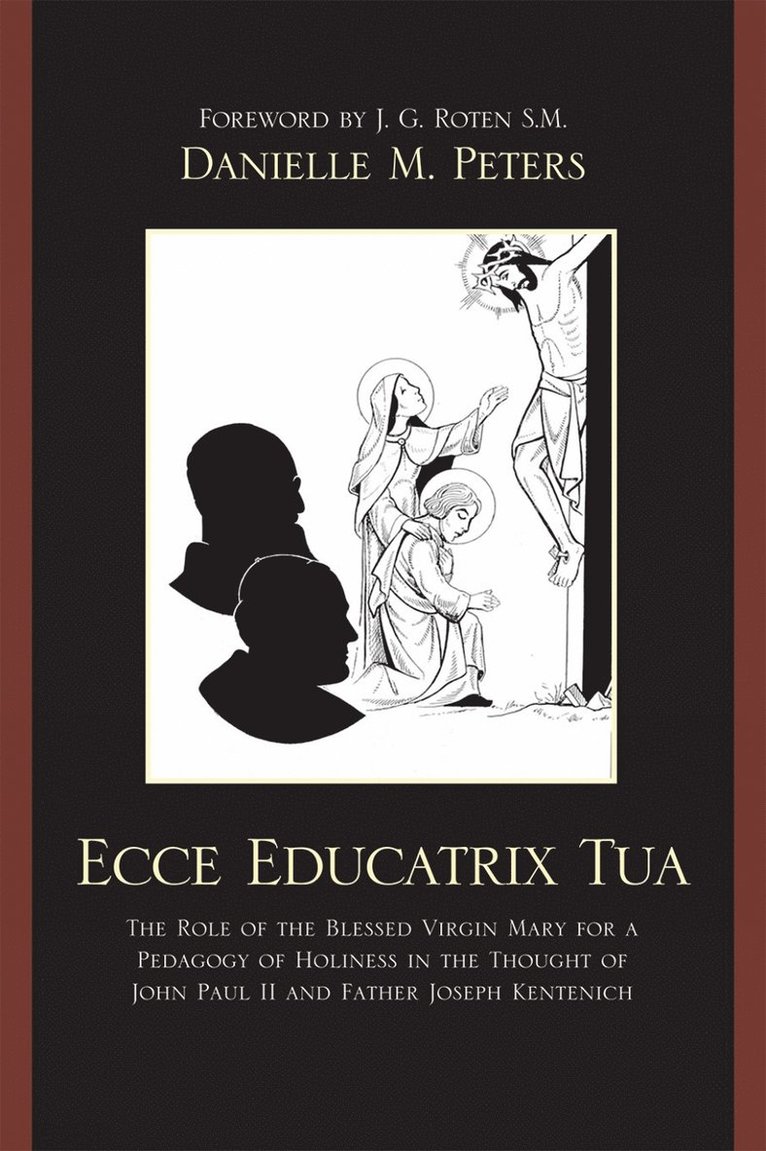
Ecce Educatrix Tua discusses the Apostolic Letter Novo millennio ineunte (NMI), wherein John Paul II outlined the path the Church should adopt in the third millennium. The necessity "to rediscover the full practical significance of Chapter 5 of the Dogmatic Constitution on the Church Lumen Gentium, dedicated to the universal call to holiness" (NMI 30) is at stake. John Paul II stressed that a concrete "pedagogy of holiness" is required, including a "spiritual path," without which "external structures…will serve very little purpose (NMI 43)." The Polish Pontiff invited ecclesial movements to present their original pedagogy of holiness (cf. NMI 31). Peters highlights the Blessed Virgin Mary as educator in a pedagogy of holiness from the teachings of John Paul II and Father Joseph Kentenich, founder of the Schoenstatt Movement.