Danya Glabau - Böcker
Visar alla böcker från författaren Danya Glabau. Handla med fri frakt och snabb leverans.
3 produkter
3 produkter
171 kr
Skickas
A concise introduction to cyborg theory that examines the way in which technology is situated, political, and embodied.This introduction to cyborg theory provides a critical vantage point for analyzing the claims around emerging technologies like automation, robots, and AI. Cyborg analyzes and reframes popular and scholarly conversations about cyborgs from the perspective of feminist cyborg theory. Drawing on their combined decades of training, teaching, and research in the social sciences, design, and engineering education, Laura Forlano and Danya Glabau introduce an approach called critical cyborg literacy. Critical cyborg literacy foregrounds power dynamics and pays attention to the ways that social and cultural factors such as gender, race, and disability shape how technology is imagined, developed, used, and resisted.Forlano and Glabau offer critical cyborg literacy as a way of thinking through questions about the relationship between humanity and technology in areas such as engineering and computing, art and design, and health care and medicine, as well as the social sciences and humanities. Cyborg examines whether modern technologies make us all cyborgs—if we consider, for instance, the fact that we use daily technologies at work, have technologies embedded into our bodies in health care applications, or use technology to critically explore possibilities as artists, designers, activists, and creators. Lastly, Cyborg offers perspectives from critical race, feminist, and disability thinkers to help chart a path forward for cyborg theory in the twenty-first century.
1 106 kr
Skickas inom 10-15 vardagar
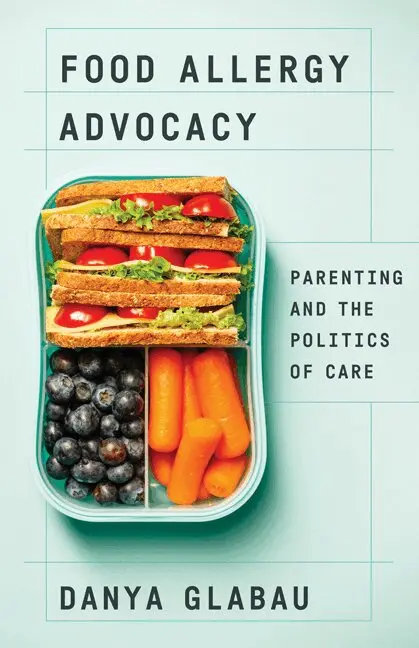
A detailed exploration of parents’ fight for a safe environment for their kids, interrogating how race, class, and gender shape health advocacy The success of food allergy activism in highlighting the dangers of foodborne allergens shows how illness communities can effectively advocate for the needs of their members. In Food Allergy Advocacy, Danya Glabau follows parents and activists as they fight for allergen-free environments, accurate labeling, the fair application of disability law, and access to life-saving medications for food-allergic children in the United States. At the same time, she shows how this activism also reproduces the culturally dominant politics of personhood and responsibility, based on an idealized version of the American family, centered around white, middle-class, and heteronormative motherhood.By holding up the threat of food allergens to the white nuclear family to galvanize political and scientific action, Glabau shows, the movement excludes many, including Black women and disabled adults, whose families and health have too often been marginalized from public health and social safety net programs. Further, its strategies are founded on the assumption that market-based solutions will address issues of social exclusion and equal access to healthcare. Sharing the personal experiences of a wide spectrum of people, including parents, support group leaders, physicians, entrepreneurs, and scientists, Food Allergy Advocacy raises important questions about who controls illness activism. Using critical, intersectional feminism to interrogate how race, class, and gender shape activist priorities and platforms, it shows the way to new, justice-focused models of advocacy.
265 kr
Skickas inom 7-10 vardagar
A detailed exploration of parents’ fight for a safe environment for their kids, interrogating how race, class, and gender shape health advocacy The success of food allergy activism in highlighting the dangers of foodborne allergens shows how illness communities can effectively advocate for the needs of their members. In Food Allergy Advocacy, Danya Glabau follows parents and activists as they fight for allergen-free environments, accurate labeling, the fair application of disability law, and access to life-saving medications for food-allergic children in the United States. At the same time, she shows how this activism also reproduces the culturally dominant politics of personhood and responsibility, based on an idealized version of the American family, centered around white, middle-class, and heteronormative motherhood.By holding up the threat of food allergens to the white nuclear family to galvanize political and scientific action, Glabau shows, the movement excludes many, including Black women and disabled adults, whose families and health have too often been marginalized from public health and social safety net programs. Further, its strategies are founded on the assumption that market-based solutions will address issues of social exclusion and equal access to healthcare. Sharing the personal experiences of a wide spectrum of people, including parents, support group leaders, physicians, entrepreneurs, and scientists, Food Allergy Advocacy raises important questions about who controls illness activism. Using critical, intersectional feminism to interrogate how race, class, and gender shape activist priorities and platforms, it shows the way to new, justice-focused models of advocacy.