Darrell Duffie - Böcker
Visar alla böcker från författaren Darrell Duffie. Handla med fri frakt och snabb leverans.
13 produkter
13 produkter
1 282 kr
Skickas inom 7-10 vardagar
This is a graduate level work covering the economic principles of security markets. Interested readers include students and researchers in economics and finance, as well as financial analysts following the latest theoretical developments in capital asset pricing.
1 208 kr
Skickas inom 7-10 vardagar
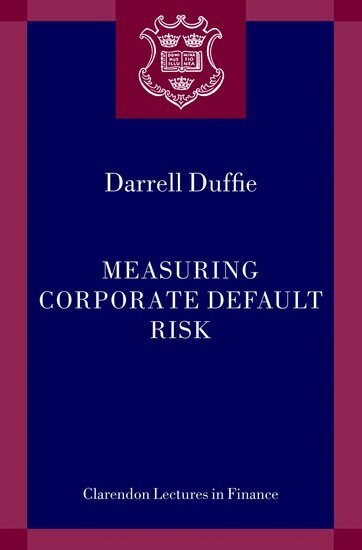
This book, based on the author's Clarendon Lectures in Finance, examines the empirical behaviour of corporate default risk. A new and unified statistical methodology for default prediction, based on stochastic intensity modeling, is explained and implemented with data on U.S. public corporations since 1980. Special attention is given to the measurement of correlation of default risk across firms. The underlying work was developed in a series of collaborations over roughly the past decade with Sanjiv Das, Andreas Eckner, Guillaume Horel, Nikunj Kapadia, Leandro Saita, and Ke Wang. Where possible, the content based on methodology has been separated from the substantive empirical findings, in order to provide access to the latter for those less focused on the mathematical foundations.A key finding is that corporate defaults are more clustered in time than would be suggested by their exposure to observable common or correlated risk factors. The methodology allows for hidden sources of default correlation, which are particularly important to include when estimating the likelihood that a portfolio of corporate loans will suffer large default losses. The data also reveal that a substantial amount of power for predicting the default of a corporation can be obtained from the firm's "distance to default," a volatility-adjusted measure of leverage that is the basis of the theoretical models of corporate debt pricing of Black, Scholes, and Merton. The findings are particularly relevant in the aftermath of the financial crisis, which revealed a lack of attention to the proper modelling of correlation of default risk across firms.
363 kr
Skickas inom 5-8 vardagar
This book, based on the author's Clarendon Lectures in Finance, examines the empirical behaviour of corporate default risk. A new and unified statistical methodology for default prediction, based on stochastic intensity modeling, is explained and implemented with data on U.S. public corporations since 1980. Special attention is given to the measurement of correlation of default risk across firms. The underlying work was developed in a series of collaborations over roughly the past decade with Sanjiv Das, Andreas Eckner, Guillaume Horel, Nikunj Kapadia, Leandro Saita, and Ke Wang. Where possible, the content based on methodology has been separated from the substantive empirical findings, in order to provide access to the latter for those less focused on the mathematical foundations.A key finding is that corporate defaults are more clustered in time than would be suggested by their exposure to observable common or correlated risk factors. The methodology allows for hidden sources of default correlation, which are particularly important to include when estimating the likelihood that a portfolio of corporate loans will suffer large default losses. The data also reveal that a substantial amount of power for predicting the default of a corporation can be obtained from the firm's "distance to default," a volatility-adjusted measure of leverage that is the basis of the theoretical models of corporate debt pricing of Black, Scholes, and Merton. The findings are particularly relevant in the aftermath of the financial crisis, which revealed a lack of attention to the proper modelling of correlation of default risk across firms.
1 582 kr
Skickas inom 10-15 vardagar
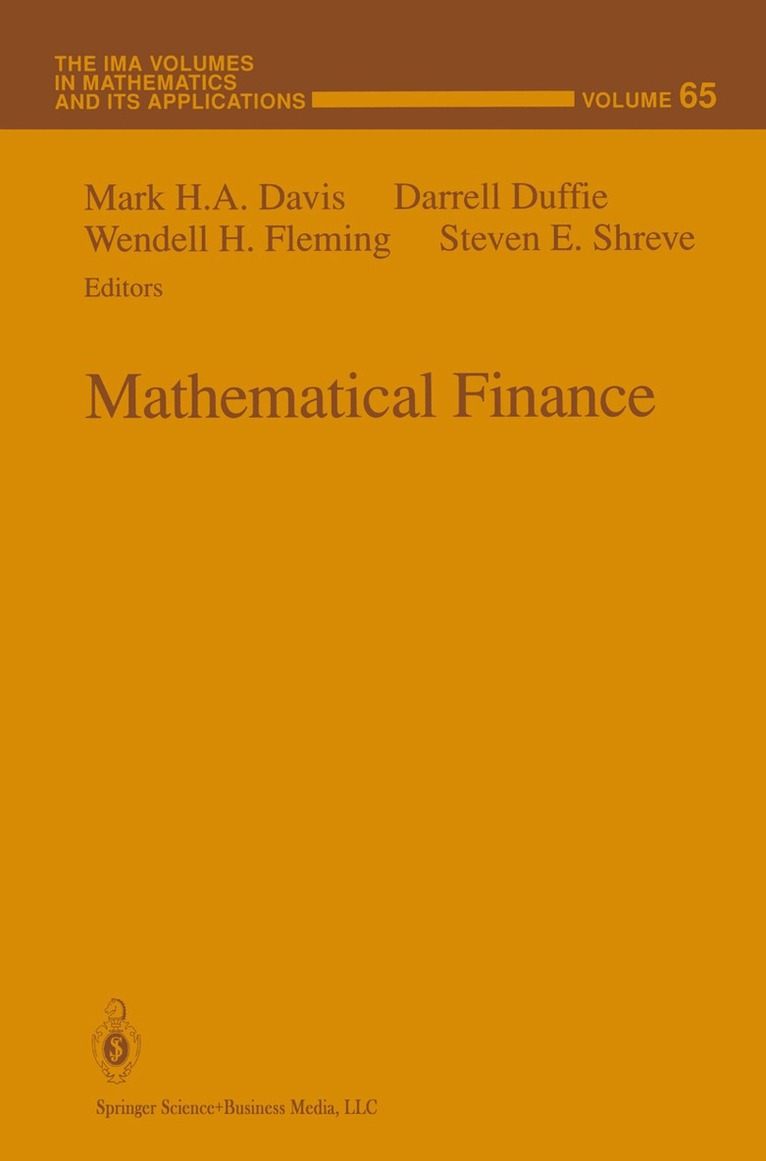
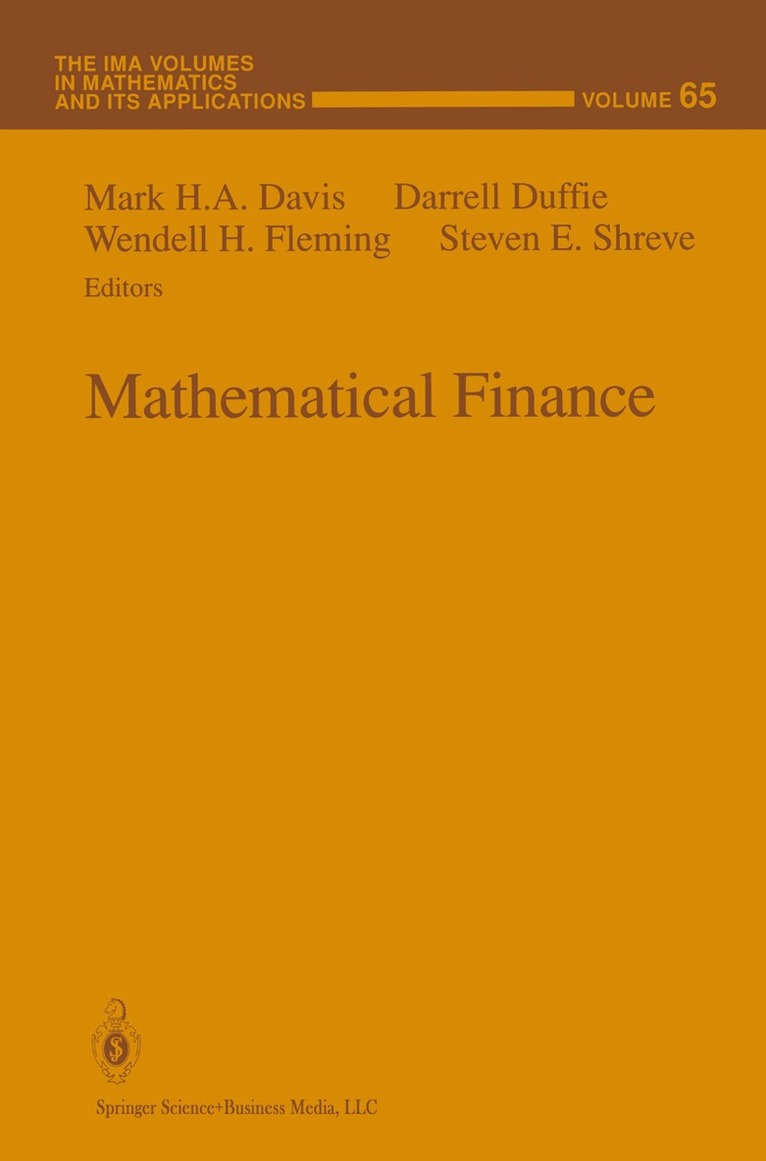
Recent revolutions in the world of finance have created a need for the expertise of research mathematicians in solving problems. The articles in this volume are based on recent research in methods in mathematical finance.
774 kr
Skickas inom 7-10 vardagar
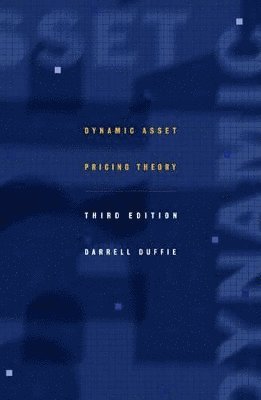
This is a thoroughly updated edition of Dynamic Asset Pricing Theory, the standard text for doctoral students and researchers on the theory of asset pricing and portfolio selection in multiperiod settings under uncertainty. The asset pricing results are based on the three increasingly restrictive assumptions: absence of arbitrage, single-agent optimality, and equilibrium. These results are unified with two key concepts, state prices and martingales. Technicalities are given relatively little emphasis, so as to draw connections between these concepts and to make plain the similarities between discrete and continuous-time models. Readers will be particularly intrigued by this latest edition's most significant new feature: a chapter on corporate securities that offers alternative approaches to the valuation of corporate debt. Also, while much of the continuous-time portion of the theory is based on Brownian motion, this third edition introduces jumps--for example, those associated with Poisson arrivals--in order to accommodate surprise events such as bond defaults. Applications include term-structure models, derivative valuation, and hedging methods.Numerical methods covered include Monte Carlo simulation and finite-difference solutions for partial differential equations. Each chapter provides extensive problem exercises and notes to the literature. A system of appendixes reviews the necessary mathematical concepts. And references have been updated throughout. With this new edition, Dynamic Asset Pricing Theory remains at the head of the field.
1 942 kr
Skickas inom 3-6 vardagar
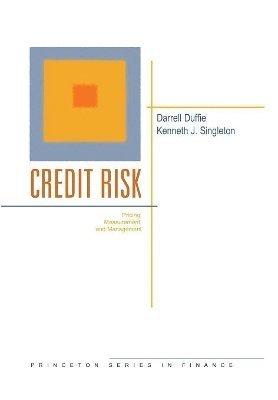
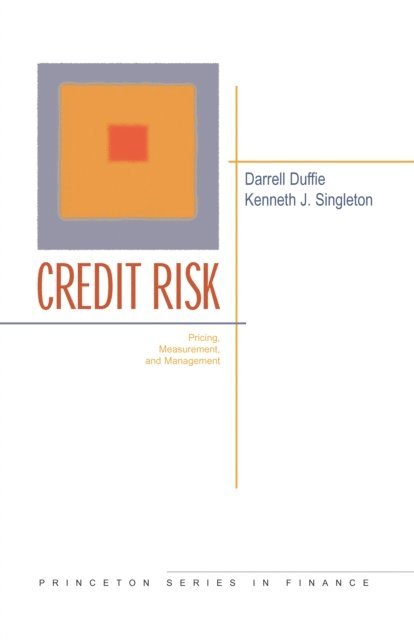
In this book, two of America's leading economists provide the first integrated treatment of the conceptual, practical, and empirical foundations for credit risk pricing and risk measurement. Masterfully applying theory to practice, Darrell Duffie and Kenneth Singleton model credit risk for the purpose of measuring portfolio risk and pricing defaultable bonds, credit derivatives, and other securities exposed to credit risk. The methodological rigor, scope, and sophistication of their state-of-the-art account is unparalleled, and its singularly in-depth treatment of pricing and credit derivatives further illuminates a problem that has drawn much attention in an era when financial institutions the world over are revising their credit management strategies. Duffie and Singleton offer critical assessments of alternative approaches to credit-risk modeling, while highlighting the strengths and weaknesses of current practice. Their approach blends in-depth discussions of the conceptual foundations of modeling with extensive analyses of the empirical properties of such credit-related time series as default probabilities, recoveries, ratings transitions, and yield spreads.Both the "structura" and "reduced-form" approaches to pricing defaultable securities are presented, and their comparative fits to historical data are assessed. The authors also provide a comprehensive treatment of the pricing of credit derivatives, including credit swaps, collateralized debt obligations, credit guarantees, lines of credit, and spread options. Not least, they describe certain enhancements to current pricing and management practices that, they argue, will better position financial institutions for future changes in the financial markets. Credit Risk is an indispensable resource for risk managers, traders or regulators dealing with financial products with a significant credit risk component, as well as for academic researchers and students.
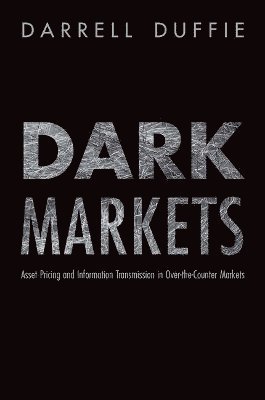
Dark Markets
Asset Pricing and Information Transmission in Over-the-Counter Markets
Inbunden, Engelska, 2012
481 kr
Skickas inom 7-10 vardagar
Over-the-counter (OTC) markets for derivatives, collateralized debt obligations, and repurchase agreements played a significant role in the global financial crisis. Rather than being traded through a centralized institution such as a stock exchange, OTC trades are negotiated privately between market participants who may be unaware of prices that are currently available elsewhere in the market. In these relatively opaque markets, investors can be in the dark about the most attractive available terms and who might be offering them. This opaqueness exacerbated the financial crisis, as regulators and market participants were unable to quickly assess the risks and pricing of these instruments. Dark Markets offers a concise introduction to OTC markets by explaining key conceptual issues and modeling techniques, and by providing readers with a foundation for more advanced subjects in this field. Darrell Duffie covers the basic methods for modeling search and random matching in economies with many agents.He gives an overview of asset pricing in OTC markets with symmetric and asymmetric information, showing how information percolates through these markets as investors encounter each other over time. This book also features appendixes containing methodologies supporting the more theory-oriented of the chapters, making this the most self-contained introduction to OTC markets available.
170 kr
Skickas inom 7-10 vardagar
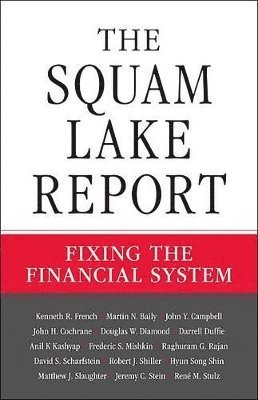
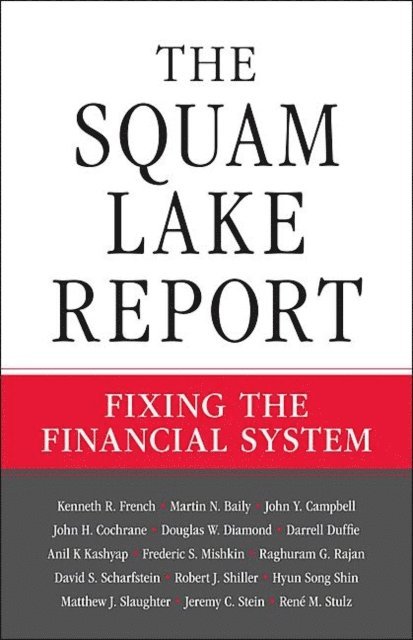
In the fall of 2008, fifteen of the world's leading economists--representing the broadest spectrum of economic opinion--gathered at New Hampshire's Squam Lake. Their goal: the mapping of a long-term plan for financial regulation reform. The Squam Lake Report distills the wealth of insights from the ongoing collaboration that began at these meetings and provides a revelatory, unified, and coherent voice for fixing our troubled and damaged financial markets. As an alternative to the patchwork solutions and ideologically charged proposals that have dominated other discussions, the Squam Lake group sets forth a clear nonpartisan plan of action to transform the regulation of financial markets--not just for the current climate--but for generations to come. Arguing that there has been a conflict between financial institutions and society, these diverse experts present sound and transparent prescriptions to reduce this divide. They look at the critical holes in the existing regulatory framework for handling complex financial institutions, retirement savings, and credit default swaps. They offer ideas for new financial instruments designed to recapitalize banks without burdening taxpayers.To lower the risk that large banks will fail, the authors call for higher capital requirements as well as a systemic regulator who is part of the central bank. They collectively analyze where the financial system has failed, and how these weak points should be overhauled. Combining an immense depth of academic, private sector, and public policy experience, The Squam Lake Report contains urgent recommendations that will positively influence everyone's financial well-being--all who care about the world's economic health need to pay attention.
391 kr
Skickas inom 7-10 vardagar
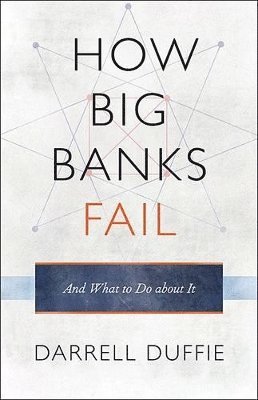
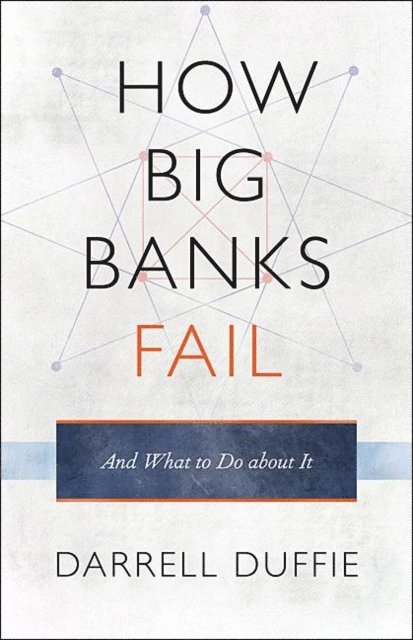
Dealer banks--that is, large banks that deal in securities and derivatives, such as J. P. Morgan and Goldman Sachs--are of a size and complexity that sharply distinguish them from typical commercial banks. When they fail, as we saw in the global financial crisis, they pose significant risks to our financial system and the world economy. How Big Banks Fail and What to Do about It examines how these banks collapse and how we can prevent the need to bail them out. In sharp, clinical detail, Darrell Duffie walks readers step-by-step through the mechanics of large-bank failures. He identifies where the cracks first appear when a dealer bank is weakened by severe trading losses, and demonstrates how the bank's relationships with its customers and business partners abruptly change when its solvency is threatened. As others seek to reduce their exposure to the dealer bank, the bank is forced to signal its strength by using up its slim stock of remaining liquid capital.Duffie shows how the key mechanisms in a dealer bank's collapse--such as Lehman Brothers' failure in 2008--derive from special institutional frameworks and regulations that influence the flight of short-term secured creditors, hedge-fund clients, derivatives counterparties, and most devastatingly, the loss of clearing and settlement services. How Big Banks Fail and What to Do about It reveals why today's regulatory and institutional frameworks for mitigating large-bank failures don't address the special risks to our financial system that are posed by dealer banks, and outlines the improvements in regulations and market institutions that are needed to address these systemic risks.
Multiperiod Securities Markets With Differential Information
Martingales and Resolution Times
Inbunden, Engelska, 2023
336 kr
Skickas inom 5-8 vardagar
Multiperiod Securities Markets With Differential Information
Martingales and Resolution Times
Häftad, Engelska, 2023
168 kr
Skickas inom 5-8 vardagar
1 590 kr
Skickas inom 10-15 vardagar
Recent revolutions in the world of finance have created a need for the expertise of research mathematicians in solving problems. The articles in this volume are based on recent research in methods in mathematical finance.
Fragmenting Markets
Post-Crisis Bank Regulations and Financial Market Liquidity
Inbunden, Engelska, 2022
575 kr
Skickas inom 7-10 vardagar
Post-crisis capital regulations and new failure-resolution rules increased the funding costs that are borne by bank shareholders, and thus the cost to buy-side firms for access to space on the balance sheets of large banks. A policy implication is the encouragement of market infrastructure and trading methods that reduce the amount of space on bank balance sheets that is needed to conduct a given amount of trade. Using models and evidence, this book addresses the implications for financial-market liquidity of these regulations for systemically important banks and argues that current rules do not allow for potential levels of market efficiency and financial stability. In this insightful analysis of the impact of regulation on financial market efficiency post-2008, the author argues that bank capital levels could actually be pushed higher while still improving the liquidity of markets for safe assets such as low-risk fixed-income instruments by relaxing the leverage-ratio rule and increasing risk-based capital requirements.